

You found the house. You love it. And then your loan takes two weeks longer than expected, and someone else gets it. That scenario plays out constantly for homebuyers who don't know how to speed up the loan approval process before they need it most. 73% of buyers submit offers within 48 hours of finding a property, which means your financing has to move just as fast as your decision. This guide covers exactly how to prepare, apply, and follow up so your loan moves at the speed the market demands.
Table of Contents
- Key Takeaways
- How to speed up the loan approval process
- Preparation checklist before you apply
- Execution strategies during the application
- Verification and follow-up after submission
- My honest take on speeding up loan approvals
- How 1smtg helps loan officers close faster
- FAQ
Key Takeaways
| Point | Details |
|---|---|
| Preparation beats pressure | Organizing documents before applying reduces underwriter time by nearly 3x compared to raw submissions. |
| Credit score is your fast pass | Lenders with automated systems approve borrowers with scores above 750 within hours, not days. |
| Timing your application matters | Applying Tuesday or Wednesday during business hours significantly improves same-day or next-day processing odds. |
| Portals beat email every time | Secure borrower portals eliminate an average 4.7-hour delay per email exchange in document collection. |
| Respond fast, close faster | Pre-approved borrowers with fast pre-approval letters close 50% more loans than those with slow approvals. |
How to speed up the loan approval process
Most borrowers treat loan approval as something that happens to them. The reality is you have significant influence over the timeline. Understanding where time actually gets lost is the first step toward taking that control back.
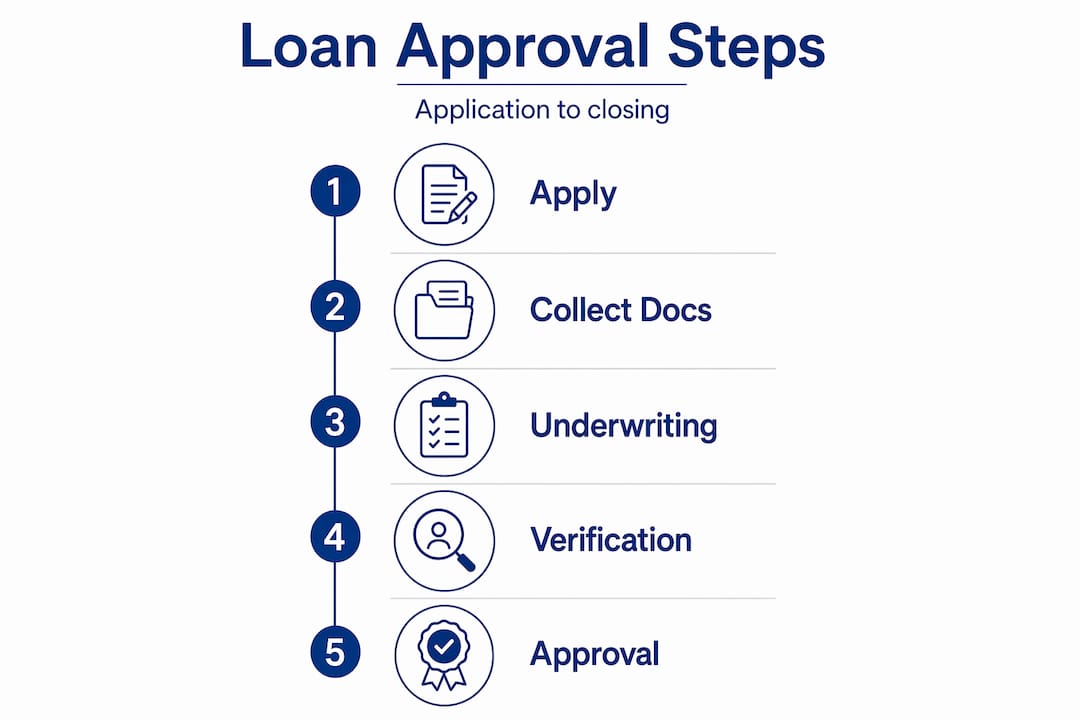
A typical mortgage approval moves through four stages: application submission, document collection, underwriting review, and final decision. On paper, that sounds manageable. In practice, mortgage underwriting takes 30 to 45 days total, with underwriting review alone consuming 48 to 72 hours. The good news is that most of that time is not locked in stone.
Where the bottlenecks actually happen
The biggest time killers are not complicated. They are predictable and avoidable:
- Incomplete document submissions that trigger back-and-forth requests
- Manual data entry by loan processors who are handling multiple files at once
- Sequential workflows where each step waits for the previous one to fully close before starting
- Email-based document exchange that lacks clear tracking of what is missing
Six of eight loan approval steps are automatable, yet most delays come from incomplete documents and manual data entry. That tells you exactly where your energy should go. Choose a lender whose underwriting method uses automated systems rather than fully manual reviews, and you cut days off your timeline before you even submit a single page.
Pro Tip: Ask your lender directly whether they use automated underwriting (AUS) or manual underwriting. If they hesitate or say "it depends," that is a signal their process is slower by default.
Preparation checklist before you apply
The single most effective thing you can do to get fast loan approval happens weeks before you fill out an application. Lenders move quickly when the file in front of them is clean, complete, and consistent. They slow down when they have to chase you for anything.
Get your credit in shape first
Lenders with automated systems approve borrowers with scores above 750 within minutes, with funds disbursed within 24 hours. Scores below 700 to 725 typically push you into manual review territory, which adds days. Pay down revolving credit balances, dispute any errors on your credit report, and avoid opening new credit accounts in the 90 days before applying.
Assemble your documents before you need them
Updated and consistent financial documents reduce manual review and speed approvals significantly. Here is what to gather in advance:
- Last two years of W-2s and federal tax returns
- Two to three months of recent pay stubs
- Two to three months of bank statements (all pages, no gaps)
- Proof of any additional income (rental income, freelance work, investments)
- Government-issued photo ID and Social Security number
- Gift letters if any part of your down payment is a gift
Make sure these documents tell a consistent story. If your tax return shows income that does not match your pay stubs, an underwriter will flag it for manual review. That flag costs you days.
Know your debt-to-income ratio before the lender does

Your debt-to-income (DTI) ratio is your total monthly debt payments divided by your gross monthly income. Most conventional loans require a DTI below 43%. If yours is higher, you either need to pay down debt or lower your loan amount target before applying. Submitting an application you do not qualify for does not just get rejected. It wastes your time and leaves a hard inquiry on your credit report.
Pro Tip: Use a free DTI calculator before applying. If your ratio is above 40%, spend 60 to 90 days paying down credit cards before you submit. The wait is shorter than recovering from a denial.
Execution strategies during the application
Preparation gets you ready. Execution gets you approved fast. These are the tactical moves that separate borrowers who close in two weeks from those who wait two months.
-
Apply midweek. Applying on Tuesday or Wednesday during normal business hours significantly increases your chances of same-day or next-day processing. Monday files pile up behind weekend backlogs. Friday files sit until Monday. Midweek is when processors have the most bandwidth.
-
Use a secure borrower portal, not email. Borrowers submitting documents via secure portals avoid an average 4.7-hour delay per email exchange. With an average of 11.3 email exchanges per borrower in document collection, that adds up to more than two full business days lost to inbox confusion alone.
-
Apply with a lender where you already bank. Existing account relationships give lenders direct access to your financial history. They can verify income and assets faster because they already have some of the data. This is especially true for larger banks and credit unions.
-
Submit a complete application on the first try. Every follow-up request from a lender adds at least one business day to your timeline. Review your application twice before hitting submit. Have someone else review it too. One missing field can trigger a conditional approval that takes days to clear.
-
Ask about parallel processing. Some lenders run credit checks, employment verification, and title searches simultaneously. Others run them in sequence. Ask your loan officer directly which approach they use. Parallel processing alone can shave a week off a standard timeline.
-
Consider a lender with a digital-first application process. Top lenders achieve pre-approval in 4 to 8 hours, compared to the industry average of 4.2 business days. That gap is almost entirely explained by automation and digital workflows.
Pro Tip: Before choosing a lender, ask: "What is your average time from complete application to pre-approval letter?" If they cannot answer that question confidently, their process probably does not have the tracking in place to move quickly.
Verification and follow-up after submission
Submitting your application is not the finish line. What you do in the days after submission has a direct impact on how fast your approval comes through.
The most common reason approvals stall after submission is slow borrower response. When a lender sends a request for additional documentation or clarification, the clock stops until you respond. A 24-hour delay on your end can push your file to the back of the queue.
How to stay ahead of requests
- Check your email and borrower portal at least twice daily after submission. Set a phone notification if needed.
- Respond to every request within the same business day. Even a partial response with a note about when the rest is coming shows the processor your file is active.
- Address exceptions proactively. Applications flagged for minor documentation issues often get lower priority in the review queue. If you know you have an unusual income source or a gap in employment, write a brief explanation letter and include it upfront. Do not wait to be asked.
- Stay in regular contact with your loan officer. A quick check-in call or message every two to three days keeps your file top of mind and gives you early warning if something needs attention.
Borrowers with pre-organized, complete documents reduce underwriter decision time by nearly 3x compared to raw submissions. That same principle applies post-submission. The more organized and responsive you are, the faster your file moves through the queue.
Pro Tip: Ask your loan officer what the most common reasons are for delays at their institution. They will tell you exactly what to prepare for, and you can address those issues before they become problems.
My honest take on speeding up loan approvals
I have watched a lot of homebuyers make the same mistake. They think the way to get a faster approval is to follow up aggressively with the underwriter. Call more. Push harder. In my experience, that approach almost never works and sometimes backfires by creating friction with the team processing your file.
What actually moves the needle is everything that happens before the underwriter ever sees your file. The borrowers I have seen close fastest are not the ones who called every day. They are the ones who showed up with a complete, organized, consistent document package and responded to every request within hours.
I have also seen borrowers lose deals because they chose the wrong lender. A lender with a fully manual underwriting process can be a great institution with competitive rates and still cost you a week or two compared to one with automated systems. That week matters when you are in a competitive offer situation.
The other thing I would tell any homebuyer is this: do not apply until you are genuinely ready. A conditional approval with five outstanding items is not faster than waiting 30 more days to clean up your documents. Every condition adds time, and the cumulative effect can push your closing date past the seller's patience.
— Omar
How 1smtg helps loan officers close faster
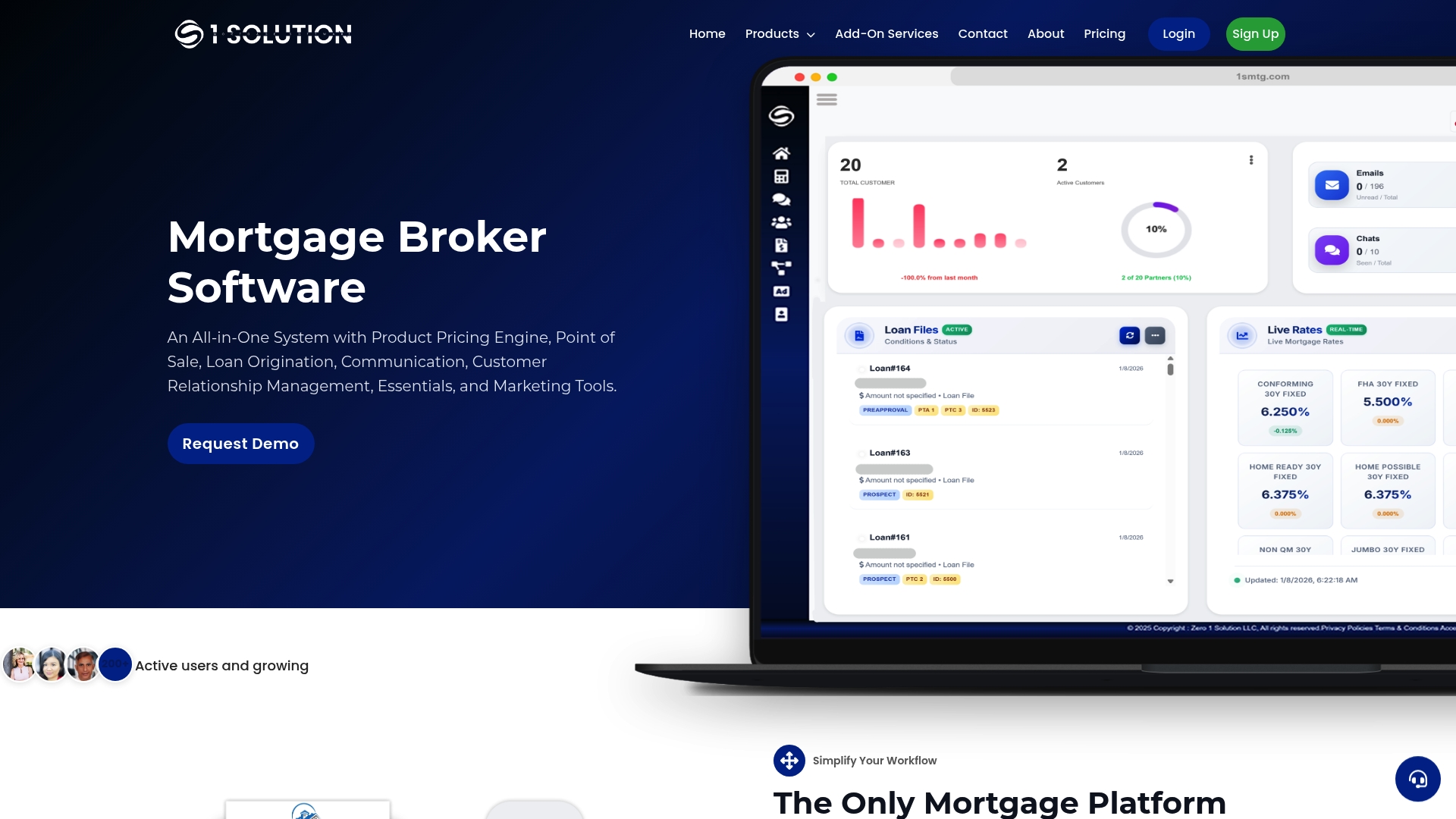
When loan officers and brokers have the right technology behind them, the entire approval process moves faster for everyone involved, including you as the borrower. 1smtg combines a Loan Origination System, a Product and Pricing Engine, and an integrated CRM into a single platform built specifically for mortgage professionals. That means less time chasing documents across disconnected systems and more time moving your file forward. Pre-approved borrowers with faster pre-approval letters close 50% more loans, and the technology your loan officer uses is a big part of what makes that possible. If you are working with a broker or officer who uses modern mortgage software, you benefit directly from their efficiency.
FAQ
How long does mortgage loan approval typically take?
The industry average for pre-approval is 4.2 business days, but top lenders using automated systems can deliver pre-approval in 4 to 8 hours. Full mortgage approval from application to closing typically takes 30 to 45 days.
What documents do I need to speed up my loan application?
You need two years of tax returns and W-2s, two to three months of pay stubs and bank statements, a government-issued ID, and documentation for any additional income sources. Having these ready before you apply prevents the back-and-forth that causes most delays.
Does my credit score affect how fast I get approved?
Yes, directly. Lenders with automated systems approve borrowers with scores above 750 within minutes. Scores below 700 to 725 typically require manual review, which adds several business days to the process.
What is the best day of the week to submit a loan application?
Tuesday or Wednesday during normal business hours gives you the best chance of same-day or next-day processing. Monday applications compete with weekend backlog, and Friday applications often sit until the following week.
Why do loan approvals get delayed after submission?
The most common causes are slow borrower responses to document requests, incomplete initial submissions, and applications flagged for exceptions that land in lower-priority review queues. Responding to every lender request within the same business day is the fastest way to keep your file moving.