
Finding a mortgage e-signature platform that unifies origination, compliance, and support without software sprawl is too hard for brokers and lenders. Many mortgage e-signature tools require juggling multiple vendor contracts, bolt-on modules, or custom integrations, which increases time and cost. This comparison highlights features and tradeoffs of three alternatives so brokers and lenders can choose a mortgage e-signature platform that better matches their process.
Table of Contents
1 Solution
At a Glance
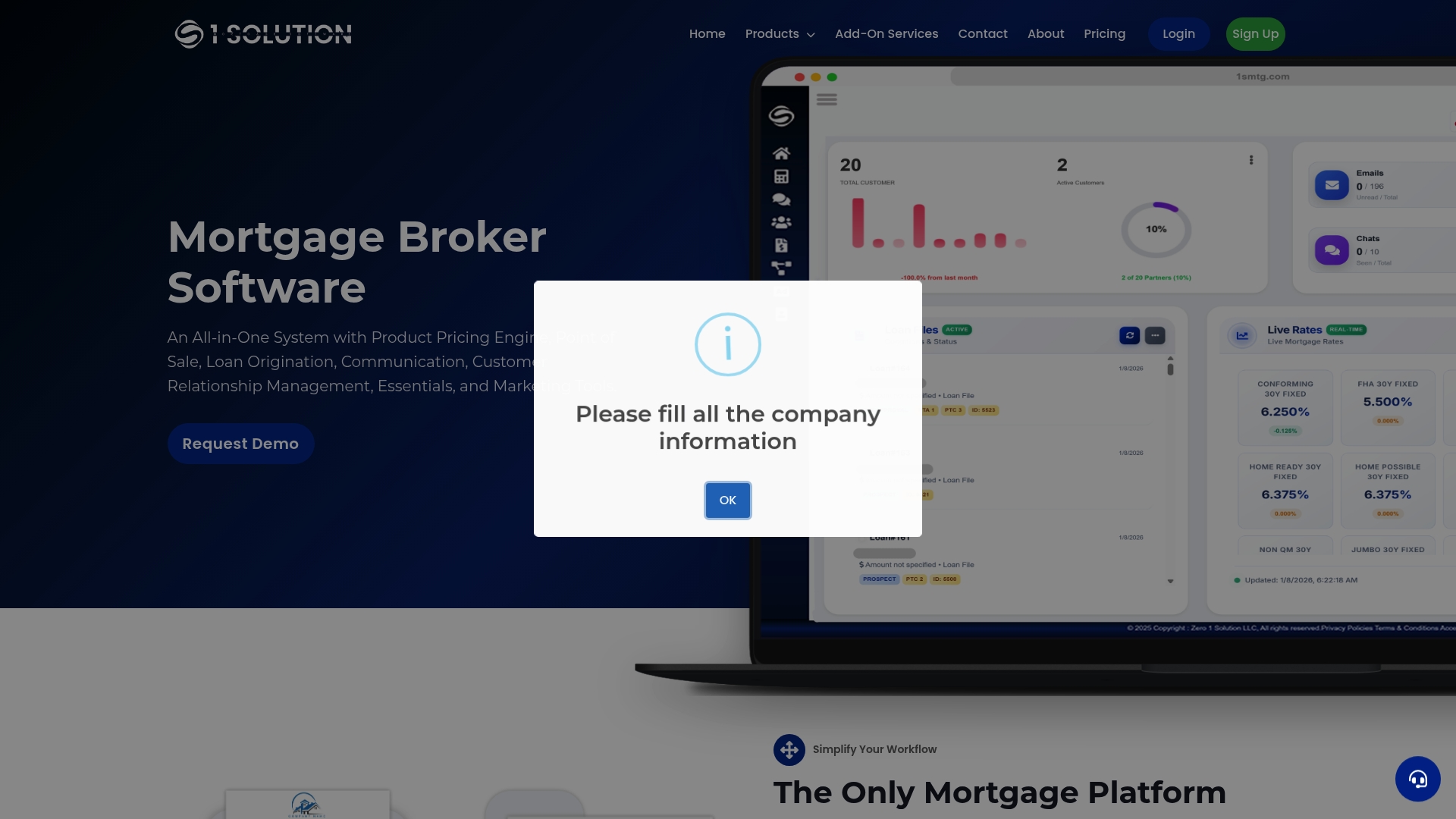
Onboarding includes personalized training sessions during the first two weeks of use. The platform has offered cloud access and real human support since 2018. It bundles origins, CRM, pricing, e-signature, and marketing tools in one dashboard.
Core Features
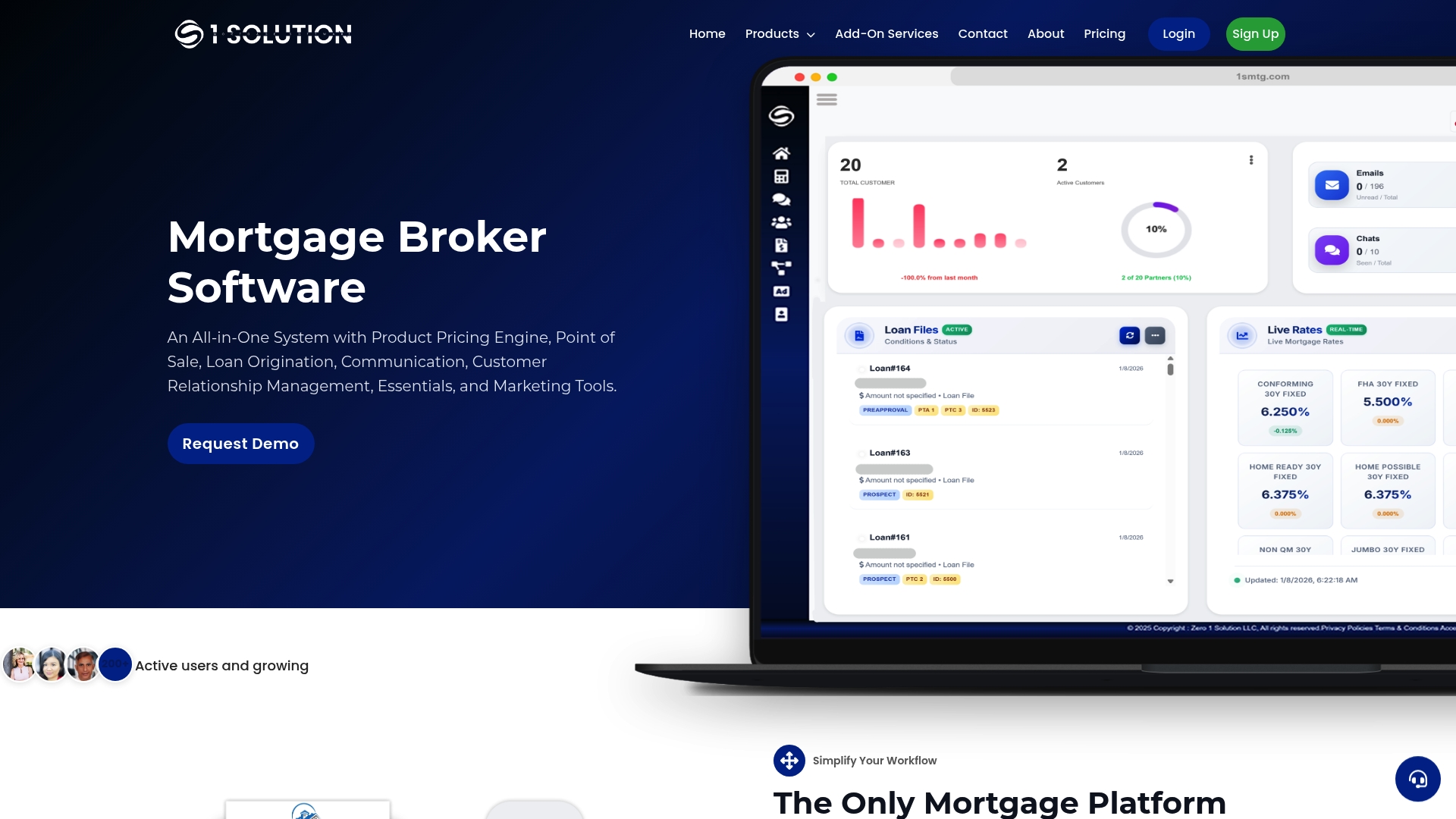
The platform unifies loan origination, CRM, pricing, and e-signature into a single cloud-based system and includes a Pricing & Proposal Engine. It provides device-agnostic access and secure document storage, with real people available for support during business hours. New accounts receive tutorials and tailored training sessions to shorten ramp time.
Key Differentiator
The defining feature is the combined stack that includes LOS, CRM, PPE, e-signature, communication, and marketing inside one cloud system. That single-dashboard approach reduces app switching and keeps pricing and proposal creation adjacent to loan files. Brokers who handle many small loans benefit from having proposals and pipeline actions in one place.
Pros
The all-in-one model reduces the need for multiple vendor contracts and separate data transfers. Built-in training and dedicated support help teams adopt the system faster than tools that rely only on written guides. The dashboard centralizes pipeline, client files, and marketing activity, and secure cloud storage keeps documents accessible on any device.
Cons
- Some users report the interface feels overwhelming at first, which can lengthen initial setup and training time.
Who It's For
This product fits mortgage brokers and loan officers who want a single platform covering lead capture, loan processing, and client communications. It suits small teams that prefer bundled tools and in-person onboarding help. Larger shops requiring deep custom integrations may need to confirm available connectors.
Unique Value Proposition
Founded by Omar Khamisa, who spent more than 20 years across underwriting, processing, and loan origination, 1 Solution Mortgage Software is 100% self-funded and independent. That origin explains its focus on broker workflows and control over feature priorities. The vendor frames the platform as built from operational experience rather than investor priorities.
Real World Use Case
A mortgage broker uses the system to create a mini website for lead capture, import leads directly into CRM, and produce proposals with the PPE inside the same account. The broker tracks every client touch in the dashboard and closes files without exporting between systems. Personalized onboarding reduces early mistakes and speeds first closings.
Pricing
Pricing is listed as not applicable and presented for informational purposes only. Prospects must contact the vendor for specific plans, seat counts, or custom quotes.
Website: https://1smtg.com
Snapdocs
At a Glance
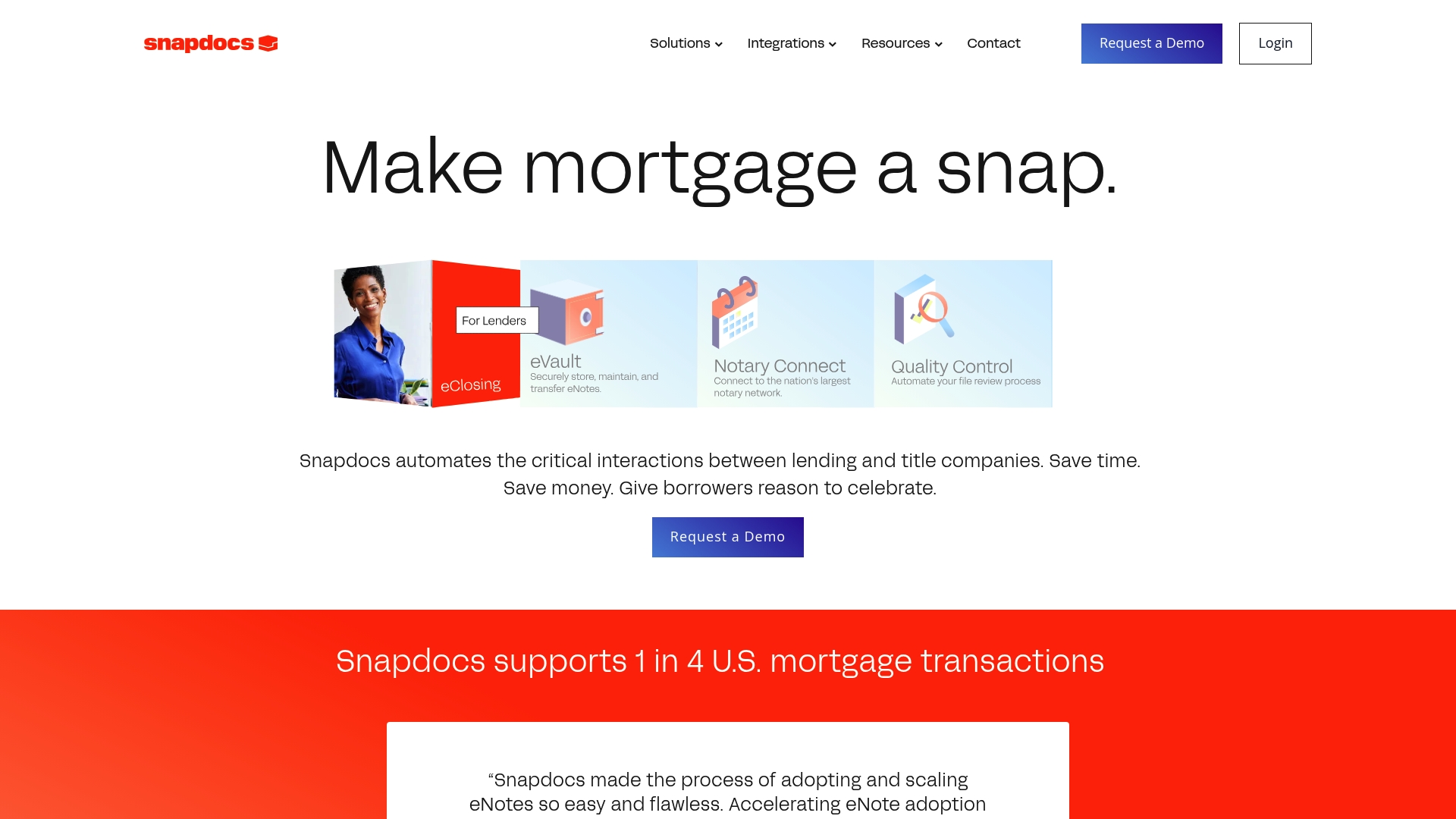
Snapdocs reports it supports 1 in 4 U.S. mortgage transactions. That scale shows up in wide adoption of eNotes and remote notarization across lenders and title firms. The platform packages closing coordination, secure eNote custody, and signing orchestration in one workflow.
Core Features
Snapdocs bundles an eClosing workspace with tools for signing appointment coordination and automated file checks. The platform includes Notary Connect for scheduling and management, an AI-driven quality control layer for document reviews, and an eVault for secure storage and transfer of electronic promissory notes. It also integrates with LOS, POS, remote notarization providers, and warehouse systems to connect closing steps to upstream processes.
Key Differentiator
Snapdocs focuses on accelerating eNote adoption and remote online notarization by pairing product integrations with operational support and onboarding. The vendor emphasizes tailored migration paths and lender specific configuration to move loan volumes to digital closings. That combined approach targets both technical and process barriers to broader eNote use.
Pros
The platform shows tangible industry reach and backers report broad participation from lenders, title companies, and signing services. It provides end to end closing management covering scheduling, quality control, secure eNote custody, and RON workflows. Security and compliance controls are highlighted across features, which appeals to institutions with audit demands. Extensive integration options reduce manual handoffs between LOS, POS, and warehouse platforms.
Cons
-
Vendor sourced claims dominate the available information. Independent third party reviews are limited.
-
Onboarding can require significant process change and stakeholder coordination for organizations used to paper closings.
-
Jurisdictional rules for notarization and eNote transfer may constrain full platform use in some states.
When It May Not Fit
Small shops with minimal loan volume may find enterprise setup and governance heavier than their needs. Organizations that lack internal change management bandwidth will face longer timelines. Firms operating in jurisdictions with restrictive RON or eNote rules may not realize the platform's full benefits.
Notable Integrations
-
LOS
-
POS
-
RON providers
-
TPS and title production systems
-
Warehouse lender platforms
-
Data and connectivity tools
Who It's For
Mortgage lenders, title companies, signing services, and notaries that plan to scale digital closings will get the most value from Snapdocs. Teams that need coordinated scheduling, eNote custody, and automated file review benefit from its end to end approach. Larger lenders or regional title operations with integration needs match the product profile.
Real World Use Case
A regional lender migrated closing operations to Snapdocs to process thousands of loans digitally. The lender cut signer scheduling friction, reduced document errors through automated checks, and moved eNotes into a secure vault for transfer to investors. Borrower satisfaction improved as the team handled more closings remotely.
Pricing
Pricing is not explicitly stated. The vendor appears to offer enterprise and custom pricing, with costs likely tied to loan volume and feature set.
Website: https://snapdocs.com
Docutech
At a Glance
ConformX powers dynamic, data driven document generation and feeds the Solex eClosing workflow. The platform pairs document generation with closing and fulfillment services for mortgage lending and servicing. First American ownership gives the product a deep regulatory focus and legacy integrations with loan systems.
Core Features
Docutech bundles dynamic document generation, digital closing, and document storage into a single offering. ConformX generates regulatory aware documents from loan data while the Solex platform manages eClosing and settlement steps. The system also supports ADA and LEP accessibility standards and links to loan origination and borrower portals for document delivery.
Key Differentiator
The product’s core edge lies with ConformX and its data driven document engine. That engine aims to reduce manual errors by producing documents that reflect the underlying loan data and current regulatory language. For lenders focused on document accuracy and compliance, that precision is the defining capability.
Pros
Docutech offers a mature document engine and a purpose built closing platform that work together to cut manual steps. Integrations with loan origination systems and borrower portals reduce duplicate data entry and lower rework. The vendor emphasizes regulatory review and accessibility standards, which helps compliance teams maintain consistent language across documents and updates.
Cons
-
Third party reviews are not included in the product data. That absence makes independent performance validation harder for buyers.
-
Pricing and specific licensing terms are not disclosed in the provided content. Procurement teams must request quotes to compare total cost.
-
The platform can require specialized onboarding and staff training. Teams without dedicated implementation resources may need external help to configure templates and workflows.
When It May Not Fit
Docutech may not fit small broker shops that need a light, all in one POS and CRM focused on retail brokers. Organizations that require quick out of the box workflows with minimal setup could find the implementation overhead heavy. Also, if your LOS requires a bespoke connector, plan to validate compatibility before committing. Teams that prefer single vendor sales models aimed at independent brokers should compare options carefully.
Notable Integrations
Docutech connects with core loan origination systems and external portals used in closing workflows. Integrations listed by the vendor include:
- Loan origination systems
- Borrower portals
- Lender portals
Who It's For
The product fits mortgage lenders and mortgage servicers that need accurate document generation tied to electronic closings. It suits organizations with compliance teams, template management needs, and in house integration capacity. Independent retail brokers that need CRM first solutions may find this offering narrower in scope.
Real World Use Case
A lender uses ConformX to generate closing packages populated from LOS data. The lender runs closings through Solex and sends documents to borrower and lender portals for signing and fulfillment. The combined flow reduces manual handoffs and keeps document language aligned with regulatory updates.
Pricing
Pricing is not published. The product data marks pricing as not applicable and informational only. Contact Docutech for licensing and deployment cost details.
Website: https://docutech.com
Comparison of alternatives
Selecting the mortgage e-signature platform entails assessing various facets, such as feature integration, workflow optimization, and scalability in compliance and document management.
Integration breadth and external extensions
Snapdocs provides extensive integrations across platforms such as POS, LOS, and title production systems, which brings significant flexibility and alignment with industry workflows. For organizations requiring adaptable technological incorporation into diverse existing environments, this extensibility ensures broader permissions and smoother interoperability. 1 Solution presents an integrated platform unifying essential tools in a central system but provides less extensive connections with other systems. Meanwhile, Docutech caters to compliance-oriented lenders, prioritizing detailed processes for legal document preparation.
Unified service and onboarding models
With its centralized design encompassing LOS, CRM, PPE, and marketing, 1 Solution enhances brokers' efficiency by interlinking essential functionality within a cohesive system. In contrast, Snapdocs leverages its proven eNote custody and remote notarization, offering industry-tailored setups at scale for organizations transitioning to electronic processes. Docutech addresses compliance with precise document modification protocols but may present challenges for smaller firms due to elevated onboarding requirements.
Best fit
- Companies aiming to enhance operational efficiency using a unified platform for originating, processing, and finalizing loans benefit greatly from 1 Solution.
- Firms embedding customized integrations into multi-vendor environments and emphasizing extended POS/LOS collaborations will find Snapdocs indispensable.
- Lenders prioritizing top-tier regulatory-caliber document generation processes should consider the compelling features offered by Docutech.
Our pick
1 Solution particularly stands out for brokers needing a complete, integrated platform consolidating key functionalities required for loan management under one umbrella. This system alleviates the need for separate technologies and associated training or data exchange challenges. However, lenders with specific priorities concerning eNotes or document legal precision might evaluate other specialized solutions thoroughly. For each broker seeking maximized efficiency within this specific design, 1 Solution provides alignment with their daily operational goals.
To make an informed choice among leading mortgage e-signature platforms, the following table summarizes key features and differentiators of the products evaluated in the article:
| Product Name | Key Features | Target Audience | Pricing | Notable Limitation |
|---|---|---|---|---|
| 1 Solution Mortgage Software | Unified loan origination, CRM, pricing & e-signature in one platform; Personalized onboarding. | Mortgage brokers and loan officers seeking combined tools and onboarding. | Price not published | Initial setup complexity due to comprehensive feature set reported by some users. |
| Snapdocs | E-closing tools with eNote management, RON integration, and scheduling coordination. | Lenders and title firms scaling digital closings. | Price not published | Requires significant process change and adaptation for traditional workflows. |
| Docutech | Data-driven document generation and e-closing workflows with compliance emphasis (ConformX & Solex). | Lenders prioritizing document accuracy and compliance. | Price not published | Implementation overhead may deter teams lacking dedicated resources for setup. |
Which Mortgage E-Signature Platform Aligns With Your Broker Workflow Challenges?
Mortgage brokers and loan officers often struggle with fragmented systems, lack of control, and expensive tools designed for banks. 1 Solution Mortgage Software directly addresses these issues by uniting pricing, CRM, communication, POS, LOS, compliance, marketing, and operational tools in one platform. This all-in-one approach cuts down app switching and reduces onboarding complexity.
If you want technology built by someone who knows the broker experience firsthand, 1 Solution Mortgage Software offers personalized training and ongoing support. See how real brokers use our platform to handle leads, proposals, and closings without juggling multiple tools. Visit 1 Solution Mortgage Software to compare options and start simplifying your workflow today.
FAQ
How does 1 Solution Mortgage Software support remote onboarding for new users?
1 Solution Mortgage Software offers personalized training sessions during the first two weeks of use. This tailored training helps ensure users can effectively utilize the platform's features right away. Expect a smoother transition and quicker proficiency with the software.
What is the difference between Snapdocs and 1 Solution Mortgage Software?
Snapdocs excels in coordinating eClosings and integrates various closing management tools seamlessly. In contrast, 1 Solution Mortgage Software focuses on providing an all-in-one platform encompassing loan origination, CRM, and e-signature functionalities. This makes 1 Solution Mortgage Software a better fit for brokers requiring comprehensive management of multiple loan stages within one dashboard.
Which platform offers better support for compliance and regulatory needs?
Docutech stands out by providing a strong regulatory focus through its ConformX document engine, ensuring compliance with current lending regulations. While 1 Solution Mortgage Software has solid features for loan processing, organizations with more stringent compliance requirements should consider Docutech to leverage its specialized capabilities.
Can I use 1 Solution Mortgage Software if I have a large volume of loans?
1 Solution Mortgage Software suits mortgage brokers and loan officers dealing with many small loans, thanks to its integrated dashboard and proposal management tools. This allows for efficient tracking and closing, making it an excellent choice for teams handling high volumes.
How do setup and onboarding compare for 1 Solution Mortgage Software and Docutech?
1 Solution Mortgage Software provides built-in training and dedicated support to help teams adopt the system quickly. In contrast, Docutech may require more specialized training and implementation resources, which could prolong setup for new users. Users should weigh their team's capacity for adaptation when choosing between the two.