

A disclosure tracking system must record every version, timestamp, delivery method, and recipient for each Loan Estimate and Closing Disclosure, and it must guarantee the timing protections that TRID requires. That means enforcing the 3-business-day waiting periods, capturing corrected-CD triggers, and keeping an immutable snapshot of what was actually sent. We recommend evented logging with retention of at least three years as the baseline architecture.
TL;DR:
- Disclosures must be stored with immutable snapshots, timestamps, delivery methods, and acknowledgment records to ensure full auditability and legal defensibility.
- Timings are strict: Loan Estimates and Closing Disclosures must be sent within three business days of application completion, with resets triggered by specific corrections like APR changes.
- The disclosure log should record detailed data including type, version, generator, scheduled date, delivery method, recipient, timestamps, acknowledgment, and correction reasons.
- Integration via event-driven architecture, webhook callbacks, and reconciliation jobs is essential for accurate, tamper-proof disclosure tracking across vendors.
- Manual and automatic fulfillments require distinct tracking, with manual actions needing explicit UI flags and audit notes to prevent compliance risks.
Table of Contents
- TRID timing and legal triggers developers must enforce
- Core disclosure tracking concepts and minimal data model for an LOS
- Integration and API patterns for disclosure tracking
- Fulfillment workflows: automatic vs manual fulfillment
- Audit readiness, retention timelines, and privacy controls
- Developer checklist and common pitfalls to avoid
- Author perspective: lessons from mortgage operations
- What the TRID compliance conversation gets wrong
- How our platform handles disclosure tracking for brokers
- FAQ
- Sources
TRID timing and legal triggers developers must enforce
TRID timing rules exist to give borrowers a real window to shop and review before money changes hands, and the logic behind them has to live in code, not just policy documents. An application under 12 CFR § 1026.2(a)(3)(ii) is defined by six data points: name, income, Social Security number, property address, estimated property value, and loan amount sought. Once all six arrive, the clock starts.
From that point, the system must:
- Deliver or place the Loan Estimate in the mail within 3 business days after the application is complete.
- Ensure the consumer receives the Closing Disclosure at least 3 business days before consummation.
- Restart the 3-business-day wait whenever a correction changes the APR beyond tolerance, swaps the loan product, or adds a prepayment penalty, per CFPB guidance on corrected Closing Disclosures.
Other corrections, like a minor fee adjustment, can be delivered at or before consummation without resetting the wait. Getting this branch logic wrong is one of the most common sources of compliance exposure we see in LOS implementations.
Core disclosure tracking concepts and minimal data model for an LOS
A disclosure log is only as useful as the fields it captures. At a minimum, every entry needs to answer what was sent, when, how, to whom, and whether it was acknowledged.
- Disclosure type: LE or CD, plus any addenda.
- Version ID: a monotonically increasing identifier tied to the generating data snapshot.
- Generator ID: which process or user created the disclosure.
- Scheduled date: the calculated due date based on business-day rules.
- Delivery method: mail, email, e-sign portal, or in person.
- Recipient ID: borrower or co-borrower reference, not a raw name string.
- Sent and received timestamps: both ends of the delivery event.
- Signer acknowledgment: e-sign confirmation or mailed-receipt date.
- Correction reason: required whenever a version supersedes a prior one.
Every log entry should point to an immutable snapshot, the exact PDF or HTML that was transmitted, along with the source data that populated it. Never regenerate a historical disclosure on demand; store it once and reference it forever.
PII handling deserves its own discipline. Avoid writing raw Social Security numbers or full loan identifiers into readable logs; use tokenized or hash-chained references instead and keep the sensitive values in a secure vault.
Pro Tip: Treat every disclosure snapshot as a legal exhibit, not a cache entry: it should never be rebuilt, only retrieved.
Integration and API patterns for disclosure tracking
Most LOS platforms and document vendors communicate through some combination of events, webhooks, and polling, and the right pattern depends on how much control you have over the vendor's side of the handshake. An event-driven core gives you the cleanest audit trail: application-created events, term-change events, and corrected-disclosure triggers each fire a discrete, loggable action rather than leaving state changes implicit.
- Fire a dedicated event when the six-item application threshold is met, since that single moment starts every downstream timing calculation.
- Accept webhook callbacks from e-sign and document-prep vendors, and make every handler idempotent so a retried callback never creates a duplicate fulfillment entry, a pattern common across document-prep and e-sign integrations.
- Run a scheduled reconciliation job that compares the vendor's reported document state against your own disclosure log, surfacing any fulfillment the vendor confirms but your system never recorded.
Polling still has a place as a fallback when a vendor's webhook infrastructure is unreliable, but it should never be the primary source of truth. Partner integrations focused on structured finance data management can help standardize how disclosure logs sync with outside systems, particularly where reconciliation needs to run across multiple vendors at once.
Fulfillment workflows: automatic vs manual fulfillment
Fulfillment logic splits into two paths, and the tracking log needs to distinguish between them clearly for both audit and operational reasons.
- Automatic fulfillment: the system schedules and sends the disclosure package without a human click; record
isManual=falseand attach the generator persona so the log shows the process, not a person, took the action. - Manual fulfillment: a user triggers the send; the UI must mark the action explicitly and capture an audit note explaining why manual intervention was needed.
- Single-fulfillment enforcement: when a disclosure type requires exactly one active fulfillment record, the system should block a second send rather than silently overwriting the first.
- Recipient constraints: borrower-only recipient lists need UX flags that prevent accidental delivery to a co-borrower who should not yet receive a corrected CD.
- Re-send decisions: a corrected disclosure triggered by an APR change should route through the same timing checks as the original, not a shortcut path.
Audit readiness, retention timelines, and privacy controls
Regulators and internal compliance teams need to reconstruct the full disclosure history for any loan file years after closing, which means retention and immutability have to be designed in from the start rather than bolted on later.
- Retain Closing Disclosures and related documents for the multi-year periods described in CFPB compliance materials, and keep the retention clock tied to the loan's closing date, not the system's deployment date.
- Store final disclosures and signed artifacts as write-once records, using WORM storage or an equivalent immutability guarantee so a later process can never alter a historical file.
- Apply role-based access so only authorized reviewers can view unredacted borrower data, and pseudonymize logs used for production debugging.
Pro Tip: If a developer can modify a historical disclosure record in production without leaving a trace, the audit trail has already failed.
Developer checklist and common pitfalls to avoid
Before any disclosure tracking feature ships, run it through a checklist that mirrors how an examiner would review the file, not just how a user would click through it.
- Simulate business-day calculations across weekends, federal holidays, and time zones, since a single miscalculated day can invalidate a waiting period.
- Test every corrected-CD scenario: APR drift past tolerance, a loan-product swap, and the addition of a prepayment penalty, each confirmed to restart the wait correctly.
- Verify webhook failure handling, including retried callbacks that must not create duplicate fulfillment entries.
- Run the nightly reconciliation job against a vendor sandbox to confirm drift gets flagged, not silently ignored.
Common pitfalls include timezone errors in business-day math, skipping document snapshots in favor of regenerating PDFs on demand, leaking raw PII into readable logs, and failing to enforce single-fulfillment rules. Track the late-disclosure rate, reconciliation drift, and fulfillment failure rate as ongoing monitoring metrics once the feature is live.
Author perspective: lessons from mortgage operations
Early in a build, teams tend to spend their energy on UI polish when the real risk sits in auditability. A reviewer six months from now does not care how the disclosure screen looks; they care whether the exact document sent to a borrower can be pulled up instantly alongside the data that generated it.
Keep the generation pipeline deterministic. The same inputs should always produce the same disclosure, every time, so a QA replay or an auditor's reconstruction never produces a different result than what actually happened. Reconcile nightly, not weekly, because drift compounds and gets harder to explain the longer it sits unresolved. Build for the compliance reviewer's workflow first; the loan officer's workflow is easier to fix later.

What the TRID compliance conversation gets wrong
Most guidance on disclosure tracking treats it as a timing problem: get the 3-business-day math right and you are done. That undersells the harder part, which is evidentiary integrity. A system that calculates deadlines perfectly but regenerates documents on the fly, or stores PII in plain log fields, is just as exposed in an audit as one with sloppy date math.

The conventional advice also tends to treat manual and automatic fulfillment as interchangeable, as long as both eventually send the disclosure. They are not. A manual override that lacks an audit note is a liability waiting to surface, regardless of whether the disclosure itself was timely.
If you are building or buying a disclosure tracking feature, prioritize the immutable snapshot and the reconciliation job before the dashboard. Everything else, including a clean UI, can be added once the evidentiary foundation holds up to scrutiny.
— Omar Khamisa
How our platform handles disclosure tracking for brokers
Disclosure tracking can be integrated inside the same system as LOS, compliance rules engine, and borrower portal rather than as a bolted-on module.
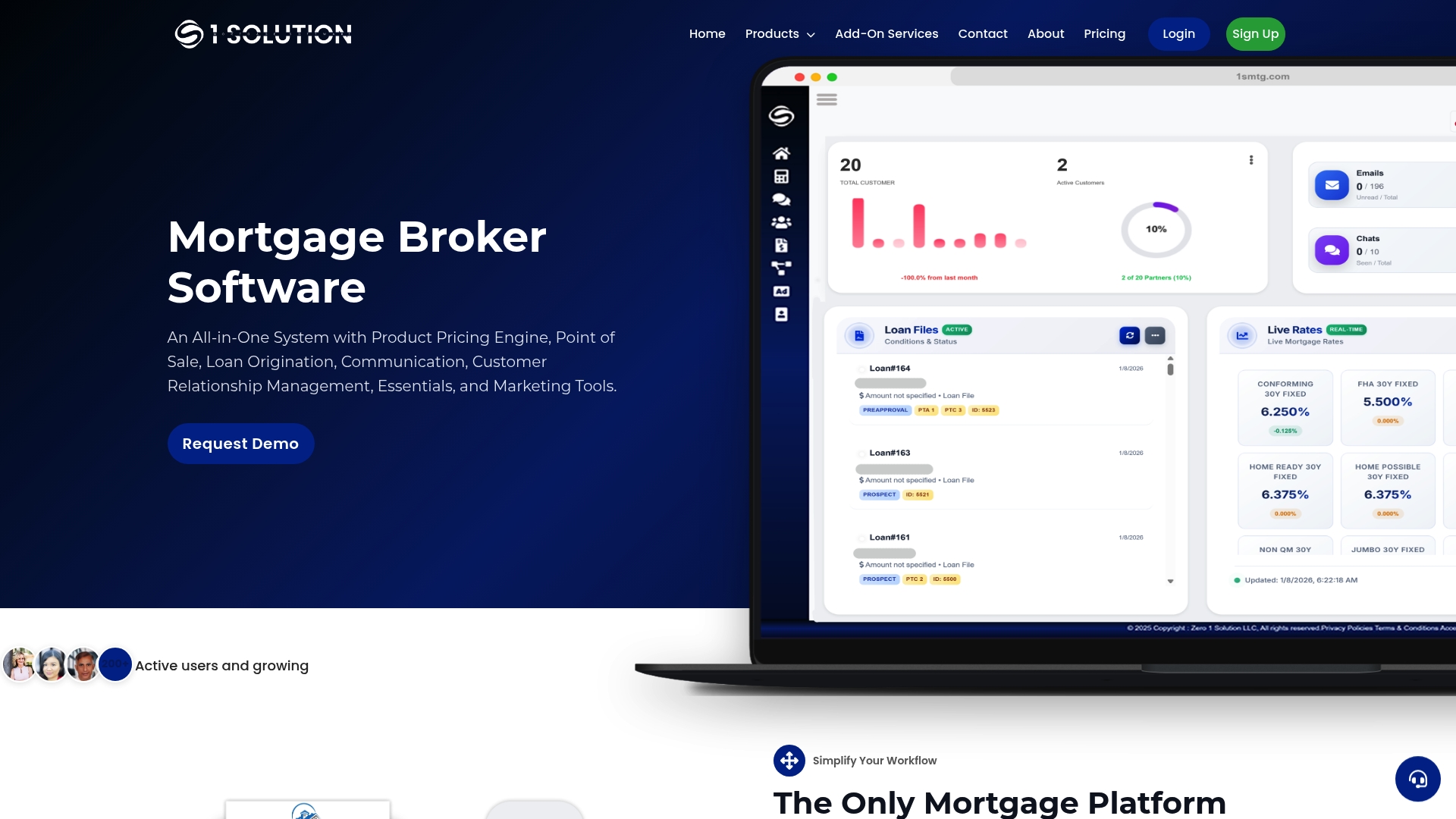
- An LOS can log every Loan Estimate and Closing Disclosure event, including delivery method, timestamps, and corrected-CD triggers, without a separate compliance tool.
- A rules engine can apply the business-day and corrected-CD logic automatically, so teams do not have to track deadlines in a spreadsheet.
- Some platforms are built as independent, self-funded mortgage technology rather than bank-first platforms retrofitted for brokers.
If you want to see how disclosure tracking fits into the rest of an origination stack, visit 1 Solution Mortgage Software to explore a subscription account and request a walkthrough.
FAQ
Does a closing disclosure mean your loan is approved?
Receiving a Closing Disclosure means your loan has cleared underwriting conditions and is moving toward consummation, but it is not a separate approval event on its own. It confirms the final terms and starts the mandatory 3-business-day waiting period before closing can occur.
How long before closing do you get closing disclosure?
You must receive the Closing Disclosure at least three business days before consummation. If a correction later changes the APR beyond tolerance, swaps the loan product, or adds a prepayment penalty, that three-business-day period restarts from the corrected version.
What does disclosure mean in a mortgage loan?
A mortgage disclosure is a standardized form, most commonly the Loan Estimate or Closing Disclosure, that states the loan's terms, projected payments, and closing costs so you can review and compare offers. The CFPB's Know Before You Owe materials explain how these forms are meant to function for borrowers.
What happens after signing disclosures?
After you sign the Closing Disclosure and the waiting period passes without a qualifying correction, the loan moves to consummation and funding. The signed document becomes part of the permanent loan file and is retained under the record-keeping periods described in CFPB compliance guidance.
Sources
- TILA-RESPA integrated disclosure (TRID) rule: Frequently asked questions
- TILA-RESPA integrated disclosure: Frequently asked questions (CFPB PDF)
- How is TRID defined for bankers? | Alogent