
Broker-lender relationships are defined as strategic capital partnerships where lenders supply funding, compliance infrastructure, and underwriting capacity, while brokers manage client acquisition, deal structuring, and borrower guidance. Understanding how broker-lender relationships work is not optional for mortgage professionals who want to close loans faster and serve clients better. The relationship between brokers, lenders, account executives, and underwriters determines whether a deal closes in 14 days or falls apart at the finish line. When the partnership is built on operational alignment and transparent communication, every party wins. When it is not, everyone pays the price.
What roles do brokers and lenders play in their relationship?
The broker-lender dynamic is built on complementary strengths, not interchangeable functions. Lenders provide the capital, underwriting teams, compliance frameworks, and technology infrastructure that make mortgage origination legally and financially possible. Brokers bring the client relationships, market knowledge, and deal-structuring expertise that fill a lender's pipeline. Neither side operates effectively without the other.
Here is how the responsibilities break down in practice:
- Lenders supply wholesale capital, set underwriting guidelines, manage regulatory compliance, and provide broker portals, pricing engines, and disclosure tools.
- Brokers originate leads, counsel borrowers, gather documentation, structure loan scenarios, and submit complete files to the lender for underwriting.
- Account executives (AEs) serve as the primary lender contact for brokers, answering product questions, escalating issues, and facilitating communication with underwriting teams.
- Underwriters review submitted files against lender guidelines, issue conditions, and ultimately approve or deny loan applications.
- Loan officers within broker shops manage individual borrower relationships and are responsible for accurate file preparation before lender submission.
Broker compensation typically runs 1% to 2% of the loan amount, paid either by the wholesale lender or the borrower depending on the compensation model. That structure creates a direct financial incentive for brokers to submit clean, complete files that move through underwriting without delays. Lenders, in turn, earn revenue through interest rate spreads and fees. Both sides profit most when the process is efficient.
Mutual understanding of these roles is what separates functional partnerships from frustrating ones. When brokers treat lenders as passive capital sources rather than operational partners, communication breaks down. When lenders treat brokers as mere lead generators rather than skilled deal structurers, they lose the transparency that makes underwriting predictable. The broker and lender roles are interdependent by design.

How do communication and access drive broker-lender partnership success?
Communication is the single most controllable variable in broker-lender collaboration. Direct access to underwriters and knowledgeable account executives significantly improves transaction speed and reduces errors. Multi-layer communication chains, where a broker contacts an AE who contacts a manager who contacts underwriting, multiply the risk of miscommunication and delay at every step.
The most effective brokers do not wait for problems to surface. They engage lenders proactively with scenario analysis before submission to mitigate underwriting risks and accelerate approvals. A five-minute call with an AE before submitting a complex self-employed borrower file can prevent a two-week underwriting condition cycle. That is not just good practice. It is the difference between a 14-day close and a 30-day scramble.
Pro Tip: Before submitting any file with non-standard income documentation, call your AE and walk through the scenario. Ask specifically whether the lender has issued recent guideline updates for that income type. This single habit eliminates the majority of avoidable underwriting surprises.
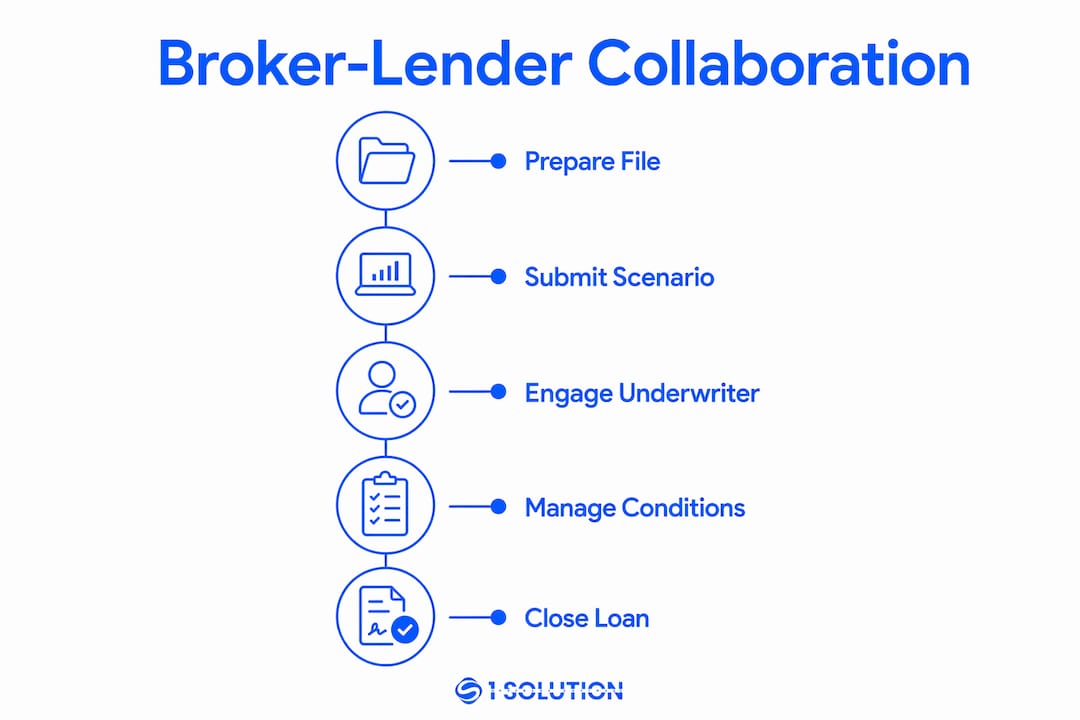
Transparent underwriting guidelines and real-time loan status updates are equally critical. Consistent underwriting and transparent communication empower brokers to structure loans confidently and avoid surprises that derail closings. When brokers know exactly where a file stands, they can manage borrower expectations accurately instead of making promises the lender cannot keep.
Practical communication strategies that protect broker-lender partnerships include:
- Establishing a weekly check-in cadence with your top AEs, even when no active files are in process.
- Requesting written confirmation of any verbal guideline clarification before relying on it for a submission.
- Flagging potential issues in the cover letter when submitting a file rather than hoping underwriting will overlook them.
- Using lender portals to monitor condition status in real time rather than waiting for AE updates.
What role does technology play in strengthening broker-lender relationships?
Technology is no longer a convenience in broker-lender operations. It is a competitive requirement. Integrating lender technology into broker operations reduces manual work and scales business faster. Brokers who treat lender systems as an extension of their own operations consistently outperform those who use them as a last-mile submission tool.
The technology stack that defines high-performing broker-lender partnerships in 2026 includes:
- Broker portals that provide real-time loan status, condition tracking, and document upload capabilities directly within the lender's system.
- Automated disclosure platforms that move a file from application to initial disclosure in minutes, satisfying regulatory timing requirements without manual intervention.
- Pricing engines integrated into broker point-of-sale systems, allowing real-time rate comparisons across multiple wholesale lenders before borrower commitment.
- Automated underwriting systems (AUS) like Fannie Mae's Desktop Underwriter (DU) and Freddie Mac's Loan Product Advisor (LPA), which provide preliminary eligibility findings that guide file structuring before submission.
- CRM and LOS platforms that track borrower milestones, lender deadlines, and condition management in one connected workflow.
| Technology tool | Primary benefit for brokers |
|---|---|
| Broker portal | Real-time condition tracking and document submission |
| Automated disclosures | Regulatory compliance without manual processing |
| Pricing engine | Multi-lender rate comparison at point of sale |
| AUS (DU/LPA) | Pre-submission eligibility screening |
| CRM/LOS integration | Unified pipeline and lender communication tracking |
Broker portal integrations and automation allow moving from application to disclosure in minutes. That speed matters enormously in a purchase-heavy market where a borrower's rate lock window is tight and competing offers are real. Brokers who cannot match that pace lose deals to direct lenders who can.
How should brokers handle conflicts and challenges with lenders?
Conflicts in broker-lender relationships are inevitable. Underwriting surprises, guideline discrepancies, and processing delays happen on nearly every complex file. The question is not whether conflict will arise but whether you handle it in a way that preserves the relationship and protects your client.
Managing conflicts professionally with evidence-based communication leads to better outcomes and preserves broker-lender trust. The most effective approach mirrors how a skilled attorney presents a case: lead with facts, reference lender documentation, and focus on the solution rather than the grievance.
Common conflict sources and how to address them:
- Underwriting surprises: When a condition appears that contradicts what your AE communicated, pull the written guideline and request a formal clarification in writing before escalating.
- Processing delays: Document the timeline, identify the specific bottleneck, and ask your AE for a concrete resolution date rather than a vague update.
- Guideline discrepancies: Conflicting information from lenders affects 70% of brokers and causes significant effort duplication. Build an internal checklist or reference document for each lender's current guidelines to reduce your exposure.
- Appraisal or valuation disputes: Present comparable sales data and request a formal reconsideration of value through the lender's established process rather than pressuring the AE directly.
Pro Tip: When a lender decision feels wrong, ask "why" before asking "how do we fix it." Understanding the underlying concern, whether it is regulatory, risk-based, or operational, gives you the information you need to present a credible counter-argument.
Sustained communication is what keeps a relationship intact after a difficult file. Brokers who disappear after a conflict lose the relationship. Those who follow up, acknowledge what went wrong, and commit to a cleaner process next time build the kind of trust that earns preferential treatment on future submissions.
What practical steps can brokers take to build stronger lender partnerships?
Building strong lender partnerships requires deliberate strategy, not just good intentions. The brokers who consistently close faster and at better terms treat their lender relationships as a managed portfolio, not a reactive support line.
The table below compares a reactive approach to lender relationships with a proactive, partnership-focused model:
| Approach | Reactive broker | Partnership-focused broker |
|---|---|---|
| Lender selection | Based on rate alone | Based on speed, product fit, and technology |
| Communication | Only when a problem arises | Regular cadence with AEs, even between files |
| File preparation | Submit and hope | Pre-qualify internally before submission |
| Education | Ad hoc, when required | Joint training sessions with lender teams |
| Conflict resolution | Emotional, escalation-first | Evidence-based, solution-focused |
Ongoing education and joint marketing initiatives between lenders and brokers strengthen partnerships and improve deal structuring. Bringing a lender's AE or product specialist in for a team training session does two things at once: it keeps your loan officers current on product guidelines, and it signals to the lender that you are invested in the relationship beyond the next transaction.
Additional steps that produce measurable results:
- Select lenders whose technology, turn times, and product mix match your primary borrower profile. A lender with a 10-day turn time is worth more than a lender with a marginally better rate and a 25-day underwriting queue.
- Use your loan approval process to pre-qualify files internally before submission, reducing conditions and improving your approval-to-submission ratio.
- Build internal checklists that interpret each lender's current guidelines, so your team is not spending 20-plus minutes per file researching criteria that should already be documented.
- Treat your top two or three lenders as extended team members in client communication. When a borrower asks why a specific lender is being used, you should have a confident, specific answer.
- Review your compliance management practices regularly to make sure your submissions align with lender expectations and regulatory requirements, which reduces friction at the underwriting stage.
Key takeaways
Strong broker-lender relationships are built on operational alignment, transparent communication, and technology integration, not pricing alone.
| Point | Details |
|---|---|
| Roles are interdependent | Lenders supply capital and compliance; brokers supply clients and deal structure. Neither succeeds without the other. |
| Communication drives speed | Direct access to underwriters and proactive AE engagement reduces delays and prevents avoidable conditions. |
| Technology is non-negotiable | Broker portals, AUS tools, and integrated LOS platforms are the infrastructure of a competitive operation in 2026. |
| Conflict requires evidence | Address underwriting disputes with documented facts and lender guidelines, not emotional escalation. |
| Proactive beats reactive | Brokers who pre-qualify files, hold joint training sessions, and engage lenders between transactions close faster and build lasting partnerships. |
What I've learned about broker-lender relationships after 20 years in this industry
Most brokers think about lender relationships the wrong way. They evaluate lenders almost entirely on rate sheets and treat the relationship as a vendor arrangement. That mindset is exactly why so many brokers struggle with slow turn times, repeated conditions, and unpredictable underwriting outcomes.
The shift I have seen in high-performing brokers is a move from transactional to strategic partnership, where speed and execution define the relationship more than price. When I was working as an underwriter and later as a loan originator, the brokers who got the fastest turns and the most flexible underwriting decisions were not the ones submitting the most volume. They were the ones who submitted clean files, communicated proactively, and treated the underwriting team with professional respect.
Technology has changed the mechanics of this relationship, but not the underlying principle. The brokers winning in 2026 are those who have integrated lender systems into their own operations so completely that the handoff from broker to lender is nearly invisible. They are not re-entering data or chasing status updates. They are managing relationships and closing loans.
The uncomfortable truth is that most friction in broker-lender partnerships is self-inflicted. Incomplete files, last-minute submissions, and reactive communication create the delays that brokers then blame on lenders. Fix your internal process first. Then hold your lenders accountable to the same standard.
— Omar Khamisa
How 1 Solution Mortgage Software strengthens your lender partnerships
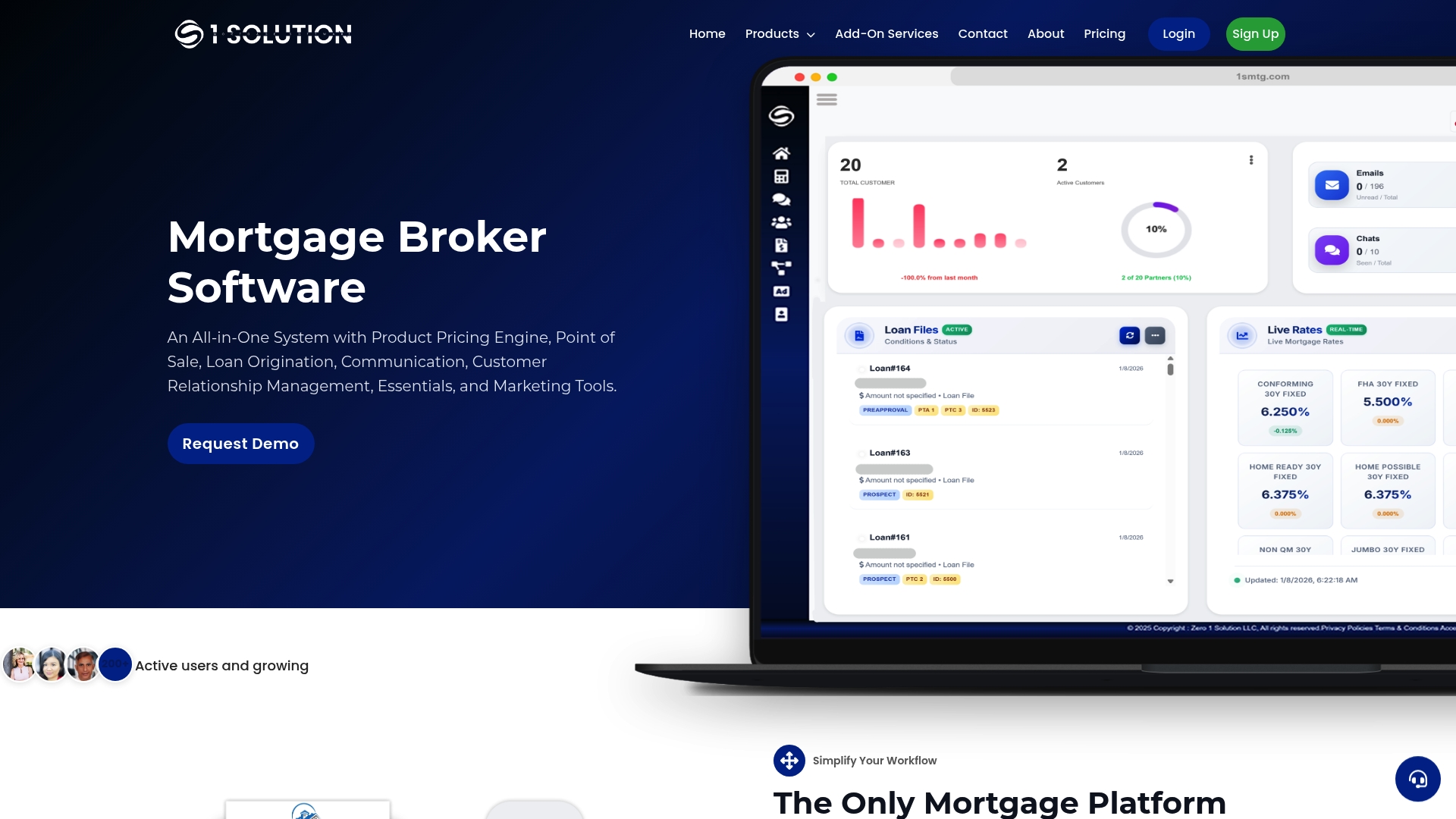
1 Solution Mortgage Software was built from direct broker experience to solve exactly the operational gaps that weaken lender relationships. The platform connects your CRM, LOS, POS, pricing engine, and compliance tools into one ecosystem, so your team submits cleaner files, tracks conditions in real time, and communicates with lenders from a single interface. Brokers using 1 Solution reduce manual overhead, eliminate duplicated data entry, and gain the operational visibility that makes proactive lender communication possible. If you are serious about building partnerships that close loans faster and serve clients better, the right technology foundation is not optional. It is where the work starts.
FAQ
How do broker-lender relationships work at a basic level?
A broker sources borrowers and structures loan scenarios, then submits complete files to a wholesale lender who provides the capital, underwrites the loan, and funds the transaction. The broker earns a fee of 1% to 2% of the loan amount, while the lender earns revenue through the rate spread and fees.
What is the biggest challenge in broker-lender collaboration?
Conflicting guideline information is the most common friction point, with 70% of brokers reporting it causes duplicated effort and submission delays. Building internal guideline documentation for each lender is the most direct fix.
How long does a broker-managed mortgage typically take to close?
The typical broker-managed mortgage lifecycle runs 14 to 21 days, with lender underwriting and condition management consuming 7 to 14 of those days. Strong broker-lender communication and clean file submissions are the primary levers for compressing that timeline.
Why does technology matter in broker-lender dynamics?
Lender portals, automated disclosures, and integrated pricing engines reduce manual errors and accelerate processing. Brokers who treat lender technology as an extension of their own operations scale faster and close more consistently than those who use it only for final submission.
How should a broker handle an underwriting dispute professionally?
Present your case with documented facts and references to the lender's own guidelines, and focus on the resolution rather than the complaint. Evidence-based conflict management preserves the relationship and produces better outcomes than emotional escalation.