
A mortgage communication audit process is a structured evaluation of how information flows across departments, between stakeholders, and with borrowers throughout the loan lifecycle. Most brokers focus their compliance reviews on disclosures and fee accuracy, but the communication layer underneath those documents carries equal regulatory weight. TRID requires immutable, timestamped records of every disclosure-related action from application through closing. Industry standards call for auditing a minimum of 10% of loan files pre-fund, closed, and canceled or denied, with 100% of early payment default files reviewed and completion within 90 days of closing. Done right, a communication audit does more than satisfy regulators. It reveals where borrower relationships break down and where your team loses time to miscommunication.
What does a mortgage communication audit process require?
Every effective audit starts with the right materials and the right mindset. You need loan files, communication logs, disclosure records, policy documents, and training records gathered before you open a single file. Leadership buy-in is not optional. Without it, audit findings sit in a report and nothing changes.
The technology side matters just as much as the paperwork. CFPB examiners expect complete, immutable, and easily searchable audit trails for every TRID-related event, including delivery confirmation and fee change history. That means your systems must produce timestamped records that cannot be altered after the fact.

A practical way to assess your current setup is to evaluate your tools against four core capabilities:
| Capability | What to look for | Why it matters |
|---|---|---|
| Immutable audit trail | Records locked after creation | Prevents post-hoc edits that trigger regulatory findings |
| Timestamp accuracy | Server-synced clock, not local device | Ensures disclosure timing holds up under examination |
| LOS integration | Communication logs tied to loan file | Eliminates manual re-entry and data gaps |
| Email and message archiving | Searchable, permanent storage | Auto-deleting email systems cause compliance failures |
One detail brokers frequently overlook: email systems that auto-delete messages within 90 days create major audit findings. That 90-day window aligns exactly with the standard audit completion timeline, meaning deleted records can disappear right when examiners need them most.
Pro Tip: Before scheduling your audit, run a test search in your email and LOS for a loan closed 12 months ago. If you cannot reconstruct the full communication timeline in under 10 minutes, your archiving setup needs attention before the audit begins.
For a broader view of how technology supports this kind of compliance audit preparation, reviewing your current tool stack against a structured checklist is a practical first step.
How do you execute a mortgage communication audit step by step?
The audit itself follows a repeatable sequence. Skipping steps or reordering them produces incomplete findings that miss the root causes regulators and borrowers actually care about.
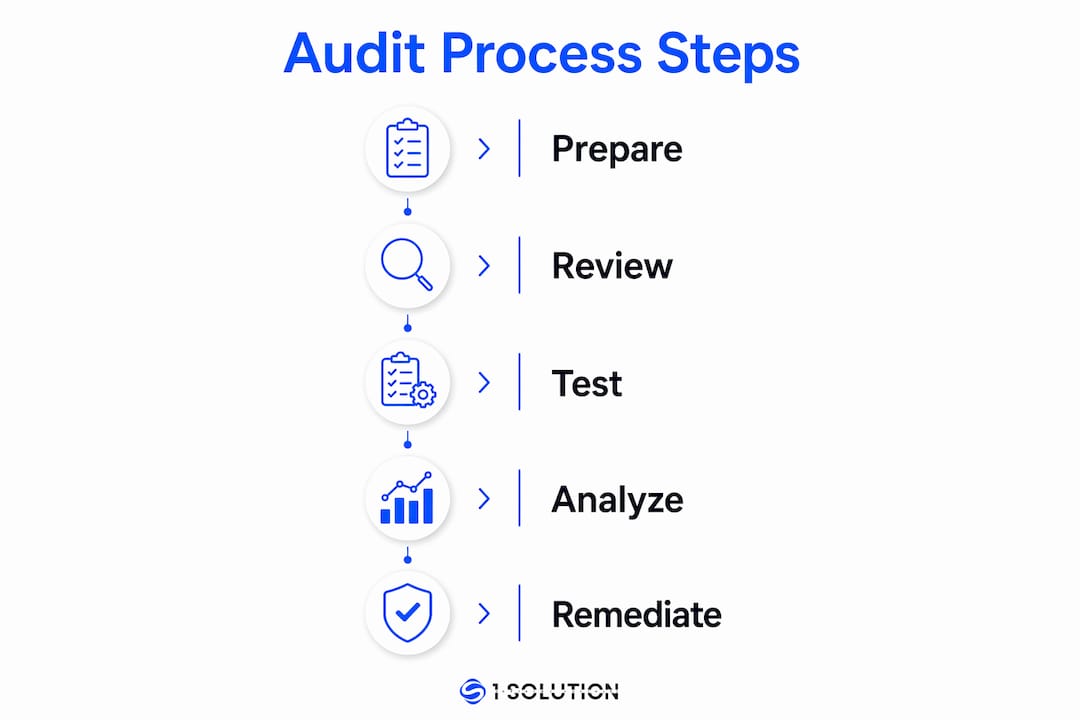
- Define objectives and scope. Decide which time period you are covering, which loan types are included, and which regulations are in focus. TRID, RESPA, and state-level disclosure rules each create different audit criteria.
- Gather and organize communication artifacts. Pull loan files, email threads, LOS notes, disclosure logs, and any recorded calls. Organize them by loan number before you start reviewing.
- Test actual communication flows against policy. Use a sampling method that meets the 10% minimum standard for pre-fund and closed files. Compare what your policy says should happen with what the records show actually happened.
- Identify communication gaps. Look for inconsistent messages between departments, missing disclosure trails, and borrower touchpoints that appear only at application and closing with nothing in between.
- Evaluate risk and rank findings. Not every gap carries the same weight. Rank findings by regulatory impact first, then by operational consequence. A missing fee change disclosure outranks a delayed status update email.
- Document findings with remediation recommendations. Each finding needs a clear description, the root cause, and a specific corrective action. Vague findings produce vague fixes.
Mortgage compliance audits often reveal that written policies are out of sync with actual practices because of fragmented workflows across departments. That gap between policy and practice is the most common finding, and it requires cross-functional collaboration to fix, not just a policy update.
Pro Tip: Never rely solely on automated logging systems to confirm your audit trail is complete. Pull three random loan files and manually verify that every communication event in the LOS matches the corresponding email or document record. Automation misses edge cases that examiners will not.
What communication gaps do audits most commonly uncover?
Audits consistently surface the same categories of problems. Knowing them in advance helps you look in the right places and interpret what you find.
Fragmented communication between lenders, warehouse partners, and investors erodes credibility and increases risk. When marketing sends one message, operations sends another, and compliance sends a third, borrowers and partners lose confidence fast. The audit's job is to make that fragmentation visible.
The most common gaps brokers find include:
- Missing TRID disclosure trails. No delivery confirmation, no timestamp, no record of the borrower receiving the Loan Estimate or Closing Disclosure on time.
- Inconsistent fee change documentation. Rate lock extensions, appraisal fee changes, and tolerance resets are recorded in one system but not reflected in the communication log.
- Transactional-only borrower contact. Borrowers hear from the team at application, at appraisal, and at closing. Nothing in between. Shifting from transactional notices to supportive guidance reduces borrower anxiety and cuts inbound support calls.
- No internal response time standards. High-performing teams use explicit micro-SLAs to confirm document receipt the same day and communicate next steps clearly. Teams without these standards leave borrowers waiting and guessing.
- Realtor and partner communication gaps. Scheduled updates build trust and speed up problem-solving. Proactive lender-realtor communication is a measurable audit criterion, not just a best practice.
Pro Tip: Map your borrower touchpoints on a timeline before the audit. If you see gaps longer than five business days with no outbound contact, that is a finding worth flagging even before you open a single loan file.
Understanding mortgage communication gaps at the operational level helps brokers see these issues not as isolated mistakes but as symptoms of structural workflow problems.
How do you turn audit findings into lasting improvements?
Reading an audit report as a list of problems misses the point. The real value is in understanding why each gap exists and what structural change will prevent it from recurring.
Root cause analysis is the first step. A missing disclosure timestamp is not just a technology failure. It usually points to a process where the loan officer sends the disclosure but does not confirm delivery, and the LOS does not require confirmation before the file moves forward. Fix the process, not just the symptom.
Remediation plans work best when they include clear ownership, a specific deadline, and a measurable outcome. The table below outlines common findings and the remediation approaches that produce results:
| Finding | Remediation approach | Expected outcome |
|---|---|---|
| Missing disclosure timestamps | Require LOS delivery confirmation before status advance | Zero unconfirmed disclosures in next audit cycle |
| Inconsistent borrower updates | Implement micro-SLAs with automated reminders | Borrower satisfaction scores improve within 60 days |
| Policy and practice misalignment | Cross-functional policy review with operations and compliance | Policies reflect actual workflows within 30 days |
| Fragmented partner communication | Scheduled weekly update cadence with realtors | Fewer escalations and faster problem resolution |
| Auto-deleting email records | Switch to permanent archiving with LOS integration | Full communication history available for all files |
Training updates should follow technology changes. A new archiving system only works if every team member knows how to use it and why it matters. Policy updates without training produce the same gaps in the next audit cycle.
Scheduling regular audit cycles, rather than treating audits as one-time events, is the most reliable way to sustain improvement. Mortgage compliance management works best as a continuous practice, not a reaction to regulatory pressure.
AI communication tools can help organize context and draft messages, but licensed professionals must maintain final review for accuracy and compliance. Automation supports the process. It does not replace the judgment that audits require.
Key Takeaways
A mortgage communication audit process delivers lasting value only when findings drive structural changes to workflows, technology, and team training, not just policy rewrites.
| Point | Details |
|---|---|
| Audit scope and timing | Review at least 10% of loan files with 100% of early payment defaults, completed within 90 days. |
| Immutable records are non-negotiable | TRID compliance requires timestamped, searchable, and unalterable communication histories. |
| Transactional contact is not enough | Proactive borrower communication between milestones reduces anxiety and support calls. |
| Root cause over symptom | Effective remediation targets the process failure behind each finding, not just the missing record. |
| Audit cycles sustain improvement | Scheduling regular audits prevents policy drift and keeps practices aligned with written standards. |
What I've learned from auditing mortgage communication from the inside
Most brokers treat a communication audit as a compliance checkbox. I understand why. The regulatory language around TRID and RESPA makes it feel like a documentation exercise. But after two decades working across processing, underwriting, origination, and systems consulting, I can tell you the audits that actually change a business are the ones that look at communication as a relationship tool, not just a paper trail.
The finding that surprises brokers most is not the missing disclosure timestamp. It is the gap between application and closing where borrowers hear nothing for two or three weeks. That silence is where trust erodes. Borrowers do not call their realtor to say the lender kept them informed. They call to say they have no idea what is happening.
Cross-department collaboration is where most remediation plans fail. Operations fixes the LOS workflow. Compliance updates the policy. Marketing keeps sending its own messages. Nobody coordinates. The audit reveals the gap, but only a cross-functional team with shared accountability closes it.
Automated systems help, but they create a false sense of security. I have seen teams assume their LOS was capturing everything, only to find entire email threads missing from the audit trail because one processor used a personal email account for a single exchange. Human oversight catches what automation misses.
The brokers who get the most from their audits schedule them before they feel necessary. Waiting for a regulatory examination or a borrower complaint to trigger a review means you are already behind. Build the audit into your annual calendar, treat it as a business improvement tool, and the compliance benefits follow naturally.
— Omar Khamisa
How 1 Solution Mortgage Software supports your communication audit
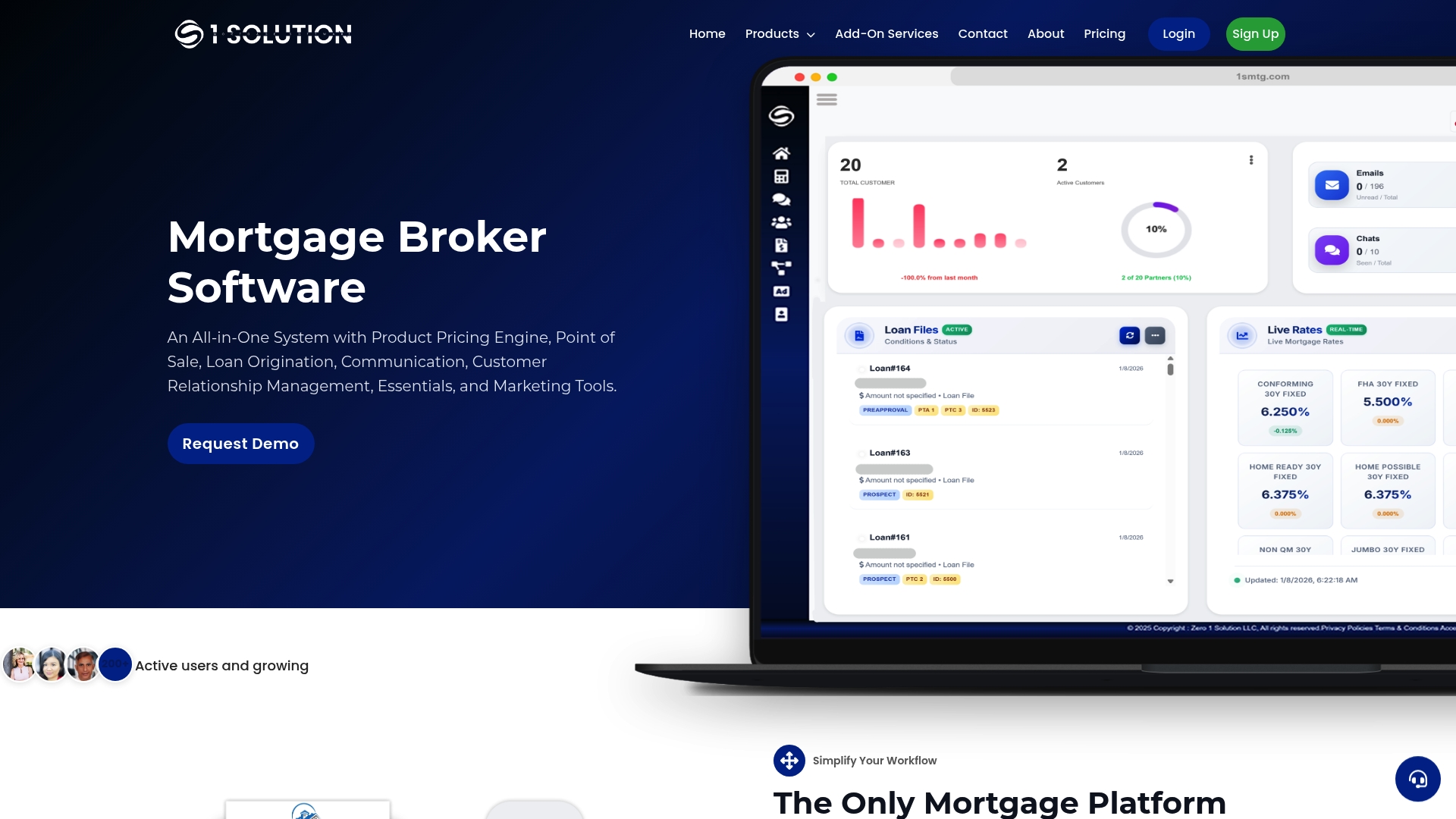
1 Solution Mortgage Software was built by mortgage professionals who have run audits from the inside, so the platform reflects what brokers actually need when it comes to communication tracking and compliance. The platform logs every borrower and partner interaction with immutable timestamps, integrates directly with your loan origination workflow, and maintains permanent, searchable records that satisfy TRID examination standards. You get a complete mortgage audit checklist built into your daily operations, not a separate tool you have to remember to use. Whether you are preparing for your next audit cycle or closing communication gaps identified in your last one, 1 Solution Mortgage Software gives you the control and visibility to do it right.
FAQ
What is a mortgage communication audit process?
A mortgage communication audit process is a structured review of how information flows between your team, borrowers, and partners throughout the loan lifecycle. It identifies compliance gaps, missing disclosure records, and communication breakdowns that affect both regulatory standing and borrower experience.
How many loan files does a communication audit need to cover?
Industry standards require auditing a minimum of 10% of pre-fund, closed, and canceled or denied loan files, with 100% of early payment default files reviewed and the audit completed within 90 days of closing.
What are the most common findings in a mortgage communication audit?
The most frequent findings include missing TRID disclosure timestamps, inconsistent fee change documentation, gaps in borrower contact between milestones, and email records deleted before the audit window closes.
Why do email systems cause audit failures?
Email systems that auto-delete messages within 90 days eliminate records that CFPB examiners need to verify disclosure timing and delivery. Switching to permanent, searchable archiving integrated with your LOS prevents this finding.
How often should brokers run a communication audit?
Brokers should schedule communication audits at least annually, with additional reviews after significant workflow changes or regulatory updates. Regular cycles prevent policy drift and keep actual practices aligned with written standards.