
A mortgage company compliance audit is a structured, evidence-based review of a lender's or broker's lending activities, policies, and file execution to confirm alignment with federal and state regulations. The audit examines whether your documented procedures actually operate in daily practice, not just on paper. Key regulatory frameworks covered include TILA-RESPA, the Bank Secrecy Act (BSA), Anti-Money Laundering (AML) requirements, and fair lending laws. Understanding this process gives compliance officers and mortgage professionals the foundation to prepare effectively, reduce regulatory exposure, and treat audits as a management tool rather than a threat.

What is a mortgage company compliance audit examining?
A compliance audit for lenders covers six core areas that regulators and independent auditors consistently prioritize. Each area reflects a distinct regulatory obligation, and gaps in any one of them can generate findings.
- Loan file documentation accuracy and completeness. Auditors pull a sample of closed loan files and verify that every required document is present, signed, and dated correctly. Missing or misdated items are among the most common findings.
- Disclosure timing under TILA-RESPA. The Loan Estimate and Closing Disclosure must be delivered within specific windows. Auditors confirm delivery dates against application and closing dates to identify any timing violations.
- AML and BSA procedures. Auditors review your Customer Identification Program (CIP), Suspicious Activity Report (SAR) filing history, and staff training records for AML compliance. Gaps here carry serious federal consequences.
- Fair lending controls. This includes a review of pricing data, denial rates, and underwriting decisions across demographic groups to identify potential disparate impact or disparate treatment under the Equal Credit Opportunity Act (ECOA) and the Fair Housing Act.
- Loan originator compensation plans. Auditors verify that compensation structures comply with Regulation Z and that no prohibited triggers, such as loan terms or conditions, influence pay.
- Policy and procedure documentation. Written policies must be current, approved, and distributed. Outdated procedures, even if operations have improved, create audit exposure.
Understanding which areas auditors focus on lets you build a preparation checklist before the review begins. A solid mortgage compliance setup checklist covers each of these categories systematically.
How does the mortgage company audit process unfold?
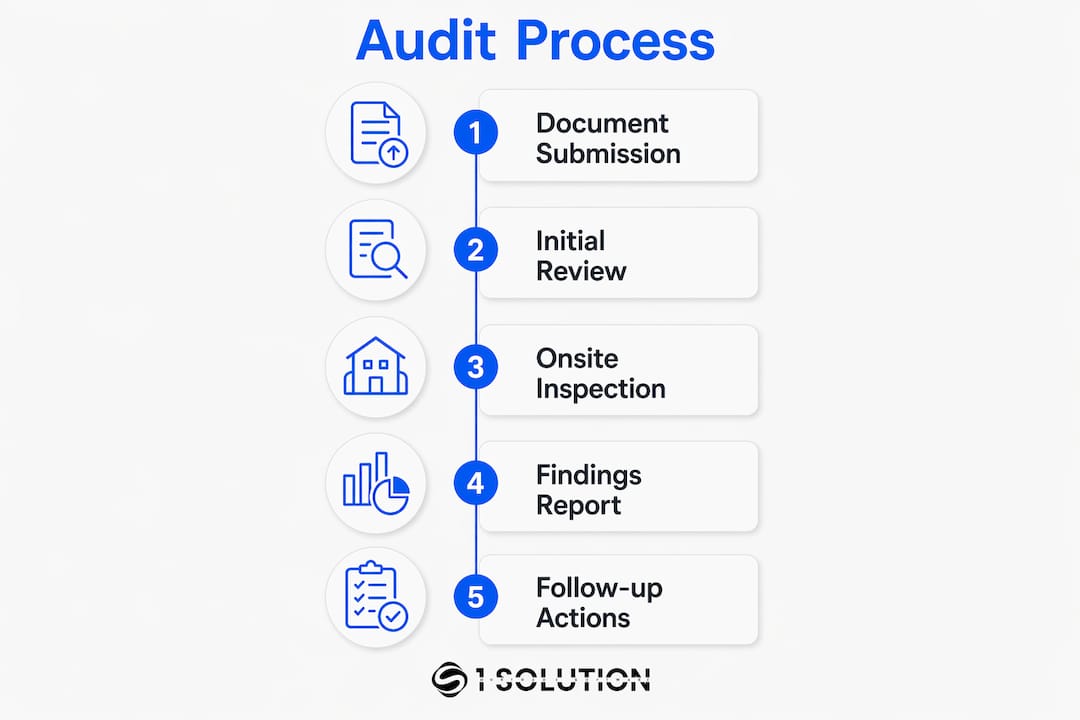
The mortgage company audit process follows a defined sequence. Knowing each phase helps you allocate staff time and avoid delays that extend the review.
- Scope definition and document request. The auditor issues a document request list covering policies, procedures, training records, and a loan sample population. Your response time sets the tone for the entire engagement.
- Document submission and initial review. Your team uploads or delivers the requested materials. Auditors conduct a desk review to identify obvious gaps before moving to deeper testing.
- Loan-level sample testing. Auditors select a statistically representative loan sample and test each file against regulatory requirements. They check disclosure dates, fee accuracy, and file completeness.
- Personnel interviews. Key staff, including your compliance officer, processors, and loan originators, may be interviewed to confirm that written procedures match actual practice.
- Preliminary findings and management response. Auditors share draft findings. Your team has the opportunity to provide clarifying documentation or context before the final report is issued.
- Final report and remediation plan. The completed report details findings by severity. Your management response and corrective action plan become part of the audit record.
Typical compliance audits take 4–6 weeks from document submission to final report. Incomplete records or slow responses extend that timeline and increase the risk of additional scrutiny.
Pro Tip: Assign a single internal point of contact to manage all auditor communications. Fragmented responses from multiple staff members create inconsistencies that auditors flag as control weaknesses.
What are best practices for preparing for a compliance audit?
Preparation is not a one-time event before an audit begins. The strongest compliance programs build audit readiness into daily operations.
The foundation rests on what regulators call the four pillars of compliance: documented policies, a designated compliance officer, staff training, and independent auditing. Each pillar must produce evidence that it operates in real time, not just in theory.
Most mortgage companies underprepare by focusing solely on file documentation. Operational governance evidence, such as training logs, policy update histories, and vendor management records, is equally critical. Lacking proof of training or policy updates often generates findings even when loan files are clean.
- Maintain a live regulatory calendar. Regulatory deadlines change. A calendar integrated into your Loan Origination System (LOS) reduces the risk of missed disclosure windows or expired policy reviews.
- Document every training session. Attendance logs, training materials, and assessment scores serve as direct evidence that your staff understands current requirements.
- Conduct internal pre-audits quarterly. Pull a small loan sample and test it against your own checklist before an external auditor does. This surfaces issues while you still have time to correct them.
- Keep policies current and version-controlled. Every policy update should carry an approval date and a distribution record. Outdated policies undermine every other control you have in place.
- Avoid fragmented manual systems. Fragmented manual compliance systems increase the risk of disclosure timing errors, a failure point the CFPB and DOJ have consistently cited. Integrating compliance workflows into your LOS creates consistent, retrievable audit evidence.
Pro Tip: Treat your compliance officer's calendar as a compliance control. If your officer cannot demonstrate they reviewed and approved policy updates on a regular schedule, auditors will question whether your compliance function is active or ceremonial.
For a practical framework on meeting 2026 mortgage industry compliance standards, the mortgage broker compliance guide covers the current regulatory priorities in detail.
How can audits serve as strategic tools beyond regulatory requirements?
"A clean audit with zero findings can sometimes signal a non-rigorous audit. Documented findings paired with completed remediation plans demonstrate a stronger compliance culture. Regulators often prefer documented evidence of risk management over perfect results."
That insight reframes how compliance officers should think about audit outcomes. The goal is not a spotless report. The goal is a report that proves your controls are real, your team responds to gaps, and your organization learns from findings.
Compliance audits are preventive maintenance that identify operational weaknesses and clarify accountability before regulators find the same problems. That distinction matters enormously. A self-identified finding with a documented corrective action plan earns leniency during regulatory examinations. A finding discovered by a regulator carries enforcement risk.
The strategic benefits extend beyond regulatory relationships:
- Merger and acquisition readiness. Buyers and investors conduct due diligence on compliance history. A well-documented audit trail with completed remediation plans increases your firm's valuation and reduces deal risk.
- Litigation defense. Modern mortgage firms use audits to build investor and regulator trust, reducing litigation exposure. Documented compliance activity is your first line of defense in any borrower dispute or regulatory action.
- Operational improvement. Audit findings reveal process breakdowns that cost you time and money independent of any regulatory consequence. Fixing them improves file quality and reduces rework.
- Competitive differentiation. Demonstrating a mature compliance program attracts warehouse lenders, investors, and referral partners who treat compliance as a proxy for overall operational quality.
The distinction between a regulatory exam and an independent compliance audit matters here. Regulatory exams are mandatory and adversarial by nature. Independent audits are voluntary and corrective. Running regular independent audits before regulators arrive puts you in a fundamentally different position during any examination.
Understanding mortgage regulatory compliance at a structural level helps compliance officers use audit findings as management data, not just regulatory paperwork.
Key Takeaways
A mortgage company compliance audit is the most direct tool available to confirm that your lending operations meet regulatory standards and to catch gaps before they become enforcement actions.
| Point | Details |
|---|---|
| Audit scope is broad | Audits cover loan files, disclosure timing, AML/BSA, fair lending, compensation, and policies. |
| Timeline is 4–6 weeks | Incomplete records extend the review and increase regulatory risk. |
| Four pillars drive readiness | Documented policies, a compliance officer, staff training, and independent audits form the foundation. |
| Findings are not failures | Documented findings with completed remediation plans demonstrate a stronger compliance culture than zero findings. |
| Technology reduces exposure | Integrating compliance workflows into your LOS creates consistent, retrievable audit evidence. |
Compliance audits are not the enemy. Complacency is.
I have spent over 20 years working across mortgage operations as a processor, underwriter, loan originator, and systems consultant. In that time, I have watched compliance officers treat audits as annual fire drills. They scramble for documents, reconstruct training logs from memory, and hope the auditor does not look too closely at their policy dates. That approach fails, and it fails predictably.
The firms that handle audits well do one thing differently. They build compliance into their daily workflow instead of treating it as a separate function that activates when an auditor calls. Their training logs are current because they train consistently. Their policies are dated because they review them on a schedule. Their loan files are complete because their LOS enforces document checklists at origination, not at audit time.
The technology piece matters more than most brokers realize. Fragmented systems, where disclosures live in one place, training records in another, and policy documents in a shared drive nobody maintains, are the single biggest source of audit findings I see. When your compliance evidence is scattered, you cannot produce it quickly, and slow production signals poor controls.
My honest advice: stop waiting for an auditor to tell you what is broken. Run your own internal review every quarter. Treat every finding as data. Build a remediation log and work through it. When a regulator or independent auditor arrives, you will have a documented history of a compliance program that actually runs. That is the difference between a firm that gets a warning letter and one that gets a consent order.
— Omar Khamisa
How 1 Solution Mortgage Software supports audit readiness
Audit preparation is significantly easier when your compliance workflows, loan files, and operational records live in one connected system.
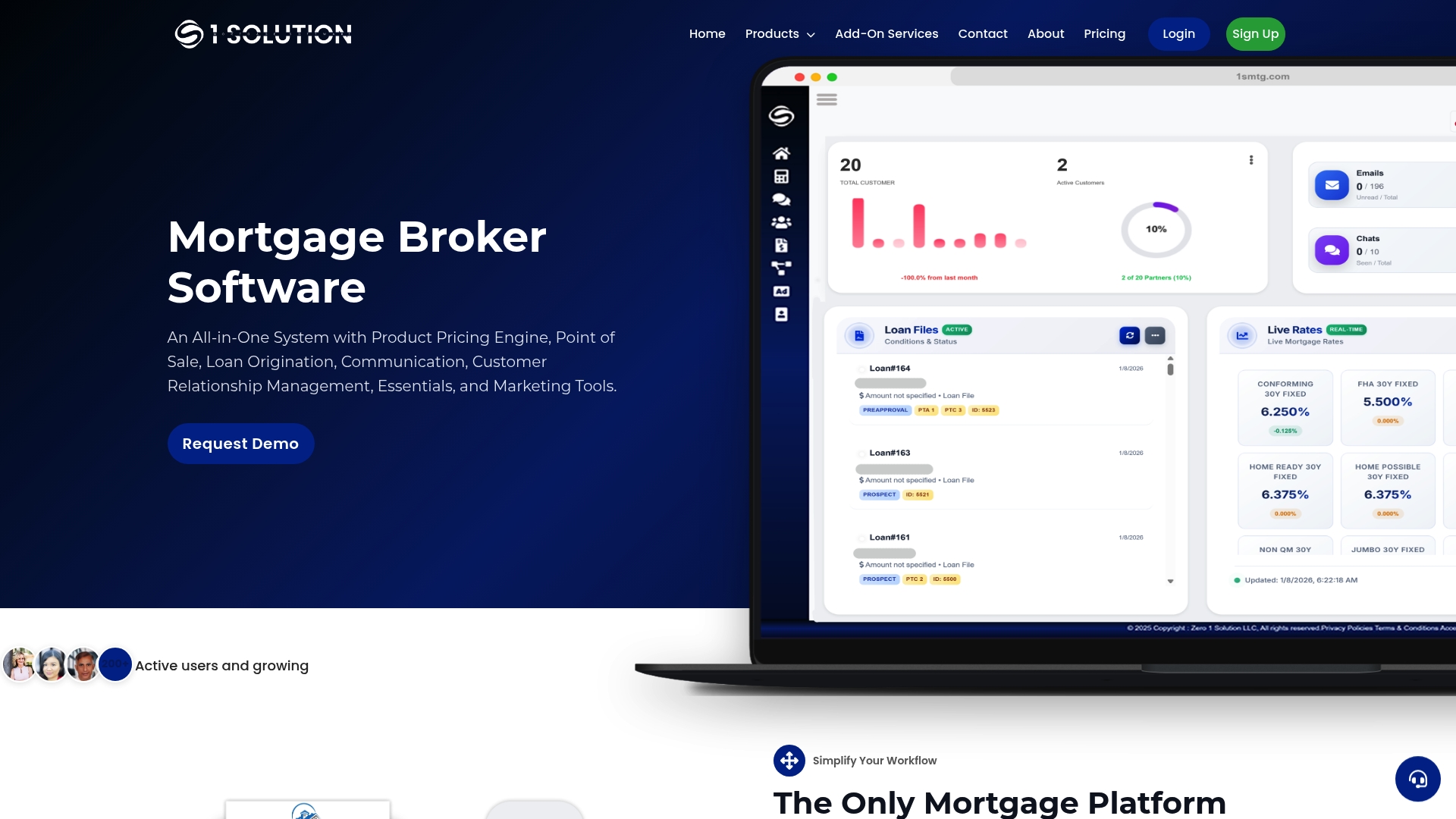
1 Solution Mortgage Software was built by mortgage professionals who have sat on both sides of the compliance table. The platform brings together LOS, CRM, POS, compliance tracking, and communication tools into a single ecosystem designed specifically for independent brokers and mortgage professionals. That means your disclosure timelines, training records, and policy documentation are organized and retrievable when an auditor requests them. Built from real industry experience, not a boardroom, 1 Solution gives you the control and transparency your compliance program requires. Explore the platform and see how it supports your audit readiness from day one.
FAQ
What is a mortgage company compliance audit?
A mortgage company compliance audit is a structured review of lending activities, policies, and file execution to confirm alignment with federal and state regulations. It verifies that documented procedures operate in real-world practice, not just on paper.
How long does a mortgage compliance audit take?
A typical compliance audit takes 4–6 weeks from initial document submission to final report. Incomplete records or delayed responses extend that timeline and increase regulatory risk.
What is the difference between a regulatory exam and an independent compliance audit?
A regulatory exam is mandatory and conducted by a government agency. An independent compliance audit is voluntary, conducted by a third party, and designed to identify and correct gaps before regulators find them.
What is a loan audit checklist?
An audit compliance checklist covers loan file documentation, disclosure timing, AML/BSA procedures, fair lending controls, loan originator compensation, and policy currency. It serves as the framework auditors use to evaluate your operations.
Do audit findings hurt a mortgage company's regulatory standing?
Documented findings paired with completed corrective action plans often strengthen regulatory standing. Regulators view evidence of active risk management more favorably than a report with no findings, which can signal an audit that lacked rigor.