
Consent tracking mortgage means capturing every borrower e-consent, disclosure acknowledgment, marketing opt-in, and data-sharing authorization with proof of who agreed, when, and how. The compliance goal is simple: affirmative consent, demonstrable attribution, and retrievable storage. Your first move is checking whether your LOS/CRM can export a full audit bundle, meaning the signed record plus its metadata, on demand.
TL;DR:
- Brokers must ensure that each borrower consent is captured with a precise timestamp, actor ID, and capture method to withstand examiner scrutiny.
- Consent records should be stored separately and include detailed metadata, such as IP address, device info, and document hashes, for full auditability.
- Building consent capture into daily workflows at application intake, disclosure delivery, and marketing opt-ins prevents common compliance gaps.
- Vendor contracts must explicitly grant rights to logs, and ongoing monitoring is essential to maintain compliance when third parties handle consent data.
- Using a centralized loan origination and CRM platform streamlines audit retrieval, reducing it from days to minutes by consolidating all consent-related events and metadata.
Table of Contents
- Which Borrower Consents Do You Need to Capture?
- What Do E-SIGN and TRID Actually Require?
- What Makes a Consent Record Actually Auditable?
- How Do You Build Consent Capture Into Daily LOS/CRM Workflows?
- How Do You Vet Vendors Who Touch Consent Data?
- How Long Should You Retain Consent Records?
- What I've Learned Building Broker Operations From the Ground Up
- A Broker-Focused Platform Built to Centralize Consent Evidence
- Sources
- FAQ
Which Borrower Consents Do You Need to Capture?
Not every consent carries the same legal weight, and brokers who treat them all the same end up with gaps examiners will find first. Some consents are contractual necessities. Others are strictly marketing permissions that carry their own separate legal exposure under TCPA.
Here's what your LOS/CRM needs to record, distinctly and separately:
- Electronic consent to receive disclosures, meeting E-SIGN's affirmative-consent standard before you send anything electronically.
- Receipt acknowledgments, used where CFPB TRID guidance permits a signature or receipt line on the Loan Estimate or Closing Disclosure.
- Marketing and TCPA opt-ins, kept entirely separate from transactional message permissions like status updates or closing reminders.
- Data-sharing and credit-authorization acknowledgments, tied to the specific transaction and specific third parties involved.
- Withdrawal records, logged the moment a borrower revokes consent, with an automatic flag that suppresses future marketing or electronic delivery to that file.
Mixing marketing consent with transactional consent is the single most common mistake brokers make, and it's the fastest way to end up on the wrong side of a TCPA complaint.
What Do E-SIGN and TRID Actually Require?
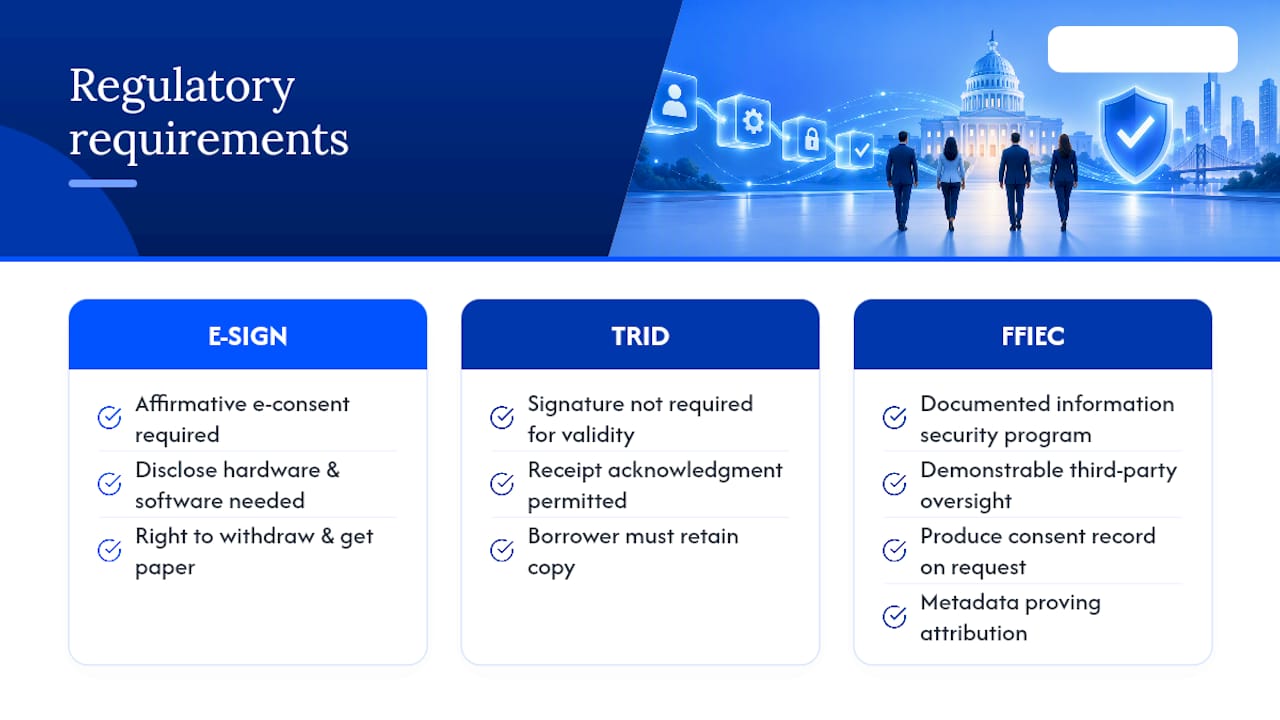
The legal floor here isn't complicated, but it's specific, and specificity is exactly what examiners check. The E-SIGN Act requires affirmative consumer consent before you can deliver legally required disclosures electronically. It also requires you to disclose the hardware and software the borrower needs to access and keep that record, and it preserves the borrower's right to withdraw consent and get paper instead.
That hardware/software disclosure step gets skipped constantly in broker workflows. A brief "can you open and save this file?" confirmation before the borrower accepts e-consent closes that gap in one screen.
TRID adds a second layer. The CFPB's own guidance confirms that TRID does not require a signature for a Loan Estimate or Closing Disclosure to be valid, but it does permit a receipt acknowledgment line. When you use one, the borrower must be able to retain the disclosure, not just view it once and lose access.
If your system generates a receipt acknowledgment but doesn't hand the borrower a retainable copy at the same moment, you've created a compliance gap that looks fine on the surface and fails the moment an examiner asks for it.
FFIEC supervisory guidance layers on top of both laws: institutions need a documented information security program and demonstrable oversight of any third party touching consent data. Examiners will ask for the consent record itself, the metadata proving attribution, and evidence you're monitoring whoever hosts that data.
What Makes a Consent Record Actually Auditable?
A signed PDF sitting in a folder isn't an audit trail. It's a document with no context, and context is what an examiner or investor actually wants to see.
An auditable consent record needs, at minimum:
- A precise timestamp for the moment consent was captured, not the date the file was saved.
- A borrower identifier tied to the specific loan file, not just a name that could match multiple records.
- The capture method, whether that's an e-signature click, a checkbox, a verbal confirmation logged by staff, or a paper form scanned in.
- An actor ID, meaning the specific staff account or system process that recorded the event, never a shared login.
- IP address and device metadata, establishing where and how the consent event happened.
- A document hash or version stamp, so you can prove the disclosure the borrower saw is the exact one on file today.
Investor eMortgage guidance goes further still. MPF's Exhibit DD requires tamper-evident seals on eNotes and audit trails linking identity evidence directly to the signing event, with logs retained in a format investors can request and review.
Role-based access controls matter just as much as the record itself. Shared logins destroy attribution, because a document hash proves a file wasn't altered, but it can't tell you which human being actually captured that consent. Unique user IDs and immutable logs solve that problem, and they're the difference between a record you can defend and one you can't.
How Do You Build Consent Capture Into Daily LOS/CRM Workflows?
Consent tracking only works if it's built into the moments where consent naturally happens, not bolted on afterward as a separate compliance step nobody remembers to complete.
Four capture points cover nearly every scenario a broker will face:
- At application intake, capturing data-sharing and credit-authorization consent before pulling any credit or verification data.
- At disclosure delivery, confirming E-SIGN consent and hardware/software access before the Loan Estimate goes out electronically.
- Before any e-signature flow, verifying the borrower affirmatively agreed to sign electronically for that specific document.
- At marketing opt-in, kept as its own event, separate from anything transactional.
For each of those events, store two things separately: the executed artifact itself (the signed PDF or snapshot) and the audit metadata describing how it was captured. Combining them into one file makes fast retrieval nearly impossible when a request lands with a tight deadline.
Pro Tip: Build a standing rule that no disclosure goes out electronically until the E-SIGN confirmation step fires. One workflow gate, placed correctly, prevents the single most common consent gap brokers discover during an exam.
Your consent fields should always capture scope (what exactly the borrower agreed to), effective date, method, and a clear revocation path. Systems like the ESIGN and UETA verification steps outlined for mortgage lenders make a useful reference point for structuring these fields correctly from the start.
How Do You Vet Vendors Who Touch Consent Data?
Third parties don't reduce your accountability. If a vendor stores or processes borrower consent data, you're still the one answering for it when an examiner or investor comes asking.
Four things belong in every vendor relationship touching consent records:
- Contractual rights to logs and exports, spelled out explicitly, not assumed as implied service.
- A due-diligence review covering security posture, SOC reports, encryption standards, data storage location, and incident-response procedures.
- Ongoing monitoring, including change notifications, penetration-test evidence, and scheduled reassessments rather than a one-time signoff.
- Documentation of that oversight itself, kept ready to hand an examiner without a scramble.
FFIEC guidance frames vendor oversight as an ongoing management responsibility, not a contract you sign once and forget. A signed agreement without active monitoring behind it won't hold up when someone asks how you know the vendor is still doing what the contract promised. Guidance on broker regulatory compliance covers this vendor-accountability gap in more depth.
How Long Should You Retain Consent Records?
Retention defaults should lean conservative, aligned with the stricter of federal rules, state requirements, or investor guidelines like MPF's eMortgage standards, whichever demands the longer window for that specific file type.
Fast retrieval depends on indexing, and a few keys cover most requests:
- Loan number, tied to the specific file an examiner or investor is asking about.
- Borrower name, cross-referenced against the loan number to catch any mismatches.
- Consent type, separating marketing from transactional from disclosure-related records.
- Date range, letting you pull everything tied to a specific origination window.
Build pre-assembled audit bundles in advance rather than scrambling to compile them under deadline. A solid bundle contains the signed disclosure PDF, an exportable event log, document hash values, and a manifest describing the export format and retention dates. When a borrower withdraws consent, preserve the prior record exactly as it stood at the time of withdrawal. Deleting history to "clean up" a file destroys the very evidence that proves you handled the withdrawal correctly.
What I've Learned Building Broker Operations From the Ground Up
I spent more than 20 years inside mortgage operations, working as a processor, underwriter, loan originator, and systems consultant before building 1 Solution Mortgage Software. That vantage point taught me that consent tracking fails for the same three reasons almost every time: logs scattered across disconnected tools, vendor contracts that never specify who owns the export rights, and indexing so poor that nobody can find the record they need when a deadline hits.
Most brokers assume they'll fix indexing later, once volume justifies the effort — but tools like the Multi-LLM Audit can help by quickly checking multiple AI model outputs at once to improve documentation accuracy early on. It never does. Start by mapping every consent touchpoint in your current workflow, then confirm your system captures audit metadata from day one, not retroactively. Run a small pilot: pull one full audit bundle and time how long it takes. If it's more than a few minutes, you've found your real priority.
— Omar Khamisa
A Broker-Focused Platform Built to Centralize Consent Evidence
Mortgage software platforms can centralize e-signature, disclosure delivery, and marketing opt-in tracking within one connected LOS/CRM platform, helping to keep all consent events in a single audit trail rather than scattered across multiple disconnected systems.
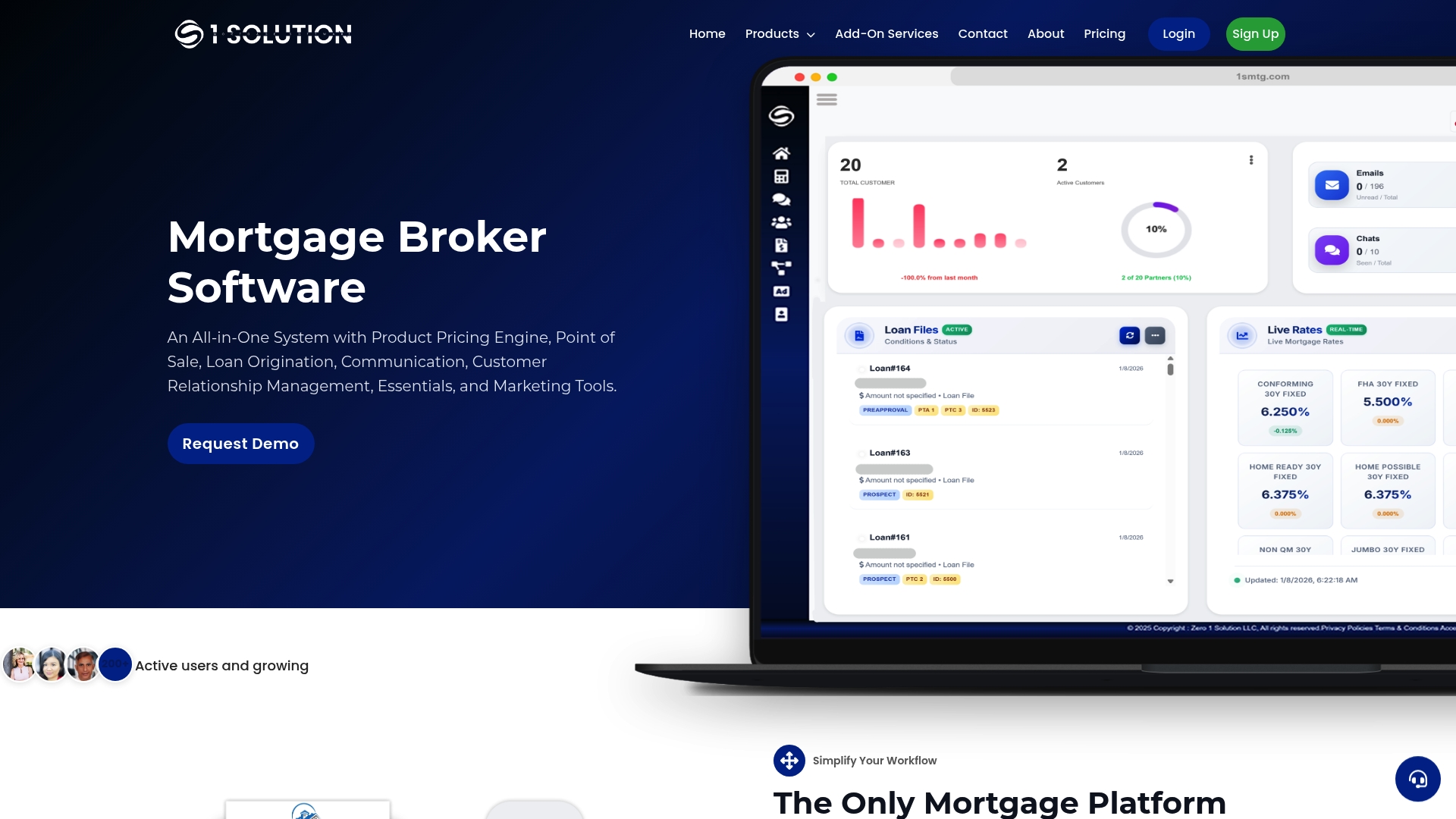
That matters because fragmentation is exactly what turns a routine exam into a multi-day scramble. When consent capture, disclosure delivery, and role-based permissions live in one platform, pulling a complete audit bundle takes minutes instead of a week of chasing logs across vendors. Some mortgage software platforms provide role-based access controls, exportable audit metadata, and the consent-scope fields this article walks through, all inside one system your team can use daily. Detailed permission setup for staff handling borrower consents is covered in user permissions guidance for mortgage platforms.
Request a demo at 1 Solution Mortgage Software and pull a sample audit bundle from your own pipeline data to see exactly what an examiner would see.
Sources
- Electronic Signatures in Global and National Commerce Act (E-SIGN)
- CFPB TRID FAQs
- FFIEC IT Examination Handbook - Information Security
- Exhibit DD: Delivering and Servicing eNotes eMortgages
FAQ
What Counts as Consent Tracking in a Mortgage File?
Consent tracking means recording every borrower e-consent, disclosure acknowledgment, marketing opt-in, and data-sharing authorization along with proof of who granted it and when. Each record needs a timestamp, capture method, and actor ID to hold up under examiner review.
Does E-SIGN Require a Digital Signature for Every Disclosure?
No. E-SIGN requires affirmative consumer consent before electronic delivery, along with a hardware and software disclosure, but it doesn't mandate a signature on every document. TRID separately permits receipt acknowledgment lines where applicable, without requiring one for validity.
How Long Should Brokers Keep Consent Records?
Retention should follow the strictest applicable rule among federal, state, and investor requirements, such as MPF's eMortgage standards. A conservative default, kept indexed by loan number and consent type, prevents gaps when a request arrives with a short deadline.
What Does 1 Solution Mortgage Software Cost?
Pricing for 1 Solution Mortgage Software's subscription plans is available directly on the company's website. Add-on services like phone, text, and PBX features are billed separately at the rates listed there.
What Should an Audit Bundle Include?
A defensible audit bundle contains the signed disclosure document, an exportable event log with metadata, hash values proving the document wasn't altered, and a manifest describing the export format and retention dates. This structure mirrors what investor eMortgage guidance expects for eNote audit trails.