

A digital mortgage application is defined as an end-to-end online process that replaces paper forms, in-person appointments, and manual document handling with automated verification, electronic signing, and real-time status tracking. The digital mortgage application benefits are concrete and measurable. Top lenders close loans in about 32 days versus 52 days for less automated lenders, according to Freddie Mac. Technologies like AI-powered income verification, Mastercard's Mortgage Verification Service (MVS), and eSigning platforms have made this speed possible. Whether you are a first-time buyer or refinancing, understanding how digital mortgages work puts you in control of one of the biggest financial decisions of your life.
1. How do digital mortgage applications speed up loan approval?
Digital mortgage platforms cut the application-to-closing cycle by 9 to 10 days compared to paper-based workflows. That gap exists because automation removes the manual steps that create bottlenecks in traditional lending.
The mechanics behind this speed are worth understanding:
- Automated income verification pulls data directly from payroll systems and tax records, eliminating the back-and-forth of faxing pay stubs.
- Integrated data sources connect to credit bureaus, bank accounts, and employment databases in real time, so underwriters get complete files faster.
- Instant document uploads replace courier deliveries and office drop-offs, cutting days from the review queue.
- AI-driven pre-screening flags missing information before submission, preventing the incomplete-file delays that plague manual processes.
Online mortgage approvals take 3–7 days versus 7–14 days for traditional methods, and closings run 21–30 days versus 30–45 days. That difference is not trivial. Closing faster can protect you from rate lock expirations and competing offers on the home you want.
Mastercard's MVS platform takes this further. One-touch verifications reduce origination time by up to 12 days by delivering precise income and asset reports directly within lender workflows.

Pro Tip: Upload all required documents before you submit your application. Digital platforms flag missing items instantly, but pre-loading your W-2s, bank statements, and tax returns eliminates a full review cycle and can shave several days off your approval timeline.
2. What cost savings do digital mortgages offer?
Digital mortgage processes save borrowers $200–$500 on closing costs compared to traditional applications. Those savings come from three specific sources: reduced administrative overhead, fewer document handling errors, and less reliance on physical resources like printing and mailing.
The table below shows where the cost and time differences add up most clearly.
| Factor | Digital mortgage | Traditional mortgage |
|---|---|---|
| Approval time | 3–7 days | 7–14 days |
| Closing timeline | 21–30 days | 30–45 days |
| Closing cost savings | $200–$500 less | Baseline |
| In-person appointments | Minimal to none | Multiple required |
| Document handling | Electronic, automated | Manual, paper-based |
Lenders operating digital platforms carry lower overhead than branch-heavy institutions. Those savings get passed to borrowers through reduced processing fees and fewer administrative charges. You are not paying for the staff hours spent manually sorting paper files.
There is one honest caveat here. Digital lenders may prioritize speed over offering the absolute lowest interest rates. Always compare quotes from multiple lenders before committing. The cost savings on closing fees are real, but your interest rate over a 30-year loan matters far more to your total cost.
Pro Tip: Use a mortgage comparison tool to evaluate both the closing costs and the APR side by side. A lower closing cost with a higher rate can cost you tens of thousands more over the life of the loan.
3. How digital mortgage applications improve transparency and user control
78% of homebuyers prefer a fully digitized mortgage process that eliminates in-person appointments. That preference is not just about convenience. It reflects a deeper demand for visibility and control over a process that has historically felt opaque.
Digital platforms deliver that control through several specific features:
- Real-time status dashboards show exactly where your application stands at every stage, from initial submission through underwriting to final approval. You never have to call your loan officer to ask "where are we?"
- Self-scheduling tools let you book appraisals and closings from your phone. 87% of homebuyers want self-scheduling for these appointments via mobile devices.
- Instant notifications alert you the moment a document is reviewed, a condition is cleared, or an action is required on your end. Waiting for a callback becomes unnecessary.
- AI-powered chat support answers common questions around the clock, so you get answers at 10 p.m. without waiting for business hours.
Real-time dashboards reduce borrower stress and improve satisfaction by keeping applicants informed at every step. That is not a minor quality-of-life improvement. Mortgage stress is real, and knowing exactly where you stand removes a significant source of anxiety during an already high-stakes process.
You can learn more about how these tools fit together by reading about real-time status tracking in digital mortgage platforms.
4. What security and accuracy benefits do digital platforms provide?
Digital mortgage platforms protect your sensitive financial data more effectively than paper-based alternatives. The security advantages are structural, not just theoretical.
- Encrypted data transfer. Your Social Security number, bank account details, and tax records travel through encrypted channels. Paper documents sent by mail or fax have no equivalent protection.
- Reduced physical risk. Digital documents protect against loss, theft, or unauthorized viewing during transit. A misplaced paper file or an intercepted fax can expose your identity. A digital file with access controls cannot be lost in a stack of mail.
- Automated completeness checks. Standardization in digital applications forces document completeness and format accuracy, avoiding delays common in manual mortgage file submissions. The system will not let you submit an incomplete file.
- Faster fraud detection. Digital tools cross-reference submitted data against multiple databases simultaneously. Discrepancies that might slip through a manual review get flagged automatically.
- Human oversight remains in place. Most digital mortgage platforms pair borrowers with loan officers to provide personalized help. Automation handles the repetitive verification work. Experienced loan officers handle the judgment calls and complex file situations.
The combination of automated accuracy checks and human review produces fewer errors than either approach alone. Incomplete submissions are one of the leading causes of delays in traditional loans. Digital platforms eliminate that problem by design.
For a deeper look at how mortgage automation tools reduce errors and protect borrowers, the 2026 guide covers the full range of available technologies.
Key takeaways
Digital mortgage applications deliver measurable advantages in speed, cost, transparency, and security that traditional paper-based processes cannot match.
| Point | Details |
|---|---|
| Faster closings | Digital lenders close loans in about 32 days versus 52 days for manual lenders, per Freddie Mac. |
| Real cost savings | Borrowers save $200–$500 on closing costs through reduced admin overhead and automation. |
| Greater transparency | Real-time dashboards and instant notifications keep you informed at every stage without phone calls. |
| Stronger security | Encrypted transfers and automated completeness checks reduce fraud risk and file errors. |
| Human support stays | Loan officers work alongside automation to handle complex files and provide personalized guidance. |
What I have learned from 20 years in mortgage operations
I have spent two decades working across every role in this industry: processor, underwriter, loan originator, and systems consultant. I have seen paper-based mortgage processes from the inside, and I can tell you the inefficiency is not accidental. It is structural.
The honest truth about digital mortgage tools is that most borrowers underestimate them. They assume "digital" means a PDF form instead of a paper one. The reality is that a well-built digital platform eliminates entire categories of delay that borrowers never even knew existed. The back-and-forth on document requests, the manual re-keying of data, the waiting for a human to open an envelope and log a file. Those delays are invisible to borrowers, but they add up to weeks.
My advice is direct: if your financial situation is straightforward and your credit is solid, a digital-first lender will almost certainly serve you faster and at lower cost. If your income is complex, self-employed, or involves multiple sources, look for a platform that pairs strong automation with accessible loan officers. The technology should work for you, not replace the human judgment you need.
The shift in borrower expectations is permanent. Buyers who have experienced real-time dashboards and mobile scheduling will not go back to calling a branch office and waiting three days for a callback. That is not nostalgia for the old way. That is just a better process winning.
— Omar Khamisa
See how 1 Solution Mortgage Software delivers these advantages
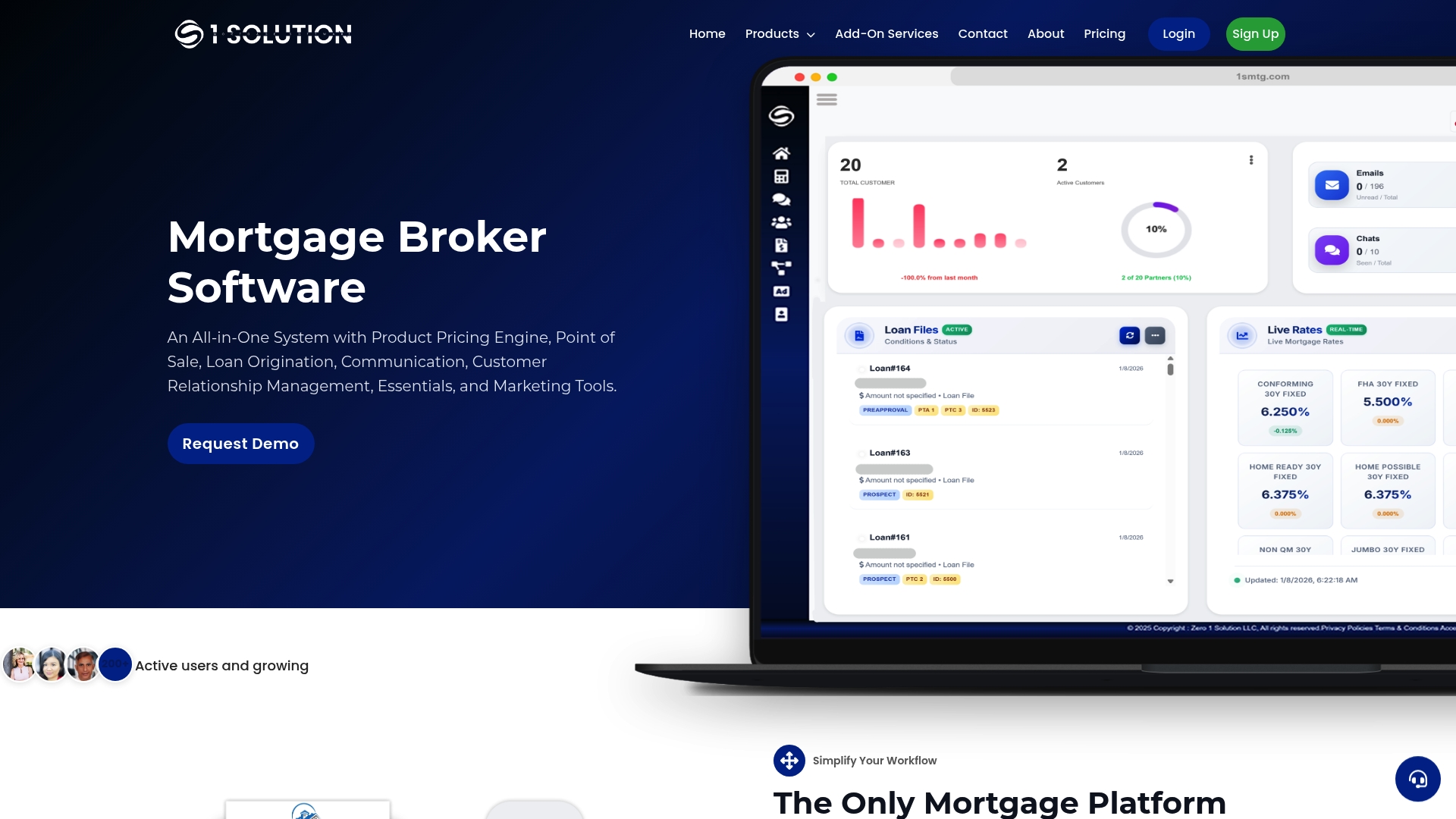
1 Solution Mortgage Software was built by mortgage professionals who lived through the frustrations of fragmented, paper-heavy systems. The platform brings together a point-of-sale system, loan origination tools, CRM, compliance tracking, and real-time communication in one connected environment. Borrowers get the speed and transparency that digital applications promise. Brokers get the control and flexibility they deserve. If you are ready to experience faster approvals and lower friction from application to closing, 1 Solution Mortgage Software is built for exactly that. Explore the platform and see what a mortgage process built from real industry experience looks like.
FAQ
What are the main digital mortgage application benefits?
The core benefits are faster approvals, lower closing costs, real-time status visibility, and stronger document security. Freddie Mac data shows top digital lenders close loans in about 32 days versus 52 days for manual lenders.
How much can I save with a digital mortgage?
Borrowers typically save $200–$500 on closing costs compared to traditional applications. Those savings come from reduced administrative overhead and fewer document handling errors.
Are digital mortgage applications secure?
Digital mortgage platforms use encrypted data transfer and automated fraud detection, making them more secure than paper-based alternatives. Freddie Mac confirms that digital documents eliminate the physical risks of loss, theft, and unauthorized viewing.
Do I still work with a loan officer on a digital mortgage?
Most digital platforms pair borrowers with loan officers for personalized guidance. Automation handles verification and document checks, while loan officers manage complex decisions and file exceptions.
Is a digital mortgage right for every borrower?
Digital-first lenders work best for borrowers with straightforward finances and strong credit. Borrowers with complex income situations may benefit from a hybrid approach that combines digital tools with more direct loan officer involvement.