
The mortgage approval process is the lender's stepwise evaluation of your loan application, moving from pre-approval through underwriting to final closing. Most borrowers enter this process without knowing what triggers delays, what lenders actually scrutinize, or why a conditional approval is not the same as a final yes. This guide covers every stage of the mortgage application process, the financial criteria lenders apply, and the practical steps you can take to reach closing faster and with fewer surprises.
What are the steps in the mortgage approval process?
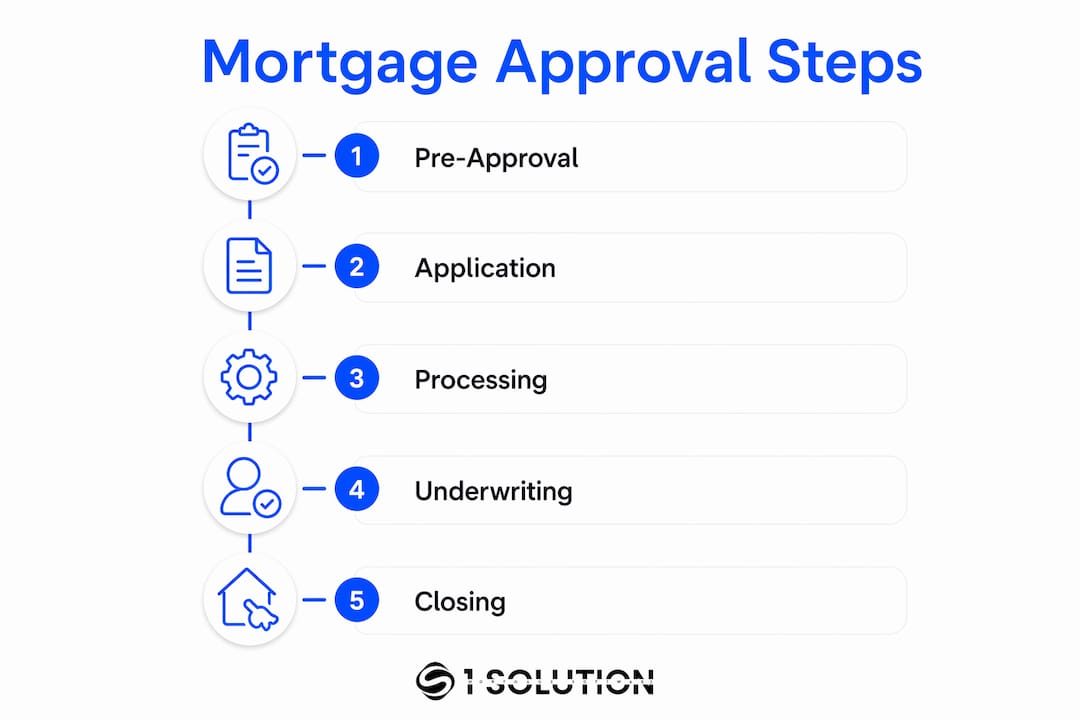
The mortgage approval process explained in full covers six distinct stages. Each one builds on the last, and skipping or rushing any stage creates problems downstream.
-
Pre-qualification vs. pre-approval. Pre-qualification is a rough estimate based on self-reported income and debt. Pre-approval is a verified review that includes a hard credit check and carries far more weight with sellers in competitive markets. A pre-approval letter is valid for 60–90 days, after which lenders can reissue it following an updated review.
-
Formal application submission. You submit a complete Uniform Residential Loan Application (Form 1003) along with supporting documents: W-2s, pay stubs, two years of tax returns, bank statements, and government-issued ID. Self-employed borrowers face a higher documentation bar. They must provide two years of business tax returns, a year-to-date profit and loss statement, business bank statements, and a CPA letter.
-
Loan processing. A loan processor organizes your file, orders a title search, and requests a property appraisal. This stage is largely administrative, but missing documents here cause the most common early delays.
-
Underwriting. The underwriter makes the actual credit decision. They evaluate your file against the Four Cs of underwriting: Capacity (your debt-to-income ratio), Credit (your score and payment history), Capital (your cash reserves), and Collateral (the appraised property value). Understanding these four pillars before you apply gives you a clear target to prepare for.
-
Conditional approval. Most borrowers receive conditional approval first, not a clean approval. This means the underwriter approves the loan subject to outstanding conditions such as a satisfactory appraisal, clear title, or additional documentation. Satisfying these conditions quickly is what separates a 30-day close from a 60-day one.
-
Clear to close and closing. Once all conditions are met, the lender issues a clear to close. Federal law requires lenders to deliver the Closing Disclosure at least 3 business days before your closing date. That window gives you time to review final loan terms, confirm figures, and flag any discrepancies before signing.
Pro Tip: Submit every page of your bank statements, including blank pages. Underwriters flag incomplete submissions and will put your file on hold until the full document is received. That single oversight can add a week to your timeline.
How long does the mortgage approval process take?

The standard approval timeline runs 30–60 days from application to closing. Digital mortgage processes can compress that to 15–20 days. That gap matters when you are competing for a property with a deadline.
Several factors determine where your timeline falls in that range:
- Borrower responsiveness. Lenders send condition requests and document checklists throughout the process. Every day you delay responding adds a day to your timeline. Treat lender emails as high priority.
- Document completeness at application. Borrowers who submit a complete, organized file at the start move through processing and underwriting faster. Gaps in documentation create back-and-forth that compounds delays.
- Appraisal scheduling. Appraisers operate on their own schedules, and in high-demand markets, wait times can stretch to two weeks. Your loan officer can order the appraisal early to reduce this bottleneck.
- Title issues. Liens, ownership disputes, or errors in public records can stall the title search. A clean title history speeds this step considerably.
- Digital application tools. Lenders using digital mortgage applications can verify income and assets electronically, cutting processing time significantly compared to paper-based workflows.
The fastest path to closing is simple: submit a complete file, respond to every lender request within 24 hours, and avoid any financial changes while your loan is in process. Borrowers who treat the approval process as a collaboration with their lender consistently close faster than those who treat it as a waiting game.
What financial criteria do lenders evaluate during approval?
Lenders apply specific numerical thresholds when reviewing your application. Knowing these numbers before you apply tells you exactly where you stand.
Debt-to-income ratios
Lenders use two DTI calculations. The front-end ratio covers your proposed housing payment only, and lenders generally want that figure at or below 28% of your gross monthly income. The back-end ratio adds all monthly debt obligations, including car loans, student loans, and credit cards, and lenders typically cap that at 43–45%. Borrowers above these thresholds are not automatically disqualified, but they face closer scrutiny and may need compensating factors like strong reserves or a larger down payment.
Credit score and hard inquiries
Your credit score determines your interest rate tier and, in some cases, your eligibility for specific loan programs. When you apply for a mortgage, the lender pulls a hard inquiry, which temporarily lowers your score. If you are shopping multiple lenders, FICO treats multiple mortgage inquiries within a 45-day window as a single inquiry. Rate-shop all lenders within that window to protect your score while still comparing offers.
| Financial Factor | Lender Benchmark | What It Means for You |
|---|---|---|
| Front-end DTI | 28% or below | Keep housing costs under 28% of gross income |
| Back-end DTI | 43–45% maximum | Total monthly debts should stay below 45% of income |
| Credit inquiries | 45-day shopping window | Multiple lender pulls count as one FICO inquiry |
| Down payment reserves | Varies by loan type | Lenders verify funds are seasoned and documented |
| Self-employed docs | 2 years returns + CPA letter | More documentation required to verify stable income |
Asset verification and reserves
Lenders verify that your down payment funds exist and are yours. They look for "seasoned" assets, meaning funds that have been in your account for at least 60 days. Large, unexplained deposits trigger additional documentation requests. Reserves, meaning funds left over after closing, signal to underwriters that you can cover payments if your income is interrupted.
Pro Tip: If you receive a gift for your down payment, document it with a signed gift letter from the donor. Undocumented gift funds are one of the most common reasons underwriters issue conditions that delay closing.
What challenges arise during approval and how do you handle them?
Conditional approval is the most misunderstood stage in the process. Receiving it feels like a finish line, but it is actually a checkpoint. The underwriter has approved your creditworthiness but still needs specific items resolved before issuing a final approval.
Common conditions include:
- A satisfactory property appraisal confirming the home's value supports the loan amount
- A clear title report showing no liens or ownership disputes
- Updated pay stubs or bank statements if your file is more than 30 days old
- Proof of homeowners insurance with the lender listed as loss payee
- A written explanation for any unusual deposits, employment gaps, or credit inquiries
Loan approval can also be revoked before closing. This happens when borrowers make financial changes after receiving conditional approval. Opening a new credit card, financing a car, changing jobs, or making a large cash withdrawal can shift your DTI or credit profile enough to trigger a re-underwrite. The guidance here is direct: keep your finances stable from application through closing. No new debts, no large purchases, no job changes.
Responding to lender requests accurately and promptly is the single most effective thing you can do to prevent delays. When an underwriter sends a condition request, read it carefully and provide exactly what is asked. Partial responses generate follow-up requests and add days to your timeline. If you are unsure what a condition requires, call your loan officer and ask before submitting anything. You can also review a loan approval speed guide for specific strategies to keep your file moving.
Key takeaways
Borrowers who understand the Four Cs of underwriting, maintain stable finances, and respond to lender requests within 24 hours consistently close faster and with fewer complications.
| Point | Details |
|---|---|
| Pre-approval outweighs pre-qualification | Only pre-approval involves verified income and a hard credit pull, making it credible to sellers. |
| Four Cs drive underwriting decisions | Capacity, Credit, Capital, and Collateral are the exact criteria underwriters score your file against. |
| Conditional approval is not final | Satisfy all outstanding conditions quickly to avoid delays or approval withdrawal before closing. |
| Rate-shop within 45 days | Multiple mortgage inquiries in a 45-day window count as one FICO inquiry, protecting your credit score. |
| Financial stability is non-negotiable | Avoid new debts, large purchases, or job changes from application through closing day. |
What i've learned after 20 years inside the mortgage process
Most borrowers treat the mortgage approval process like a black box. They submit documents, wait, and hope. That mindset is the root cause of most delays I have seen across two decades working as a processor, underwriter, and loan originator.
The borrowers who close fastest share one trait: they treat the lender as a partner, not a gatekeeper. They read every condition request carefully. They respond the same day. They do not make financial moves without asking their loan officer first. That discipline is not complicated, but most people do not practice it.
The Four Cs are not just an underwriting framework. They are a preparation checklist. Before you apply, calculate your DTI, pull your own credit report, document your reserves, and understand what your property needs to appraise for. If you walk into the process knowing your numbers, you will not be surprised by what the underwriter finds.
One thing most guides skip: the Closing Disclosure review. You have three business days to read it before signing. Use them. Compare every line to your Loan Estimate. Fees shift, rates occasionally change, and errors happen. Catching a discrepancy before closing costs you nothing. Catching it after costs you significantly more.
The mortgage process rewards preparation and patience. Borrowers who understand what lenders are looking for, and who stay organized and responsive throughout, consistently get to the closing table on time.
— Omar Khamisa
How 1 solution mortgage software supports faster approvals
Getting from application to closing faster starts with having the right tools in place. 1 Solution Mortgage Software was built by mortgage professionals who have processed, underwritten, and originated loans firsthand. The platform brings together a full loan origination system (LOS), point of sale (POS), CRM, compliance tracking, and document management into one connected workflow.
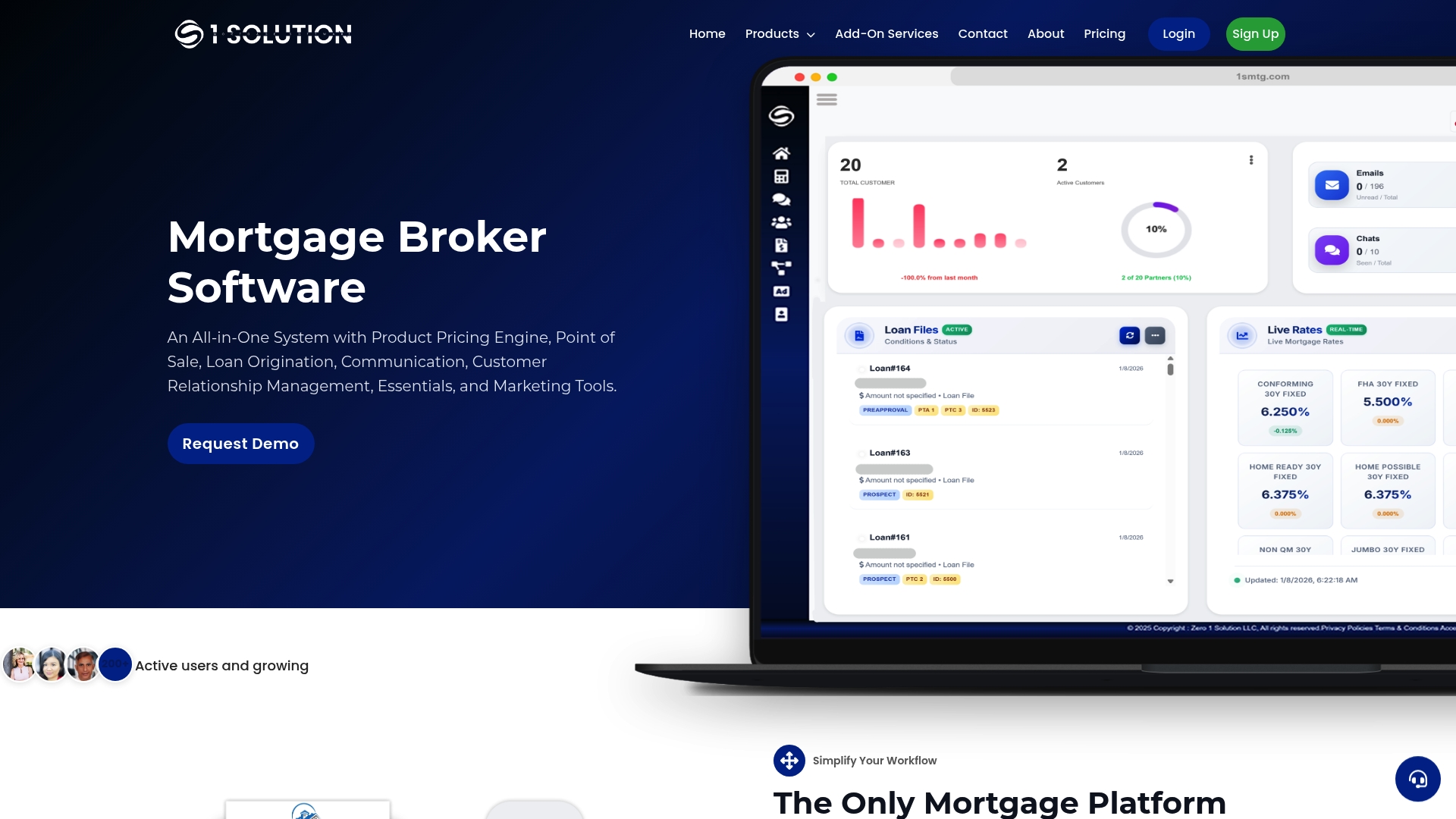
For loan officers working with borrowers through the approval stages, 1 Solution Mortgage Software removes the friction of fragmented systems. Milestone tracking, automated communication, and document collection tools keep every file moving without manual follow-up. If you are a mortgage professional looking to shorten approval timelines and give borrowers a clearer path to closing, visit 1 Solution Mortgage Software to see how the platform works.
FAQ
What is the difference between pre-qualification and pre-approval?
Pre-qualification is based on self-reported information with no credit check. Pre-approval involves verified documents and a hard credit pull, making it the only option sellers take seriously in competitive markets.
How long does mortgage approval typically take?
The standard timeline runs 30–60 days from application to closing. Digital mortgage processes can reduce that to 15–20 days when borrowers submit complete documentation upfront.
What does conditional approval mean?
Conditional approval means the underwriter has approved your loan subject to specific outstanding conditions, such as a satisfactory appraisal or additional documents. Final approval is issued only after all conditions are resolved.
Can a mortgage be denied after conditional approval?
Yes. Lenders can revoke approval if your financial profile changes before closing. Opening new credit accounts, changing jobs, or making large purchases can shift your DTI enough to trigger a re-underwrite and potential denial.
What credit score do i need to get mortgage approval?
Minimum credit score requirements vary by loan type. Conventional loans typically require a 620 or higher, while FHA loans allow scores as low as 580 with a 3.5% down payment. A higher score secures a better interest rate regardless of program.