
Getting support during mortgage software rollout is the single biggest factor separating a smooth launch from a costly, months-long disaster. The brokers and lenders who get it right do a few things consistently: they lock in a dedicated implementation manager before day one, they pull end users into the process early, and they treat their vendor as a consultant rather than a software delivery service. Platforms built for independent mortgage professionals, including 1 Solution Mortgage Software, are designed with this reality in mind. Here is what effective rollout support actually looks like in practice.
What strong rollout support covers:
- A dedicated implementation manager who owns milestones and communication
- Discovery workshops to map your workflows before any configuration begins
- Role-based training in sandbox environments before go-live
- Data migration and integration assistance to reduce friction
- A hypercare period immediately after launch for priority issue resolution
- Ongoing optimization check-ins and adoption tracking post go-live
Table of Contents
- What vendor support looks like during a mortgage software rollout
- How to structure your implementation timeline and phases
- What Omar Khamisa has learned from 20 years in mortgage operations
- How to maintain momentum after your software goes live
- Ready to build on a platform designed for brokers?
- Key Takeaways
What vendor support looks like during a mortgage software rollout
The best vendor support is proactive, not reactive. A dedicated implementation manager coordinates every milestone, owns the communication timeline, and keeps your internal team from guessing what comes next. That single point of contact is worth more than any feature list.
Discovery workshops are where real alignment happens. Your vendor should sit down with your underwriting, operations, and IT teams to map current workflows and define what the future state looks like inside the new platform. Without that session, you end up configuring software around assumptions instead of reality.

Training for mortgage software needs to be role-based and hands-on. Webinars alone do not cut it. Sandbox and UAT environments let your team validate configurations against real scenarios before anything goes live, which is where you catch the problems that would otherwise surface on day one in production. Live sessions, recorded walkthroughs, and guided test plans all serve different learning styles on your team.
Integration support is where many rollouts stall. Integration phases are a common delay point in digital mortgage implementations. Ask your vendor upfront what they need from your LOS, what the API handshake looks like, and what the realistic timeline is. Getting that clarity early removes the biggest source of mid-project friction.
Pro Tip: Treat your vendor's implementation team as consultants who bring mortgage operations expertise, not just software trainers. Ask them what they have seen work across other lenders your size. That institutional knowledge is part of what you are paying for.
How to structure your implementation timeline and phases
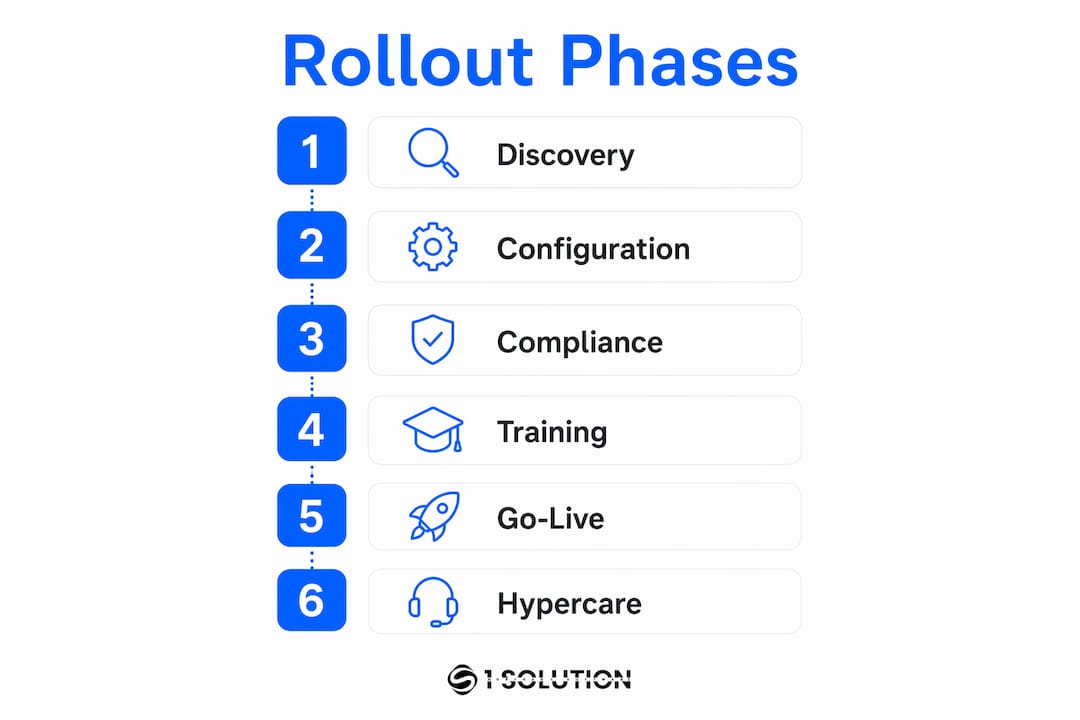
A structured implementation timeline covering discovery, configuration, compliance alignment, training, go-live, and hypercare is standard for major loan origination platforms. That timeline is tight, and every week of drift compounds.
| Phase | Key Activities | Checkpoint |
|---|---|---|
| Discovery (Early phase) | Workflow mapping, requirements doc, integration list | Signed configuration plan |
| Configuration (Mid phase) | Platform setup, compliance rules, user roles | Sandbox environment ready |
| Training (Pre go-live) | Role-based sessions, UAT, soft launch with small group | User sign-off on test scenarios |
| Go-Live (Launch phase) | Full deployment, access review, final config check | Go-live approval |
| Hypercare (Immediate post-launch) | Priority support, rapid tweaks, feedback collection | Stability confirmed |
Phased rollouts consistently outperform big-bang deployments. Deploying to a small group first gives you a controlled environment to test, troubleshoot, and gather feedback before the whole team is on the platform. That soft launch group also becomes your internal advocates, which helps with broader adoption.
Governance matters as much as the timeline. Your implementation team should include employees who will actually use the platform daily. Including end users early prevents critical functionality gaps from slipping through and ensures the software is configured around how your team actually works, not how someone assumed they work.
For project tracking, tools like Trello or Google Sheets work well for smaller teams. Larger organizations with ten or more people benefit from a dedicated project management tool to keep tasks, owners, and deadlines visible across the team.
Pro Tip: Avoid scheduling go-live during your busiest production months. Your team needs mental bandwidth to learn new workflows. A quieter period gives them the space to actually adopt the platform instead of just surviving it.
What Omar Khamisa has learned from 20 years in mortgage operations
Omar Khamisa built 1 Solution Mortgage Software after spending over two decades working as a processor, underwriter, loan originator, and systems consultant. That background shapes how we think about implementation support, and it is worth sharing directly.
The biggest mistake lenders make is treating their software vendor like a delivery service. You hand them a spec, they hand you a system, and then you wonder why adoption is low six months later. The vendors who drive real outcomes show up as consultants. They push back on your assumptions, ask hard questions about your workflows, and help you think through what success actually looks like before a single line of configuration is written. That is the relationship worth demanding.
Establishing baseline metrics before rollout is something most teams skip, and it costs them later. At least three months of pre-implementation data gives you an accurate baseline to measure against post go-live. Closed loans per month, time to close, customer satisfaction scores: pick the metrics that reflect your operational goals and track them before the new system touches anything.
Designating an internal trainer is a decision that pays off for years. That person becomes the institutional knowledge holder for the platform, handles onboarding for new hires, and serves as the first line of support before tickets go to the vendor. For independent brokers especially, having one person who truly owns the platform makes a measurable difference in long-term adoption.
1 Solution Mortgage Software was built specifically for independent mortgage professionals who need pricing, CRM, POS, LOS, compliance, and communication tools in one connected platform. When you are not stitching together five separate systems, the mortgage technology adoption curve is shorter and the support structure is simpler.
How to maintain momentum after your software goes live
The hypercare period, typically the first two to four weeks post go-live, is when your vendor should be most accessible. Priority support channels and defined escalation paths for urgent issues are not optional during this window. Configuration tweaks, workflow adjustments, and user access corrections happen fast when the right escalation structure is in place.

Regular check-ins with your vendor's customer success team keep the platform from stagnating. Those sessions should cover user feedback, feature adoption rates, and any workflow friction that has surfaced since launch. Ongoing optimization is a continuous process, not a one-time event after go-live.
Training does not end at launch. New hires need structured onboarding on the platform, and existing users benefit from refresher sessions when new features roll out. Building a short onboarding module for the platform into your standard new-hire process removes the dependency on tribal knowledge.
Post-rollout support activities that drive long-term success:
- Weekly check-ins during hypercare, moving to monthly after stabilization
- Structured feedback loops with frontline users, not just managers
- Tracking closed loans, time to close, and customer satisfaction against your pre-rollout baseline
- Scheduled reviews of new vendor features and automation opportunities
- Refresher training sessions tied to platform updates or workflow changes
- A named internal point of contact for platform questions and new-hire onboarding
For teams managing data migration from a legacy system, post-rollout support should also include data validation checks to confirm that historical records transferred accurately. Catching those discrepancies early prevents compliance headaches down the road.
Ready to build on a platform designed for brokers?
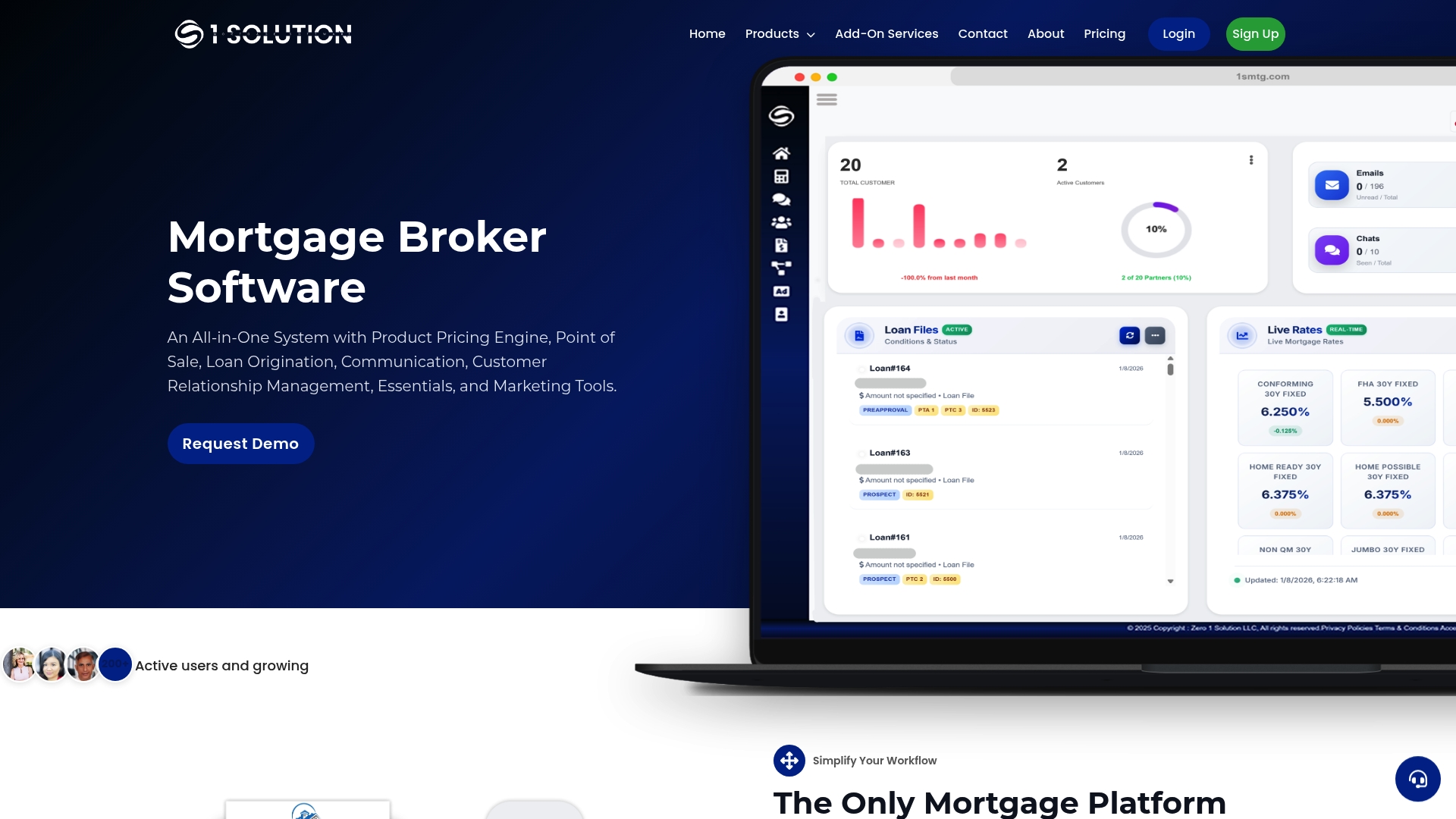
1 Solution Mortgage Software was built from the trenches of mortgage operations, not a boardroom. If you are evaluating platforms or planning a rollout, we built our all-in-one platform specifically so independent mortgage professionals get the control, compliance coverage, and support structure they deserve without the enterprise price tag or the investor agenda. Talk to us before your next implementation.
Key Takeaways
Effective support during mortgage software rollout requires vendor engagement, end-user involvement, structured training, and continuous post-launch optimization to protect both adoption rates and operational performance.
| Point | Details |
|---|---|
| Vendor as consultant | Treat your implementation team as operational experts, not just software trainers, for better outcomes. |
| Standard implementation timeline | Major LOS platforms follow a structured timeline covering discovery through hypercare. |
| End users in governance | Including daily users on the implementation team prevents critical functionality gaps before go-live. |
| Pre-rollout baseline data | Collect at least three months of performance data before launch to measure post-go-live impact accurately. |
| Post-launch optimization | Hypercare, regular check-ins, and structured feedback loops drive long-term adoption after go-live. |