

The mortgage broker lead conversion process is a structured system of rapid outreach, disciplined follow-up, and pipeline management designed to maximize the percentage of leads that become funded loans. Industry professionals call this "lead-to-close optimization," and it covers every touchpoint from the moment a lead submits a form to the day they sign at closing. Brokers who master this process consistently outperform peers on funded volume, not because they generate more leads, but because they waste fewer of the ones they already have. A properly configured CRM like 1 Solution Mortgage Software, combined with speed-to-lead protocols and structured nurture sequences, is the operational backbone of any high-converting mortgage sales funnel.
What are the critical stages in a mortgage broker lead conversion workflow?
A mortgage lead conversion workflow is only as strong as its stage structure. Pipeline stages typically include New Lead, Contacted, Appointment Booked, Application Submitted, Completed, Not Proceeding, and Nurture. Each stage is a checkpoint, not just a label. When you track movement between stages, you can calculate conversion ratios at every step and identify exactly where leads are dropping out.
The most revealing metric is your lead-to-application ratio. If 100 leads enter your pipeline and only 8 submit an application, the problem is almost certainly in your contact or appointment stage, not your pricing. Tracking by lead source adds another layer of insight. A Facebook lead that converts at 4% and a Zillow referral that converts at 18% should not receive the same follow-up budget or the same urgency level.

CRM setup for stage transitions matters more than most brokers realize. Every stage should have an automated task assigned to it. When a lead moves to "Contacted," the CRM should immediately create a task to book an appointment within 24 hours. When a lead moves to "Application Submitted," a task for document collection should fire automatically. This removes the cognitive load from your team and prevents leads from sitting in limbo.
Here is a practical stage breakdown with conversion benchmarks to aim for:
| Pipeline stage | Target conversion to next stage |
|---|---|
| New Lead to Contacted | 60% or higher within 24 hours |
| Contacted to Appointment Booked | 40% or higher |
| Appointment Booked to Application Submitted | 65% or higher |
| Application Submitted to Completed | 70% or higher |
Brokers who track these ratios monthly can pinpoint exactly which stage needs attention and allocate coaching or automation resources accordingly.
Why does speed to lead determine whether you win or lose the borrower?
Speed is the single most important variable in the mortgage broker lead conversion process, and the data is unambiguous. Leads contacted within 5 minutes are 21 times more likely to qualify compared to those contacted after 30 minutes. That is not a marginal difference. It means the broker who calls first wins the borrower in the vast majority of cases, regardless of rate or brand recognition.
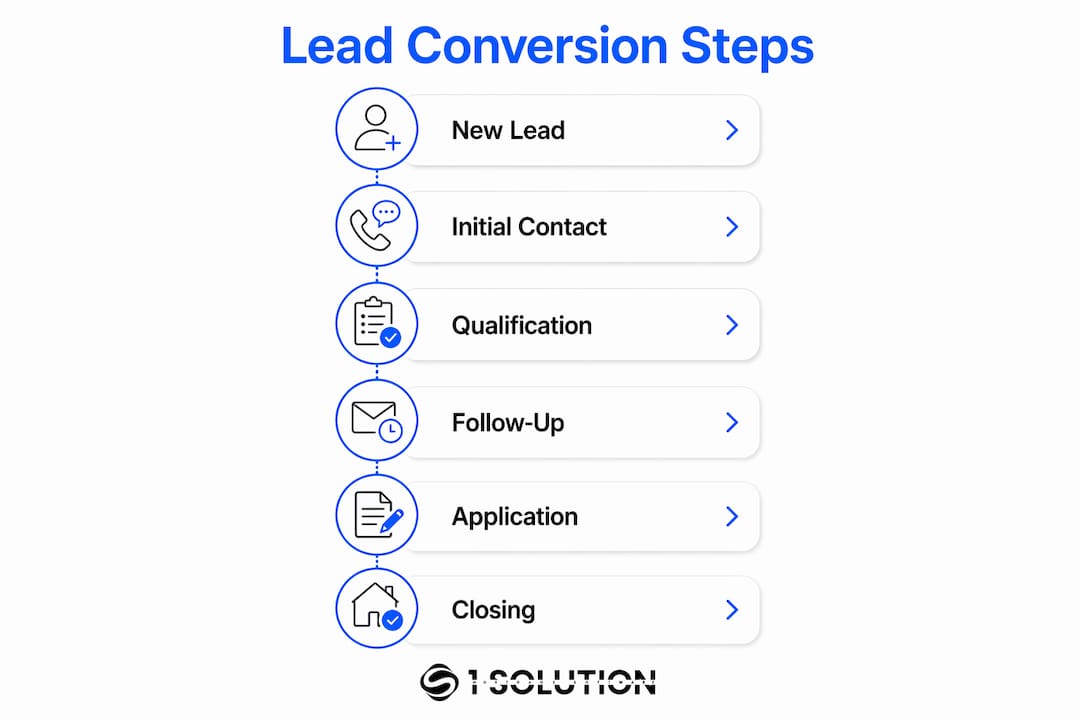
The Velocify study of 3.5 million leads found that calling within 1 minute can increase lead conversion by 391%. Speed is the primary differentiator over price or brand, which means your marketing budget is partially wasted if your contact speed is slow. A borrower who fills out a form at 7:45 PM is still shopping. They will talk to whoever calls first.
The operational barriers to speed are predictable: staffing gaps, manual lead routing, and no real-time alerts. The solutions are equally predictable.
- Set up real-time CRM push notifications the moment a lead enters your system
- Use automated lead routing to assign leads to the next available loan officer instantly
- Implement an AI ISA tool like SayVo to handle immediate outreach when your team is unavailable
- Configure after-hours auto-responses via SMS to acknowledge the lead and set a callback expectation
- Review your lead source integrations monthly to confirm zero routing delays
Pro Tip: Set your CRM to trigger a "Call within 5 minutes" alert as a push notification to your phone, not just an email. Email is too slow. The alert needs to interrupt whatever you are doing.
Automating follow-up alerts like stage-based triggers and task assignments reduces lead loss caused by human error, which is the most common and most preventable reason brokers lose qualified borrowers.
How to design a multi-touch follow-up sequence that actually converts
Most loan officers give up too early. XANT research shows that most salespeople abandon a lead after one or two contact attempts, while the optimal number of attempts ranges from 6 to 8. The gap between what most brokers do and what actually works is enormous.
A structured multi-channel sequence closes that gap. Here is a proven 10-day follow-up framework:
- Day 1, attempt 1: Call immediately after lead submission. Leave a voicemail if no answer.
- Day 1, attempt 2: Send a personalized SMS within 10 minutes of the voicemail.
- Day 2, attempt 3: Call again in the morning. Vary the time from your first attempt.
- Day 3, attempt 4: Send a value-focused email with a rate update or market insight.
- Day 5, attempt 5: Call again. Reference the lead's specific inquiry in your voicemail.
- Day 7, attempt 6: Send a second SMS with a soft call to action, such as a link to book a call.
- Day 10, attempt 7: Final call attempt. If no response, move the lead to Nurture status.
Mixing channels matters because different borrowers respond to different mediums. Some people never answer unknown calls but reply to texts within minutes. Others ignore SMS but open emails. Covering all three channels across 10 days gives you the highest probability of contact without crossing into harassment territory.
Pro Tip: Keep voicemails under 20 seconds. State your name, the loan type they inquired about, and one specific benefit of calling you back. Long voicemails get deleted before they finish playing.
Personalization in SMS is not optional at this stage of competition. "Hi [First Name], this is [Your Name] from [Brokerage]. You asked about a 30-year fixed last Tuesday. I have a few options worth discussing. When works for a quick call?" outperforms generic templates by a measurable margin.
How to implement lead nurturing strategies for slow-moving leads
Active follow-up and lead nurturing are not the same thing, and confusing them is expensive. Active follow-up is the 10-day sequence described above. Nurturing is what happens after a lead does not respond or explicitly says "not right now." The goal of nurturing is to stay present and valuable until the borrower's circumstances change.
Segmenting leads by behavior and readiness improves nurturing effectiveness and prevents time wasted on uninterested leads. A borrower who opened your last three emails is a different priority than one who has not engaged in six months. Your CRM should track email opens, link clicks, and SMS replies to surface re-engagement signals automatically.
Effective nurture content for mortgage leads includes:
- Monthly rate update emails with a brief market commentary (under 150 words)
- Quarterly check-in calls or voicemails asking if their situation has changed
- Credit improvement tips for leads who did not qualify initially
- Home price trend updates for leads still in the pre-purchase research phase
- Refinance opportunity alerts when rates drop below a threshold relevant to their loan type
Nurture messaging with monthly value-focused emails and quarterly check-ins can improve overall mortgage lead conversion by 20 to 40%. That is a significant return on a relatively low-effort automated sequence. The key is consistency. A nurture sequence that runs for 6 months and then stops is less effective than one that runs indefinitely at a lower frequency.
The moment a nurtured lead re-engages, whether by replying to an email, clicking a rate link, or calling you directly, they should be automatically moved back to active follow-up status in your CRM. That trigger is the difference between a warm lead and a missed opportunity.
What metrics and tracking practices actually improve lead conversion rates?
Data is the only honest feedback loop in the mortgage sales funnel. Without it, you are making budget and process decisions based on gut feeling, which is consistently less accurate than even basic analytics. Tracking lead-to-close conversion and cost per acquisition by source enables you to optimize marketing spend and improve profitability at the source level.
The metrics every broker should track weekly are:
| Metric | Why it matters |
|---|---|
| Speed to first contact | Directly predicts qualification rate |
| Lead-to-application rate | Reveals contact and appointment stage health |
| Application-to-close rate | Reveals underwriting and processing efficiency |
| Cost per acquisition by source | Identifies which lead sources are profitable |
| Nurture re-engagement rate | Measures long-term pipeline health |
CRM data alone is not sufficient for full attribution. Combining CRM stage data with Google Analytics 4 event tracking, ad platform pixels from Meta and Google Ads, and call tracking software like CallRail gives you a closed-loop view of which campaigns drive funded loans, not just form fills. A lead source that generates 200 inquiries but only 2 funded loans is not a good source, regardless of its cost per lead.
Pro Tip: Run a pipeline review every Friday. Archive leads that have been inactive for more than 90 days with no engagement. A clean CRM with 80 active leads is more productive than a cluttered one with 400 stale contacts dragging down your metrics.
CRM data hygiene is more important than messaging quality. Duplicated or unsynced leads cause lost opportunities even when your follow-up scripts are excellent. Deduplicate your pipeline monthly and audit your lead source integrations quarterly to confirm data is flowing correctly.
Key takeaways
A mortgage broker's conversion rate is determined by speed, structure, and data, not by lead volume alone.
| Point | Details |
|---|---|
| Speed to lead is decisive | Contacting a lead within 5 minutes makes them 21x more likely to qualify. |
| Stage tracking reveals drop-off | Measuring conversion ratios per stage shows exactly where leads are being lost. |
| Multi-touch sequences outperform single calls | Six to eight contact attempts across calls, SMS, and email maximize contact rates. |
| Nurture sequences recover slow leads | Monthly value emails and quarterly check-ins can lift overall conversion by 20 to 40%. |
| Data hygiene protects pipeline integrity | Clean, deduplicated CRM data prevents lead loss despite strong follow-up execution. |
What I have learned after 20 years of watching brokers win and lose on lead conversion
After two decades working across mortgage operations as a processor, underwriter, loan originator, and systems consultant, I have seen the same pattern repeat itself. Brokers invest heavily in lead generation and almost nothing in lead management. They buy leads, call once or twice, and then wonder why their conversion rate is low.
The uncomfortable truth is that most lead loss is operational, not competitive. It is not that the borrower chose a competitor with a better rate. It is that the borrower never got a second call. The fix is not a better script. It is a better system.
What I have found actually works is separating qualification from document collection. Separating lead qualification from documentation reduces abandonment and backlog in complex mortgage cases. When a borrower feels like the first conversation is an interrogation for paperwork, they disengage. Keep the first call focused on understanding their goal and qualifying their scenario. Save the document checklist for after they are committed.
Real-time alerts changed everything for the brokers I have worked with. Not email alerts. Push notifications that interrupt your day. The brokers who respond in under 5 minutes consistently outperform those who respond in 30 minutes, even when the slower broker has a better product. Speed signals professionalism and urgency to the borrower.
My honest advice: get your speed and persistence right before you spend another dollar on lead generation. A disciplined process with 50 leads will outperform a sloppy process with 200 every time.
— Omar Khamisa
How 1 Solution Mortgage Software supports your conversion process
If you are building or rebuilding your lead conversion workflow, the technology you choose determines how consistently you can execute it.
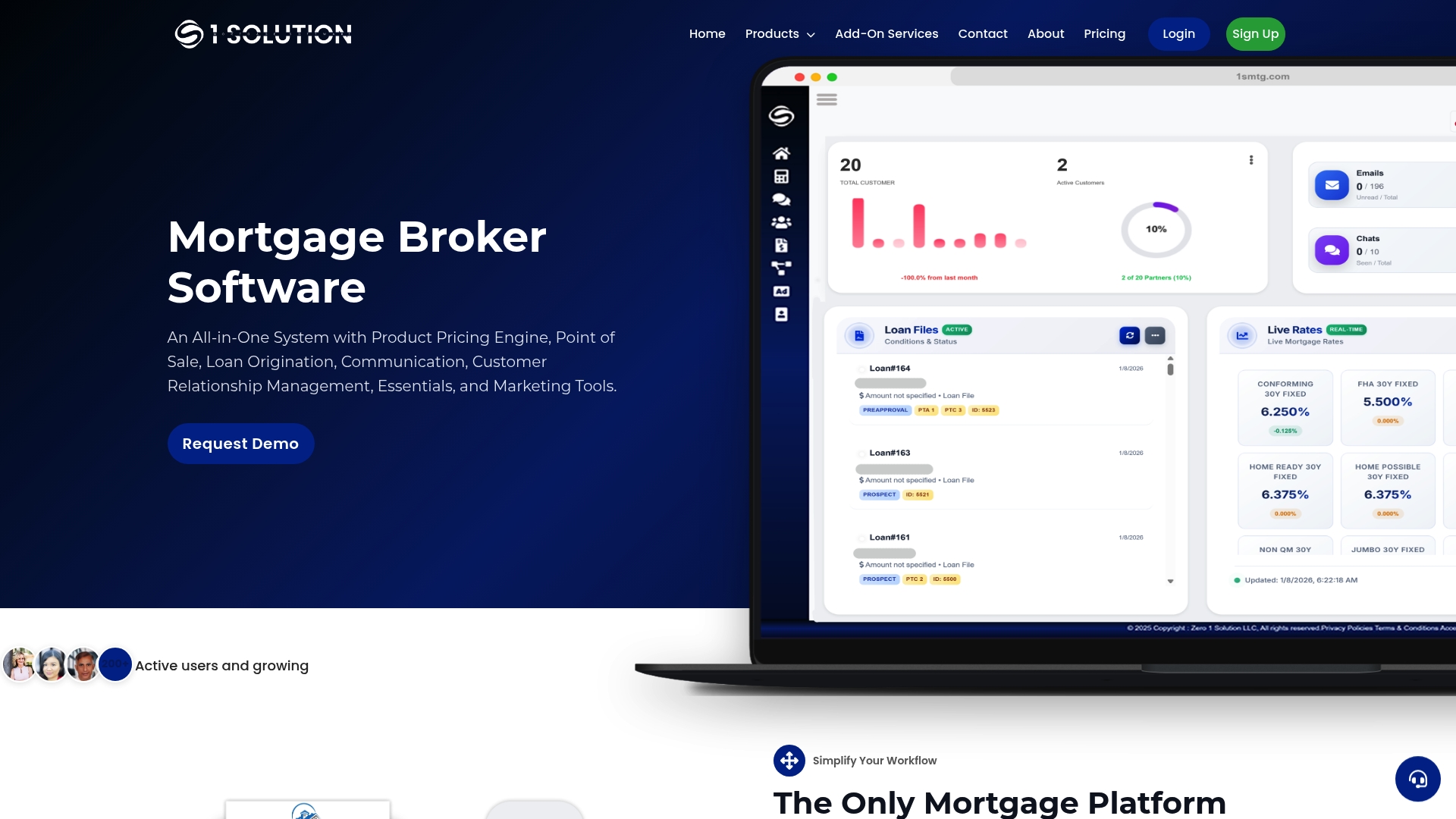
1 Solution Mortgage Software was built specifically for independent mortgage brokers who need CRM automation, real-time lead alerts, stage-based workflows, and nurture sequence automation in one connected platform. Unlike generic CRM tools adapted for mortgage, 1 Solution was designed from the ground up by mortgage professionals who understand the difference between a lead and a funded loan. The platform supports every stage of the loan approval process, from first contact to closing, without requiring three separate tools to do it. If you are serious about improving your lead-to-close rate in 2026, it is worth exploring what a purpose-built system can do for your pipeline.
FAQ
What is the mortgage broker lead conversion process?
The mortgage broker lead conversion process is a structured workflow that moves a prospect from initial inquiry to funded loan through rapid outreach, consistent follow-up, and pipeline tracking. It includes defined stages, multi-channel contact sequences, and CRM-based automation to minimize lead loss.
How quickly should a mortgage broker contact a new lead?
Contact within 5 minutes of lead submission. Leads contacted within 5 minutes are 21 times more likely to qualify than those contacted after 30 minutes, making speed the single most important conversion variable.
How many follow-up attempts should a broker make before moving a lead to nurture?
Six to eight contact attempts across multiple channels over 10 days is the research-backed standard. After that, move the lead to a long-term nurture sequence rather than abandoning it entirely.
What is the difference between active follow-up and lead nurturing?
Active follow-up is an intensive, time-bound sequence of calls, SMS, and emails designed to make contact quickly. Lead nurturing is a lower-frequency, long-term strategy of monthly emails and quarterly check-ins for leads who are not yet ready to proceed.
Which CRM metrics matter most for mortgage lead conversion?
Speed to first contact, lead-to-application rate, application-to-close rate, and cost per acquisition by source are the four metrics that most directly reflect conversion health. Tracking these weekly enables data-driven decisions on staffing, marketing spend, and process adjustments.