

A defensible mortgage vendor management program comes down to three things: a centralized inventory with risk-based tiering, documented controls with continuous monitoring, and clear board governance tied to what Fannie Mae and federal regulators expect. Lenders remain accountable for every vendor failure, no matter who caused it. Practical platforms exist specifically to help compliance teams centralize this evidence instead of chasing it across spreadsheets.
TL;DR:
- Critical vendors must be vetted before onboarding using financial, security, reference, and sub-vendor checks, especially for AI-enabled solutions that require bias and model validation.
- Contracts with vendors should include clear scope, audit rights, incident timelines, sub-vendor clauses, and liability limits aligned with the risk level.
- Monitored on a risk tier basis, critical vendors need continuous or monthly oversight of SLA compliance, security updates, financial health, and ownership changes.
- A centralized vendor inventory with tiering and documented oversight roles is essential, with automation preferred to manual spreadsheets to meet exam expectations.
- Starting with high-risk vendors, consolidating records, and setting a review cadence are vital first steps to build a defensible vendor management program this quarter.
Table of Contents
- What Does Mortgage Vendor Management Actually Require?
- How Do You Vet a Vendor Before Signing?
- What Contract Terms Actually Protect You?
- How Often Should You Monitor Mortgage Vendors?
- Who Owns Vendor Oversight at Your Company?
- How Do You Vet Technical and AI-Enabled Vendors?
- What Do Examiners Keep Flagging?
- Where Should You Start This Quarter?
- A Practitioner's Note on Getting This Right
- How 1 Solution Mortgage Software Fits Into Your Vendor Program
- Sources
What Does Mortgage Vendor Management Actually Require?
Mortgage vendor management is the discipline of tracking, assessing, and overseeing every third party that touches your loan production, from your loan origination system provider to the appraisal management company on your approved list. Fannie Mae's seller/servicer oversight framework requires written procedures, designated staff, and a centralized operating model, not scattered ownership across departments.
Your inventory needs specific fields to be useful during an exam:
- Service provided and business unit that owns the relationship
- Data access level (borrower PII, credit data, loan documents)
- Sub-vendor and fourth-party relationships
- Contract start, renewal, and termination dates
- Assigned risk tier and last review date
Tiering matters because not every vendor deserves the same scrutiny. Your LOS provider, credit reporting agencies, and appraisers sit in the critical tier because they touch borrower data or loan decisions directly. An office supply vendor does not. Examiners frequently cite lenders for treating all vendors identically, or worse, for having no formal inventory at all.
How Do You Vet a Vendor Before Signing?
Due diligence has to happen before the ink dries, not after a vendor already has access to your borrower data. Skipping this step is how lenders end up explaining a preventable breach to a state regulator.
Work through these steps for every vendor above your lowest risk tier:
- Pull audited financials or a Dun & Bradstreet report to confirm the vendor can survive a bad quarter.
- Request SOC 2 Type II or ISO 27001 certifications for anything touching borrower data.
- Call at least two references, ideally other mortgage lenders using the same service.
- Map sub-vendor and fourth-party relationships the vendor depends on.
- Review the proposed contract for gaps before negotiation, not after.
AI-enabled vendors need an extra layer: ask how the model was trained, whether it has been bias-tested against protected classes, and who owns model governance going forward. The MBA's compliance guidance offers sample questionnaires built for exactly this kind of documentation.
Pro Tip: Store every due diligence artifact, financial statements, certifications, reference call notes, in the same file as the executed contract. An examiner asking "show me your diligence on this vendor" wants one folder, not a scavenger hunt across three inboxes.
What Contract Terms Actually Protect You?
Your contract is your first line of defense when a vendor fails, and a well-negotiated one with explicit audit rights is often the single most effective way to limit your liability when things go wrong.
Every critical-vendor contract should include:
- A clearly defined scope of services with measurable service level agreements
- Right-to-audit language that lets you or a regulator inspect vendor controls on demand
- Incident notification timelines (24 to 72 hours is standard for data events)
- Subcontractor flow-down clauses requiring the same standards apply to fourth parties
- Liability caps that reflect the actual risk the vendor introduces, not a boilerplate limit
Right-to-audit clauses matter most during examinations because they prove you can act, not just monitor from a distance. If your current contracts lack remediation timelines with real deadlines, renegotiate at renewal rather than waiting for a problem to force the issue.
How Often Should You Monitor Mortgage Vendors?
Monitoring cadence should match risk tier, not calendar convenience. Critical vendors, your LOS, credit bureaus, appraisal panels, deserve continuous or monthly monitoring. Mid-tier vendors can run on a quarterly cycle. Low-risk vendors are usually fine with an annual check-in.
Track these metrics regardless of tier:
- SLA adherence and response times against contracted benchmarks
- Security posture changes (new certifications, lapsed ones, breach disclosures)
- Financial health alerts and credit rating shifts
- Adverse media mentions tied to the vendor's name
- Material contract or ownership changes
Regulators increasingly expect automated monitoring feeds rather than manual quarterly check-ins, and the gap shows up in exam outcomes: lenders relying on spreadsheets report more examiner concerns than those using automated platforms.
By the numbers: Automating continuous monitoring, financial feeds, adverse media, sanctions screening, breach alerts, produces audit-ready trails that scale well beyond what a small compliance team can track manually.
Who Owns Vendor Oversight at Your Company?
Vendor management fails when it gets treated as a procurement task instead of a governance function. The board approves policy and gets periodic vendor risk reporting; senior management cannot push that responsibility down to whoever happens to negotiate contracts.
A working governance structure needs these roles filled, not just named:
- Board or audit committee: approves the vendor management policy and reviews a risk summary at least annually.
- Compliance officer: owns the policy, tracks regulatory changes, and prepares exam-ready documentation.
- Vendor owner (business unit): manages the day-to-day relationship and flags performance issues early.
- Legal and procurement: negotiate contract language and enforce audit rights when triggered.
For an exam, assemble signed risk scorecards, remediation logs with dates, and board or committee meeting minutes referencing vendor oversight. Examiners look for traceable artifacts, not a verbal assurance that reviews happened.
How Do You Vet Technical and AI-Enabled Vendors?
Your LOS provider, borrower POS platform, and any AI-driven underwriting tool need a different due diligence track than a marketing vendor. These systems touch borrower data directly and often make decisions that affect loan outcomes.
Request these documents before signing or renewing:
- SOC 2 Type II or ISO 27001 reports covering the last 12 months
- Recent penetration test results and remediation status
- Data lineage documentation showing where borrower data travels and who can access it
- Model validation records for any AI or automated decisioning tool
- Bias testing results against protected class outcomes
For AI vendors specifically, ask how the model gets monitored for drift after deployment, not just at initial validation. A model that performed fairly at launch can drift as underlying data changes. CISA's supply chain risk template gives you standardized questions to run through with any technology supplier, and it maps cleanly to the cloud security controls your LOS integration should already meet.
Pro Tip: Treat fourth-party subcontractors the same way you treat the primary vendor. If your AI underwriting tool relies on a data provider you've never vetted, that gap belongs on your risk scorecard too.
What Do Examiners Keep Flagging?
The same handful of gaps show up in exam findings year after year, and most are fixable in a single quarter.
- No centralized inventory: fix by consolidating vendor data into one system of record, even a shared platform, before the next review cycle.
- Annual-only reviews on critical vendors: fix by moving high-tier vendors to quarterly or continuous monitoring.
- Missing right-to-audit clauses: fix at contract renewal, and flag any vendor that resists the language.
- No FHFA Suspended Counterparty Program check: fix by confirming vendor status against the list before onboarding and again annually.
- Insufficient AI oversight: fix by documenting model validation and bias testing for every automated decisioning tool in use.
When presenting remediation to examiners, show dated evidence that the fix happened, not just a policy update promising it will.
Where Should You Start This Quarter?
Small compliance teams cannot fix everything at once, so sequence matters more than ambition.
- Build or consolidate your vendor inventory into one system.
- Tier every vendor by data access and criticality.
- Confirm critical vendors against the FHFA suspended list.
- Audit existing contracts for missing right-to-audit clauses.
- Set monitoring cadence by tier and assign an owner to each.
- Collect outstanding SOC 2 or ISO certifications from critical vendors.
- Draft a one-page vendor risk scorecard for board reporting.
- Schedule a quarterly governance review with compliance, legal, and business owners.
Smaller lenders without dedicated vendor risk specialists often lean on SaaS-based platforms to centralize this work instead of building it from scratch. Report progress to the board as a percentage of vendors reviewed and tiered, not a narrative summary.
Pro Tip: Start with your five highest-risk vendors, not your longest list. A defensible program covering critical vendors beats a spreadsheet covering everyone at the same shallow depth.
A Practitioner's Note on Getting This Right
I've watched compliance teams drown in vendor spreadsheets that nobody trusted, including their own examiners. The pattern is consistent: centralization reduces exam friction almost immediately, because you stop reconstructing history under deadline pressure and start pulling records that already exist.
Resourcing looks different by size. A five-person shop needs a tight, tiered list and quarterly discipline. A larger lender needs the same discipline plus automation, because manual tracking stops scaling past a few dozen critical vendors.
— Omar Khamisa
How 1 Solution Mortgage Software Fits Into Your Vendor Program
Building a mortgage vendor management program by hand, spreadsheets, shared drives, email chains, works until your first tough exam question. Some mortgage software platforms centralize your vendor inventory, contract dates, and compliance evidence inside the same system you use for your LOS, CRM, and pricing engine.
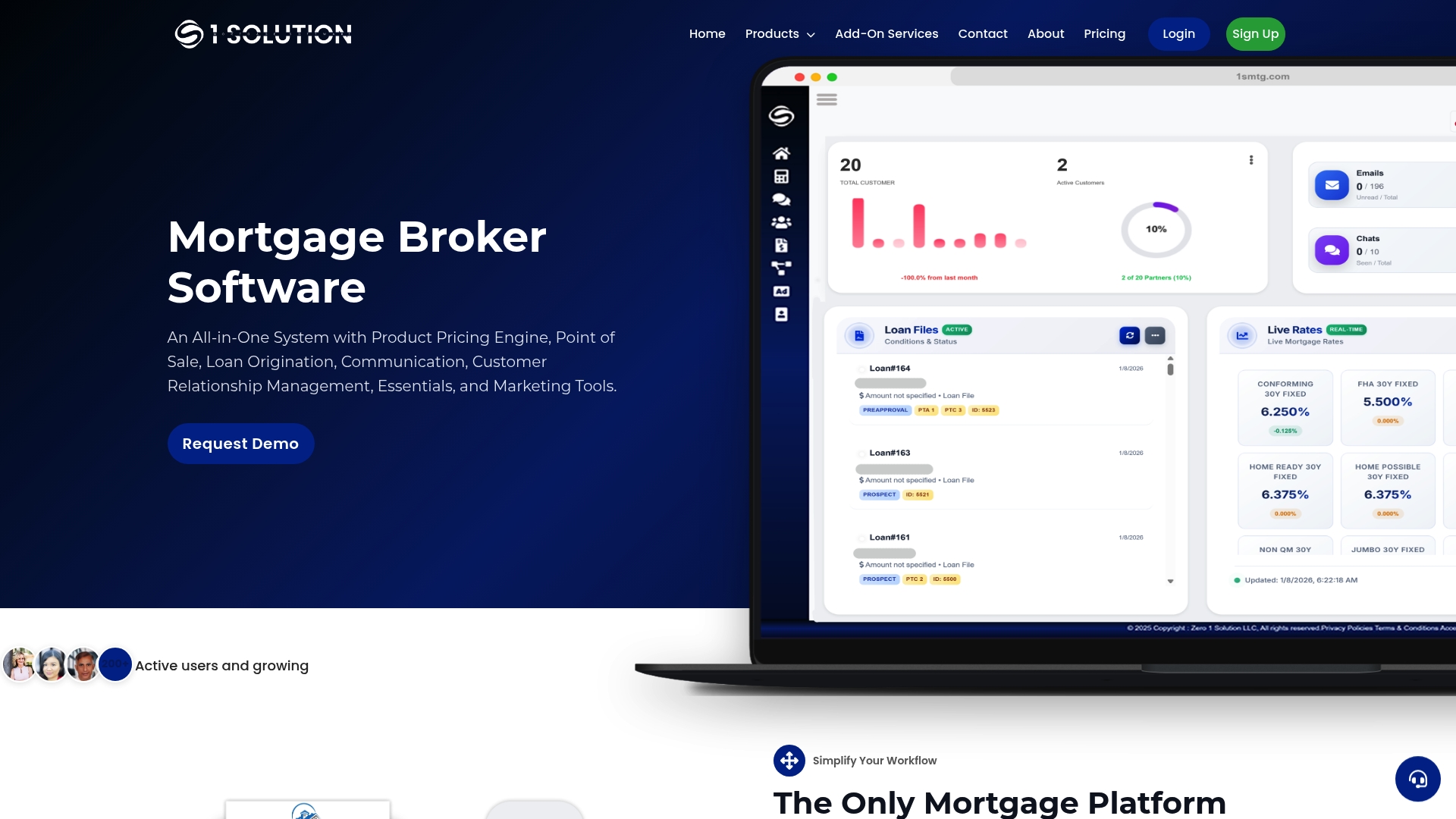
This means your vendor owner, compliance officer, and operations team pull from one connected record instead of multiple disconnected tools, providing the kind of documented, centralized evidence Fannie Mae's oversight framework expects to see. If your current process still lives in spreadsheets, request a demo of 1 Solution Mortgage Software and see how a connected platform handles vendor tracking, workflow documentation, and exam-ready reporting in one place.
Sources
- Vendor and Third-Party Oversight Seller/Servicer Risk Self-Assessment
- Vendor Management for Mortgage Companies and Lenders
- Vendor Supply Chain Risk Management Template (CISA)