
Staff training in mortgage companies is defined as the structured process of building the skills, knowledge, and compliance readiness that loan officers and support staff need to perform at a high level. The role of staff training in mortgage companies goes far beyond onboarding paperwork. It directly shapes productivity, regulatory compliance, and the quality of service borrowers receive. Companies that invest in employee training experience 59% greater growth likelihood, which means training is not a cost center. It is a revenue driver. The SAFE MLO exam, licensing standards set by the Nationwide Multistate Licensing System, and evolving federal regulations all demand that mortgage professionals stay current. Without a formal training infrastructure, companies fall behind on every one of those fronts.
How does staff training improve employee productivity in mortgage companies?
Structured training closes skill gaps before they become performance problems. A loan originator who enters production without a clear onboarding curriculum makes more errors, takes longer to close loans, and requires more manager intervention. That friction costs money at every stage of the pipeline.
The productivity case for training programs in mortgage companies is concrete:
- Faster ramp time. Structured onboarding reduces the time it takes a new loan officer to reach full production capacity.
- Fewer processing errors. Trained staff understand documentation requirements, reducing file defects and re-work.
- Higher loan volume per officer. Employees who understand the full loan lifecycle handle more files without sacrificing quality.
- Better borrower communication. Training on disclosure timelines and rate explanation reduces borrower confusion and complaint rates.
- Lower supervision burden. Managers spend less time correcting mistakes when staff are trained to standard from day one.
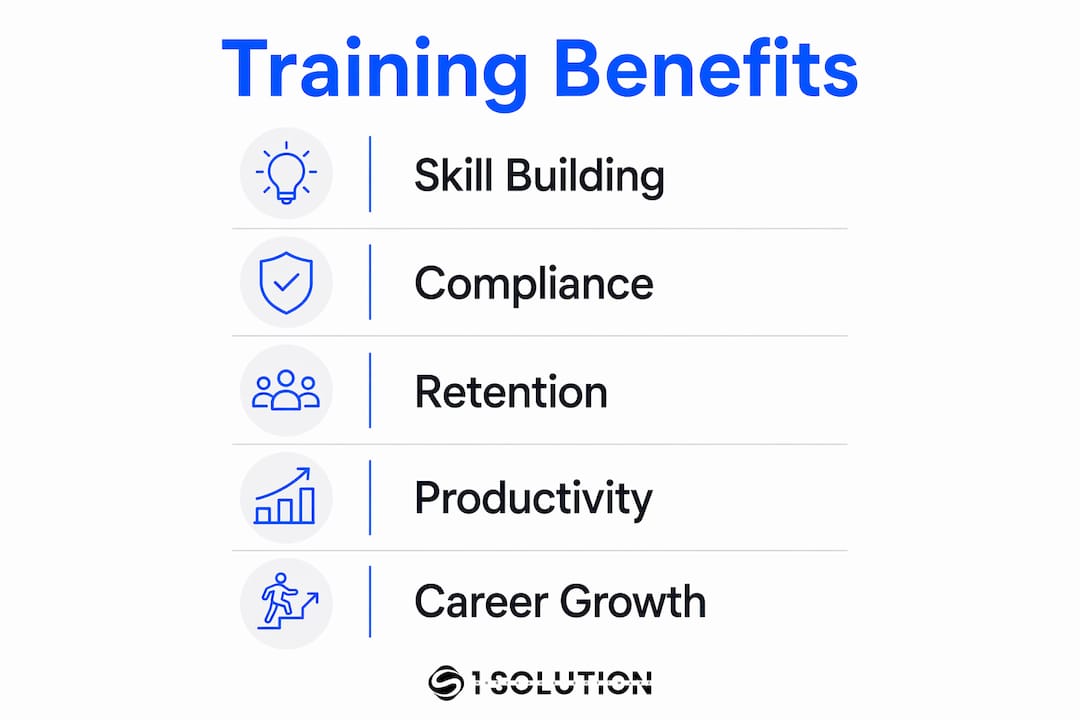
The retention connection is equally direct. 76% of workers are more likely to stay with an organization that offers professional development. In mortgage, where experienced loan officers are expensive to replace, that retention advantage translates to real cost savings. Turnover in mortgage operations can cost a company months of lost production per departing employee.
Pro Tip: Build a 90-day onboarding checklist that separates compliance milestones from production milestones. Mixing the two creates confusion and delays both.

Exploring loan officer onboarding program examples that have proven results in the field gives mortgage leaders a concrete starting point rather than building from scratch.
What is the role of training in mortgage compliance and licensing?
Compliance is where the cost of skipping training becomes most visible. Regulatory penalties, license suspensions, and enforcement actions all trace back to gaps in staff knowledge. The SAFE MLO exam is the federal licensing gateway for mortgage loan originators, and approximately 45% of first-time test-takers fail it. That failure rate is not a reflection of candidate intelligence. It reflects inadequate preparation.
Lenders with structured multi-month onboarding programs that combine hands-on experience with mentorship achieve dramatically better results. The approach that works is not classroom-first. It is field-first. New hires who work real files under supervision before sitting for the exam build the contextual knowledge that test prep alone cannot provide. Reversing the classroom-first approach through immersive field roles and mentoring substantially increases SAFE MLO exam success.
The table below shows the difference between reactive and proactive compliance training approaches:
| Dimension | Reactive compliance training | Proactive compliance training |
|---|---|---|
| Timing | After a violation or audit finding | Scheduled annually, tied to regulatory calendar |
| Documentation | Ad hoc, inconsistent | Standardized, role-based, and auditable |
| Technology integration | Manual tracking | Linked to automated IT workflows |
| Exam preparation | Self-study, no mentorship | Structured curriculum with mentorship |
| Business outcome | Higher enforcement risk | Lower risk, faster licensing, better retention |
High-performance mortgage training requires standardized documentation, role-based rubrics, and mandatory compliance calendars linked to automated IT processes. Without those systems, companies struggle to meet regulatory requirements consistently.
Pro Tip: Schedule annual compliance training on a fixed calendar date and tie completion to your HR system. Missed deadlines become visible immediately instead of surfacing during an audit.
Understanding the full scope of what a mortgage origination training course covers helps compliance officers build curricula that match actual regulatory requirements rather than guessing.
How does employee development prepare mortgage staff for future roles?
Training and development are not the same thing, and confusing them is a common mistake in mortgage companies. Training addresses current skill gaps while development prepares mortgage employees for future roles, leadership, and adapting to market changes. Both matter, but they require different investments and different timelines.
Development programs in mortgage companies typically include:
- Career path planning. Mapping a clear progression from processor to underwriter to senior loan officer gives employees a reason to stay and a goal to work toward.
- Professional certifications. The Certified Mortgage Banker designation, known as the CMB, is the mortgage industry's equivalent of an MBA in other financial sectors. Mortgage industry investment in CMB certification should be prioritized equally to advanced degrees in other financial fields.
- Cross-functional rotations. Moving staff through processing, underwriting, and origination roles builds operational empathy and reduces departmental silos.
- Leadership training. Preparing high-performing loan officers to manage teams prevents the common failure of promoting top producers into management roles without any preparation.
- Upskilling for technology. As mortgage platforms evolve, staff who understand both the workflow and the software perform at a higher level than those trained on only one dimension.
Mortgage lenders who unify recruiting, licensing, training, and retention as a single talent system outperform those treating these functions separately. That integration shortens onboarding ramp time, improves production, and reduces turnover. Development is what keeps that system producing results over the long term, not just in the first 90 days.
What are the most effective training strategies for mortgage companies?
The mortgage industry has historically relied on tribal knowledge, where experienced staff informally pass down practices to newer hires. That model does not scale. Modern scalability requires structured curricula with formal assessments, not hallway conversations and shadowing without structure.
Mortgage leaders who want to build training programs that actually hold up under growth and regulatory scrutiny should focus on these areas:
- Build a written onboarding curriculum. Document every milestone, deadline, and competency checkpoint. A written curriculum creates accountability and makes training auditable.
- Use role-based rubrics. Define what "good" looks like for each position. A processor's rubric differs from a loan officer's rubric. Generic training produces generic results.
- Incorporate real-world scenarios. Use actual loan files, redacted for privacy, as training material. Scenario-based learning builds judgment, not just procedural knowledge.
- Assign mentors, not just managers. A dedicated mentor who works alongside a new hire daily produces better outcomes than a manager who checks in weekly.
- Use technology to track progress. Platforms that log training completion, flag overdue compliance modules, and generate reports give leaders visibility without manual follow-up.
- Build a feedback loop. Collect data on where new hires struggle most and update the curriculum quarterly. Training programs that never change become outdated quickly.
How loan officers get trained on software in 2026 is a practical reference point for mortgage leaders who want to integrate technology training into their broader onboarding programs. The impact of training on mortgage performance compounds over time when the program is built on a feedback loop rather than a one-time event.
A culture of learning also requires visible leadership commitment. When company leaders participate in training sessions, complete compliance modules alongside staff, and discuss professional development in team meetings, the message is clear. Learning is not optional. It is how the company operates.
Key Takeaways
Structured staff training is the single most direct lever mortgage companies have for improving productivity, compliance, and retention simultaneously.
| Point | Details |
|---|---|
| Training drives retention | 76% of workers stay longer at companies offering professional development, reducing costly turnover. |
| Compliance training prevents penalties | Proactive, calendar-based compliance training reduces enforcement risk and improves SAFE MLO exam pass rates. |
| Field-first onboarding outperforms classroom-first | Hands-on mentorship before formal testing builds knowledge that test prep alone cannot deliver. |
| Development differs from training | Training fixes today's gaps; development builds future leaders and prepares staff for market changes. |
| Unified talent systems win | Lenders who connect recruiting, licensing, training, and retention as one system outperform those who treat them separately. |
What I've learned about training after 20 years in mortgage operations
The mortgage industry has a complicated relationship with formal training. For decades, the dominant model was simple: sit next to someone experienced, watch what they do, and figure it out. That worked when markets were stable and staff turnover was low. Neither of those conditions reliably exists anymore.
What I've seen firsthand is that companies treating training as a checkbox, something you do once during onboarding and then forget, pay for it in ways that are hard to trace directly. Compliance violations that seem random. Loan officers who plateau early. Processors who make the same errors repeatedly because no one ever corrected the root cause. The cost is real, but it shows up in slow, quiet ways.
The shift I believe matters most is moving from informal knowledge transfer to documented, repeatable systems. Not because documentation is exciting, but because it is the only way to scale. When your best underwriter leaves, a documented training program means their knowledge stays. When regulators audit your licensing process, a documented curriculum means you have answers. When a new loan officer joins, a documented onboarding plan means their ramp time is predictable.
The mortgage broker operations that I've seen perform consistently well share one trait. They treat training as an operational system, not a human resources function. That distinction changes everything about how training gets funded, measured, and improved.
— Omar Khamisa
How 1 Solution Mortgage Software supports training and compliance management
Mortgage companies that build strong training programs still need the right technology to manage compliance tracking, staff workflows, and operational documentation without adding administrative overhead.
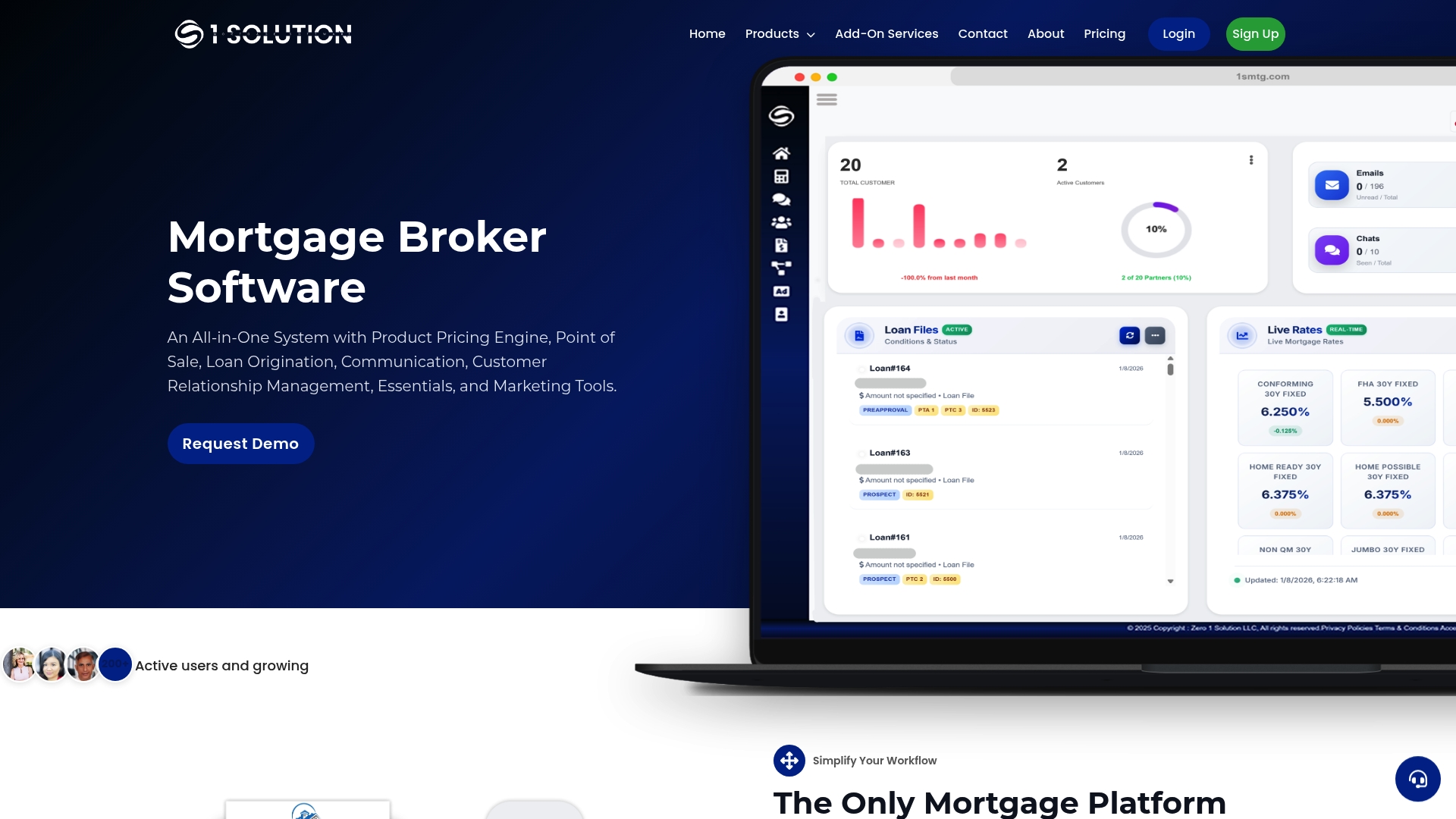
1 Solution Mortgage Software was built by mortgage professionals who understand what it takes to run a compliant, productive operation from the inside. The platform brings together compliance tracking, workflow automation, and operational tools into one connected system designed specifically for independent mortgage professionals. Mortgage leaders who want to reduce compliance risk, improve onboarding consistency, and give their teams better tools can explore the full platform at 1 Solution Mortgage Software. Built from real industry experience, not a boardroom, it reflects the way mortgage companies actually work.
FAQ
What is the role of staff training in mortgage companies?
Staff training in mortgage companies builds the skills, compliance knowledge, and operational habits that loan officers and support staff need to perform effectively. It directly affects productivity, licensing success rates, and borrower service quality.
How does training affect SAFE MLO exam pass rates?
Approximately 45% of first-time SAFE MLO exam takers fail without adequate preparation. Lenders using structured, field-first onboarding programs with mentorship achieve significantly higher pass rates.
What is the difference between training and development for mortgage staff?
Training addresses current skill gaps and immediate job performance. Development prepares mortgage employees for future roles, leadership responsibilities, and adapting to regulatory and market changes.
How does employee training reduce turnover in mortgage companies?
76% of workers are more likely to stay with employers who offer professional development. In mortgage, where replacing an experienced loan officer costs months of lost production, training is one of the most cost-effective retention tools available.
What training methods work best for loan officers?
Field-first onboarding with dedicated mentors, role-based rubrics, real-world loan file scenarios, and technology-tracked compliance calendars consistently outperform classroom-only or self-study approaches.