
You must send a risk-based pricing notice whenever you use a consumer report to set credit terms for personal, family, or household purposes, and those terms turn out materially less favorable than what you offer your best-qualified applicants. The notice has to identify that a consumer report shaped the pricing, name the credit reporting agency involved, and explain the consumer's right to a free report within 60 days.
TL;DR:
- Compare terms only among applicants seeking the same product type, such as fixed rate mortgages versus auto loans; business credit is excluded.
- Tier pricing generally triggers notices outside the top tier with four or fewer tiers, and below the top two with five or more.
- If you use a credit score cutoff, applicants without a score must be treated as receiving less favorable terms and sent a notice.
- After approval, send closed end notices before closing; open end notices precede the first transaction, while account review notices are due within five business days.
- Keep transaction level records of the score, offered APR, assigned tier, method, and applicable cutoff version, and retain delivery receipts for examinations.
Table of Contents
- Who This Rule Covers and Which Products Trigger It
- When the Notice Requirement Actually Kicks In
- Three Permitted Methods for Identifying Who Gets Notices
- What the Notice Must Say and How You Can Deliver It
- Exceptions, Overlaps, and the Credit-Score Disclosure Option
- Building an Audit-Ready Compliance Checklist
- Why Clear Records Matter More Than Perfect Policy Language
- How Our Platform Keeps Your Pricing Decisions Defensible
- FAQ
- Sources
Who This Rule Covers and Which Products Trigger It
The requirement applies specifically to credit extended primarily for personal, family, or household use, which rules out commercial loans, business lines of credit, and most investment property financing. The obligation falls on the original creditor, meaning whoever the consumer's debt is initially payable to, not a downstream purchaser of that debt.
Compliance teams often ask which products actually count. The rule covers a wide mix of consumer credit types, and the "specific type of credit product" concept matters because you compare like against like, not your entire portfolio.
- Student loans and private education financing
- Secured and unsecured credit cards
- New and used auto loans
- Fixed-rate and variable-rate mortgages
A fixed-rate mortgage applicant gets compared against other fixed-rate mortgage applicants, not against your auto loan book. Getting this segmentation right is the foundation for every method described later in this guide, under 12 CFR Part 1022 Subpart H.
When the Notice Requirement Actually Kicks In
The trigger language in the regulation centers on "material terms," which generally means the annual percentage rate or whichever financial term carries the most weight in the transaction, such as a down payment requirement on an auto loan. "Materially less favorable" means those terms are worse than what you'd extend to a substantial share of your consumer base for that same specific product type, not simply worse than your absolute best rate.
Timing depends on the transaction structure. For closed-end credit, like a mortgage or auto loan, the notice goes out after you've made the approval decision but before consummation, meaning before the loan actually closes. For open-end credit, such as a credit card, delivery happens before the consumer's first transaction under the account. Account review notices, triggered when you raise someone's APR based in whole or in part on a consumer report pulled during a periodic review, must go out either at the time of that decision or within five business days.
One notice covers one transaction. When two consumers apply jointly and both receive materially less favorable terms based on their reports, you generally need to address both, though a single combined notice can satisfy the requirement when it names both consumers and both relevant reports. According to §1022.72, the general requirement anchors all of this timing and scope logic.

Three Permitted Methods for Identifying Who Gets Notices
The regulation does not force you to send notices to every applicant. Instead, you choose one of three recognized methods to identify which consumers actually received materially less favorable terms.
- Direct comparison: you compare the material terms you offered a consumer against the terms offered to your other consumers for the same specific product type, and anyone who landed meaningfully worse gets a notice.
- Credit-score proxy: you set a cutoff score, and anyone scoring below it is treated as having received materially less favorable terms, triggering a notice automatically.
- Tiered pricing: you sort consumers into pricing tiers, and everyone outside your top tier gets notified, with distinct rules depending on whether you run four or fewer tiers or five or more.
With four or fewer tiers, every consumer outside the single best tier typically qualifies for a notice. With five or more tiers, you generally notify consumers who fall below the top two tiers, since more granular tiering means the top tiers each represent a smaller, more exclusive slice of pricing. When a consumer has no credit score available, the proxy method requires you to assume they received materially less favorable terms and send the notice anyway, a rule spelled out explicitly in §1022.72.
Pro Tip: Recalculate your cutoff score and tier boundaries on a fixed schedule, such as quarterly, and keep each version dated so you can show exactly which rule applied to any given transaction.
What the Notice Must Say and How You Can Deliver It
Section 1022.73 lays out specific content requirements, and skipping any one of them creates a compliance gap even if you sent something. The notice needs to function as a complete, standalone disclosure.
- A statement that a consumer report was used in connection with the credit decision
- A statement that the terms offered were set, in whole or in part, based on that report
- A statement that the terms may be less favorable than those offered to other consumers
- Encouragement to verify the accuracy of the report's information
- Identification of the specific credit reporting agency or agencies that supplied the report
- A statement of the consumer's right to a free copy of that report within 60 days
- Instructions for how to obtain that free report
- A link to the Consumer Financial Protection Bureau's website for further information
- Credit score, range, and key factor information when a score was used in the decision
The notice has to be clear and conspicuous, but the delivery channel is flexible: oral, written, or electronic formats are all permitted, so a notice delivered verbally at a car dealership's finance desk and one delivered through a secure borrower portal can both satisfy the rule. Using the model forms published alongside §1022.73 meaningfully reduces your risk of a content or formatting gap, since regulators built them to cover every required element.
Exceptions, Overlaps, and the Credit-Score Disclosure Option
Not every transaction needs a risk-based pricing notice, even when a consumer report was pulled. The specific-terms exception applies when you provide the consumer with the actual terms you're offering before they decide whether to proceed, such as a firm rate quote, which removes the uncertainty the notice is meant to address.
Risk-based pricing notices and adverse-action notices serve different purposes and sometimes both apply to the same credit event. When a consumer is denied credit outright, adverse action rules govern; when credit is approved but on worse terms, risk-based pricing rules apply, and compliance teams need to satisfy both sets of obligations when a transaction triggers them simultaneously, per FTC guidance.

A credit-score disclosure, sent to all consumers regardless of their pricing outcome, can replace the risk-based pricing notice in many cases. It simplifies the decision of who gets what notice, though it comes with its own separate content and delivery requirements.
Building an Audit-Ready Compliance Checklist
A risk-based pricing program survives an exam on the strength of its paper trail, not just its policy language. Examiners want to see the logic behind every decision, not just the outcome.
- Document your product segmentation definitions so examiners can see exactly how you grouped consumers for comparison purposes.
- Log the decision inputs for every transaction that triggers a notice: credit score, APR offered, tier assignment, and which cutoff or tier version applied.
- Build a missing-score workflow that automatically flags the case, assumes materially less favorable terms under the proxy method, and issues the notice without manual intervention.
- Set a review cadence for cutoff scores and tier boundaries, and tie each version to a specific reporting period with an immutable record.
- Wire notice timing checks directly into your loan origination system or closing workflow, and retain delivery receipts as your evidence of compliance.
Teams running this process manually tend to lose the audit trail first, usually because cutoff updates happen informally and nobody records which version applied to which file. Our approach to pricing exceptions in our loan pricing exceptions guide walks through similar version-control logic for documenting tier decisions. Pairing that with the retention practices covered in our document storage compliance piece gives you a fuller picture of what examiners expect to find on file.
Pro Tip: Store cutoff and tier version history separately from your live pricing engine, so a mid-year policy change never overwrites the record you need to defend a notice decision from six months earlier.
Why Clear Records Matter More Than Perfect Policy Language
Compliance teams spend enormous energy wordsmithing notice templates when the bigger exposure usually sits in the decision records behind them. An examiner reviewing a risk-based pricing file cares less about whether your disclosure language is elegant and more about whether you can show, transaction by transaction, which method you used and why a given consumer did or didn't receive a notice.
That bias toward auditability comes from two decades spent inside mortgage operations, underwriting files, and origination systems, watching brokers get tripped up not by bad intentions but by undocumented pricing logic. Our view: build the decision trail first, then let the notice language follow from it. For compliance teams, that means a policy update that defines segmentation and cutoffs explicitly, IT changes that capture the decision data automatically, and a test run against real file samples before the next exam cycle arrives.
— Omar Khamisa
How Our Platform Keeps Your Pricing Decisions Defensible
Independent brokers built our mortgage platform because we got tired of fragmented systems that separate pricing decisions from the records that defend them. Our product pricing engine, document delivery tools, and borrower portal connect so the data behind every risk-based pricing decision can live in one place instead of scattered across spreadsheets and email threads.
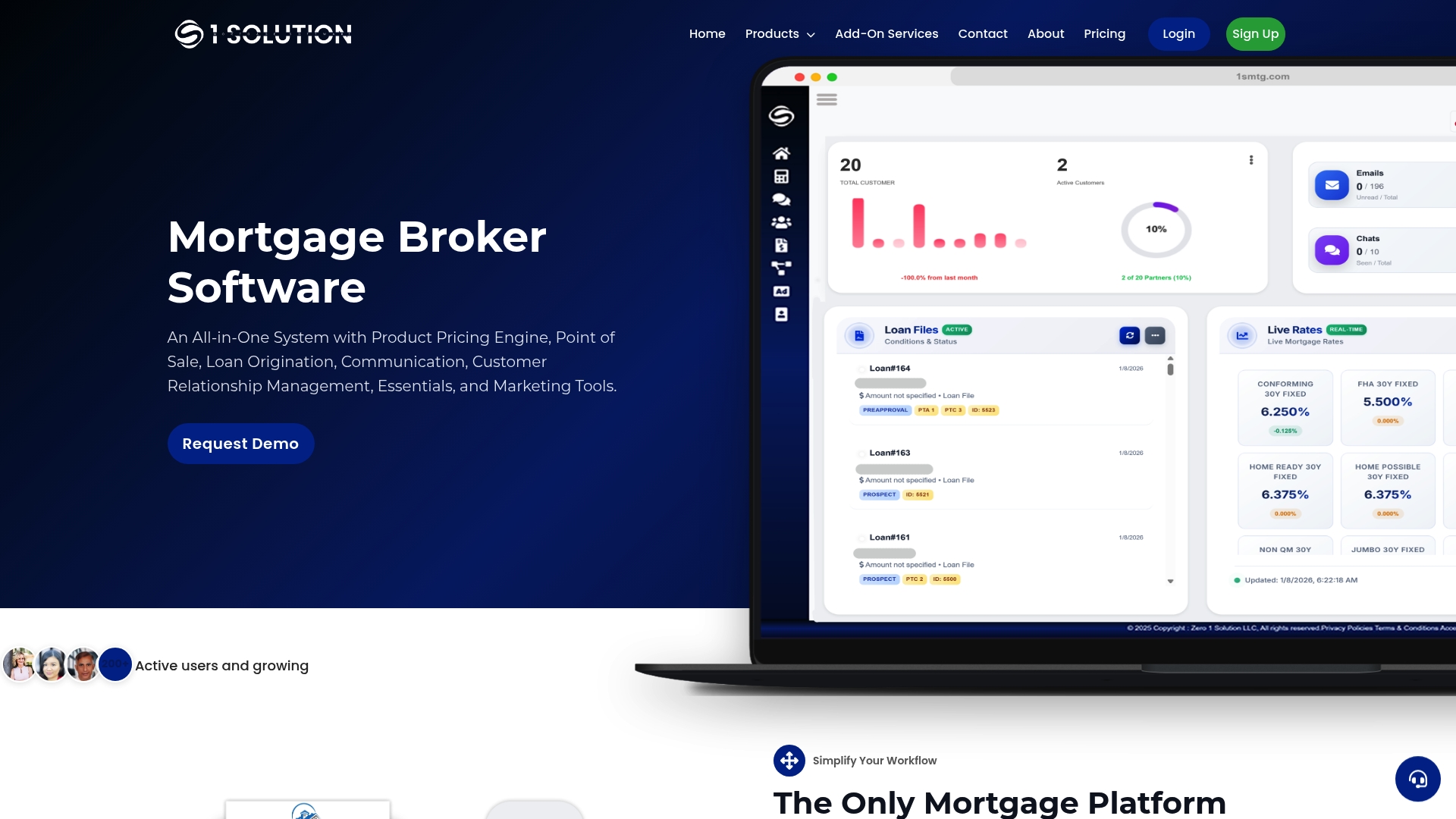
- Our pricing engine ties tier assignments and cutoff scores directly to each file's decision record.
- Decision logs capture the score, APR, and method used for every transaction that may require a notice.
- Our customer portal delivers notices electronically and keeps a timestamped receipt on file.
- Document storage keeps versioned cutoff and tier records separate from your live pricing data.
If you want to see how our Subscription Account brings pricing, compliance, and recordkeeping into one connected workflow, schedule a demo and walk through your own portfolio with our team.
This article is general information, not a substitute for advice from a qualified financial advisor. Consult a qualified financial professional about your own circumstances before acting on anything here.
FAQ
Why did I get a risk-based pricing notice?
You received a risk-based pricing notice because a lender used information from your consumer report to set credit terms for you that were less favorable than what it offers to a substantial share of its other customers. The notice does not mean you were denied credit; it means your terms, such as your interest rate, were shaped partly by your credit report.
What is a Tesla risk-based pricing notice?
A risk-based pricing notice tied to a Tesla purchase works the same way it does for any auto financing: the lender financing the vehicle used your consumer report to set your loan terms, and those terms came back less favorable than what it extends to better-qualified borrowers. The notice itself follows the same federal content and timing rules that apply to any auto loan, regardless of the vehicle brand.
What is risk-based pricing?
Risk-based pricing is the practice of setting a borrower's credit terms, most often the interest rate, based partly on information in their consumer report rather than offering every applicant the same terms. When this practice results in materially less favorable terms for a given consumer, federal rules under 12 CFR Part 1022 Subpart H require the creditor to notify that consumer.
What disclosures does TILA require?
The Truth in Lending Act requires disclosures covering the cost of credit, including the annual percentage rate, finance charges, and payment schedules, so consumers can compare loan offers on consistent terms. Risk-based pricing notices operate under a related but separate framework, the Fair Credit Reporting Act, and specifically address how a consumer report influenced the terms a lender actually offered.
Is a risk-based pricing notice the same as an adverse action notice?
No, the two serve different purposes even though both relate to consumer report use. An adverse action notice applies when credit is denied or terms are revoked, while a risk-based pricing notice applies when credit is approved but on less favorable terms, and some transactions require both under FTC guidance.
Sources
- eCFR :: 12 CFR Part 1022 Subpart H
- § 1022.72 General requirements for risk-based pricing notices. | Consumer Financial Protection Bureau
- Using Consumer Reports for Credit Decisions: What to Know About Adverse Action and Risk-Based Pricing Notices | FTC