
Under the SAFE Act, every loan originator must either register with the Nationwide Multistate Licensing System as an employee of a covered depository institution or obtain a state license and registration if working at a non-depository shop. Every mortgage loan originator needs an NMLS unique identifier and must submit fingerprints for an FBI background check. Pre-licensing education, a passing score on the SAFE MLO Test, and annual continuing education round out individual duties, while employers must maintain written policies, track renewals, and run independent compliance testing every year.
TL;DR:
- Employees of covered depository institutions register through NMLS, while originators at nondepository firms need state licenses; temporary authority applies only if they qualify.
- State licensing requires at least 20 hours of prelicensing education and a 75% test score; five or more years outside the industry can trigger a retest.
- Originators need at least 8 hours of annual continuing education, but states may add hours or topics, and NMLS checks completion before processing renewals.
- Employers must keep written policies, test compliance independently each year, and update material registration or institution record changes within 30 days.
Table of Contents
- At-a-Glance SAFE Act Compliance Checklist
- Who Must Register, Who Needs a State License, and What Temporary Authority Covers
- NMLS Registration and the Unique Identifier: Data, Fingerprints, and Reporting
- Education and Testing: Pre-Licensing Hours, the SAFE MLO Test, and Annual CE
- Employer Responsibilities Under Regulation G: Policies, Tracking, and Testing
- Renewals, Updates, Employment Changes, and Key Timelines
- State Differences, CFPB Backup Authority, and Common Compliance Pitfalls
- Immediate Compliance Checklist: Practical Steps to Implement Now
- Why Turning Rules Into Daily Habits Matters
- How 1 Solution Helps Centralize SAFE Act Compliance
- FAQ
- Sources
At-a-Glance SAFE Act Compliance Checklist
Before digging into the details, confirm where each loan originator on your team stands. This snapshot works for brokerages auditing their roster today and for new originators mapping out what comes next.
- Determine whether each MLO falls under the registered path (depository employee) or the state-licensed path (non-depository originator).
- Confirm NMLS registration status and unique identifier assignment for every active originator.
- Verify completion of pre-licensing education and the SAFE MLO Test where state licensing applies.
- Track annual continuing education deadlines and confirm any state-specific CE additions beyond the federal minimum.
- Keep written policies current, log material changes within 30 days, and schedule the year's independent compliance test.
Who Must Register, Who Needs a State License, and What Temporary Authority Covers
The SAFE Act splits loan originators into three categories, and which one applies determines your entire compliance path.
- Registered MLOs: employees of federally regulated banks, credit unions, certain subsidiaries, and Farm Credit System institutions register through the NMLS but do not need a state license, as outlined in Regulation G.
- State-licensed MLOs: originators working for non-depository mortgage companies, independent brokerages, or other state-regulated entities must meet state licensing standards built on the federal floor set by Regulation H.
- Loan originators with temporary authority: a narrow bridge status that lets certain originators move between states or employers while a license application is pending, available only when specific eligibility conditions are met and not guaranteed in every state.
Knowing which bucket an originator falls into shapes everything from the paperwork you file to the testing and education obligations that follow.
NMLS Registration and the Unique Identifier: Data, Fingerprints, and Reporting
Registering through the NMLS means submitting a defined set of information, and the process does not end once a file is approved.
- Initial registration requires identity verification, home address, Social Security number, date of birth, principal business location, a 10-year employment history, and disclosure of any legal or regulatory actions.
- Fingerprints are submitted through the NMLS for an FBI background check as part of the registration process, as described in CFPB SAFE Act guidance.
- The unique identifier assigned at registration is a lifetime numeric ID; originators must disclose it upon request and include it in initial written communications with consumers.
- Employers must confirm an originator's employment before activating their registration and update institution-level information within 30 days of any material change.
Treat this as a living file rather than a one-time form. Examiners expect to see that the data on record matches reality, not just what was true at onboarding.
Education and Testing: Pre-Licensing Hours, the SAFE MLO Test, and Annual CE
Education requirements under the SAFE Act work in two stages: what you complete before you're licensed, and what you keep current every year after.
- Pre-licensing education requires at least 20 hours of NMLS-approved coursework before an originator can be licensed, with some states adding hours on top of the federal floor.
- The SAFE MLO Test requires a passing score of 75%, and passing is generally a one-time requirement unless an originator stays out of the industry for five or more consecutive years, which can trigger a retest.
- Annual continuing education carries a federal minimum of 8 hours, broken into 3 hours of federal law, 2 hours of ethics covering fraud, consumer protection, and fair lending, 2 hours of nontraditional mortgage lending, and 1 hour on a mortgage origination topic.
- NMLS validates CE completion before processing a renewal, and many states layer on extra hours or state-specific topics, so check your state regulator's requirements directly.
Employer Responsibilities Under Regulation G: Policies, Tracking, and Testing
Employers carry obligations that go beyond making sure individual originators are registered. Regulation G requires a documented compliance structure sized to the institution.
- Written policies and procedures appropriate to the institution's size and mortgage activities must identify which employees are required to register and spell out how they comply.
- Procedures need to cover unique identifier requirements, confirmation that registration data is accurate, and a tracking system for renewals and updates.
- An annual independent compliance test is required, tailored to the institution's size and complexity, and it can be performed internally or by an outside party.
- Policies must define consequences when an MLO fails to comply, including discipline or removal from originator duties.
Smaller brokerages sometimes assume Reg G only applies to large depository lenders. It doesn't. Any employer with registrable employees needs these elements in writing, even if the "testing team" is one compliance officer wearing multiple hats. Our compliance reporting checklist walks through documentation habits that make this testing far less painful when exam season arrives.
Pro Tip: Build your annual independent test around the same renewal calendar you use for NMLS, so testing and renewal reminders land in the same review cycle instead of competing for attention.
Renewals, Updates, Employment Changes, and Key Timelines
Timing mistakes cause more compliance headaches than knowledge gaps. Here's how the clock works.
- Registrations renew annually during the NMLS renewal period, and applicants should check the applicable requirements for an initial registration.
- Any significant change, including a legal name change, termination of employment, or a new reportable legal or regulatory action, must be updated in the registration within 30 days.
- Employers must notify the Registry within 30 days when an MLO leaves the organization.
- Institution-level records must also be updated within 30 days when required information becomes inaccurate.
Missing a required update deadline can create a paperwork backlog and leave a gap in the public record.
State Differences, CFPB Backup Authority, and Common Compliance Pitfalls
Federal minimums set the floor, not the ceiling. States routinely add requirements, and the CFPB retains backup authority when a state falls short.
- States may impose requirements that exceed federal minimums, so confirm your state's specific rules.
- If a state does not have a licensing system that meets SAFE Act minimums, federal law provides for a system to license and register loan originators operating in that state. Review the statutory provisions for details.
- Common pitfalls include treating the federal 8-hour CE minimum as sufficient when the state requires more, missing renewal windows, delaying required updates, and failing to document the annual independent test.
A brokerage expanding into a new state should never assume its home-state compliance program automatically satisfies the new jurisdiction. Reviewing our guide on mortgage startup requirements is a useful starting point when building out a multi-state compliance program from scratch.
Immediate Compliance Checklist: Practical Steps to Implement Now
Turning these requirements into daily operations comes down to a short list of concrete moves.
- Adopt or update written policies that identify exactly who must be registered and who owns NMLS data entry and verification.
- Build a tracking system for renewals, CE completion, fingerprint status, and 30-day update deadlines, whether that's a spreadsheet or a dedicated platform.
- Schedule this year's independent compliance test now, assign a remediation owner for any gaps found, and keep the results on file.
- Train every originator to disclose their unique identifier on request and to report employment or legal changes to the employer immediately, not at renewal time.
Originators working with self-employed or non-traditional income borrowers may need to pay close attention to documentation accuracy. For a real-world example of how alternative income gets underwritten, see this Airbnb income qualification example from a Sedona, Arizona market specialist.
Pro Tip: Run a quarterly internal audit of NMLS data against your HR records. Catching a mismatch three months early beats explaining it to an examiner.
Why Turning Rules Into Daily Habits Matters
In my work in mortgage operations, from processing and underwriting to running systems for independent brokers, I've watched good originators get tripped up not by ignorance of the SAFE Act, but by weak tracking. Written policies and automated reminders don't just satisfy examiners. They remove the daily friction of chasing renewal dates by hand.
— Omar Khamisa
How 1 Solution Helps Centralize SAFE Act Compliance
We built our platform because brokers needed one place to manage compliance instead of juggling spreadsheets and sticky notes. Our system brings document storage, communication tools, and operational tracking together, so renewal dates and CE records don't live in someone's inbox. Our communication tools also support the consumer communication trail that examiners often want to see.
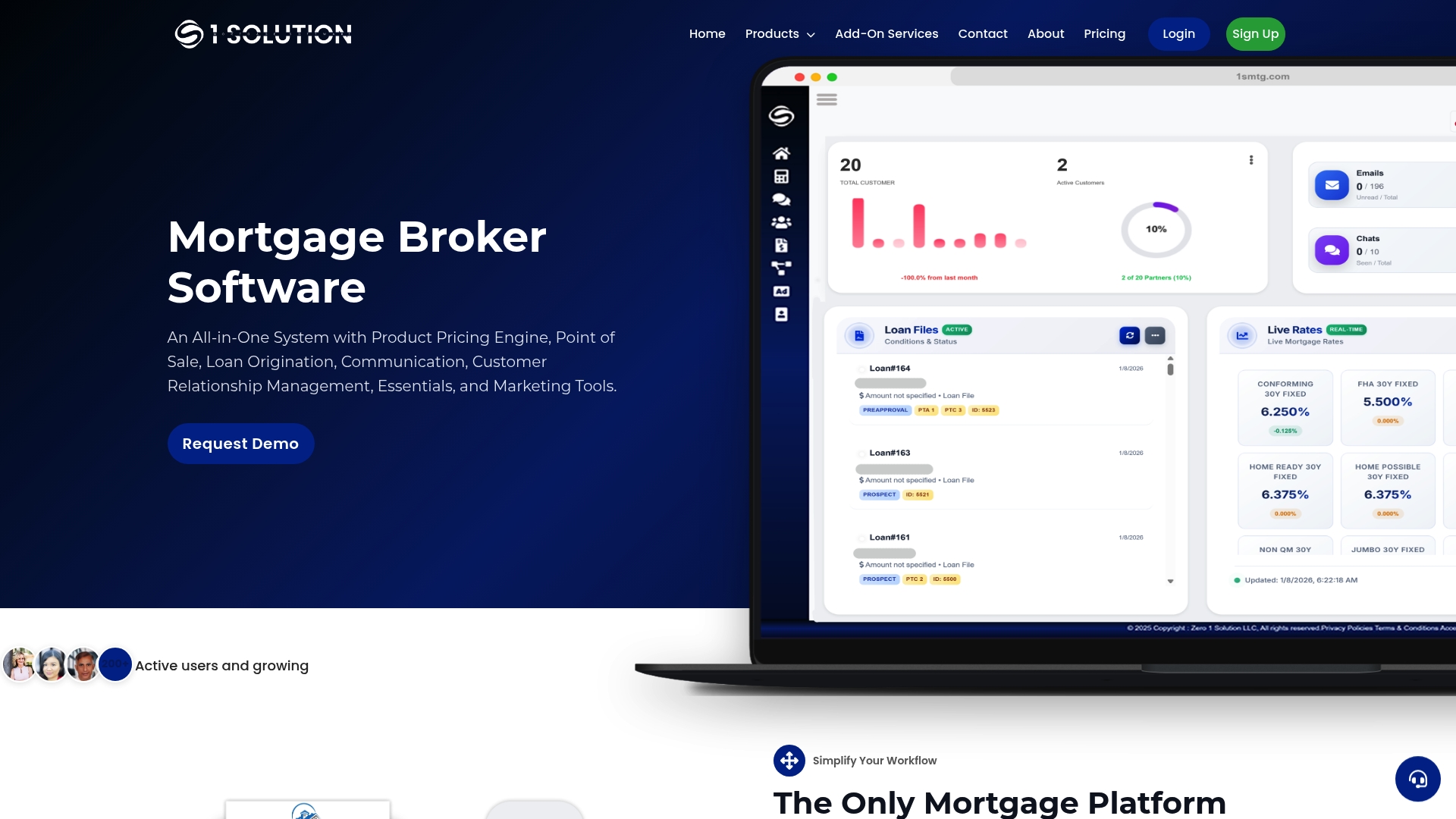
Visit 1 Solution Mortgage Software to see how our platform centralizes the tracking that keeps your team examiner-ready.
This article is general information, not a substitute for advice from a qualified financial advisor. Consult a qualified financial professional about your own circumstances before acting on anything here.

FAQ
What are the requirements of the SAFE Act?
The SAFE Act requires loan originators to either register with the NMLS as employees of covered depository institutions or obtain a state license and registration, obtain a unique identifier, complete pre-licensing education and testing, and maintain annual continuing education. Employers must also adopt written compliance policies and conduct annual independent testing under Regulation G.
Is SAFE Act training required annually?
Yes, continuing education is required every year, with a federal minimum of 8 hours covering federal law, ethics, nontraditional mortgage lending, and a mortgage origination topic. Many states require additional hours on top of that federal floor, so check your state regulator for specifics.
Is the SAFE Act federal or state?
The SAFE Act is a federal law, but it operates through a combination of federal registration under Regulation G and state licensing systems built to meet minimum standards under Regulation H. States can and often do impose stricter requirements than the federal baseline.
What types of loans are covered under the SAFE Act?
The SAFE Act applies to residential mortgage loan origination. Whether a particular activity or role is covered depends on the Act's definitions and applicable rules.
Sources
- CFPB Consumer Laws and Regulation SAFE Act
- eCFR :: 12 CFR Part 1007 -- S.A.F.E. Mortgage Licensing Act—Federal Registration of Residential Mortgage Loan Originators (Regulation G)
- eCFR :: 12 CFR Part 1008 -- S.A.F.E. Mortgage Licensing Act—State Compliance and Bureau Registration System (Regulation H)
- SAFE MLO Testing FAQ