

Federal law lets you record a call with just one party's consent, but a number of states demand consent from everyone on the line, and courts routinely apply the stricter state's rule to interstate calls. The safe default for any mortgage operation: announce "this call may be recorded" on every call, capture an auditable consent event with a timestamp, and retain it long enough to survive a regulator's request. Treat every state as an all-party state unless you've mapped your call volume otherwise.
TL;DR:
- States like California, Connecticut, Florida, and Maryland require all-party consent, making it essential to obtain explicit agreement from every participant before recording.
- Interstate calls into all-party consent states must comply with that state's laws, meaning disclosures are necessary regardless of where the loan officer is located.
- Federal law permits recording if one party knows about it, but most states enforce stricter consent laws, requiring careful call flow and documentation practices.
- Proper recording practices include announcing recording at the start, timestamping disclosures, logging consent, and retaining recordings for at least five years in specific states like Minnesota.
- Automated compliance controls integrated into call platforms ensure consistent disclosures, accurate logging, and retention, reducing operational errors and legal risk.
Table of Contents
- Mortgage Call Recording Laws by State: The Consent Map
- The Federal Baseline: ECPA and Why Interstate Calls Change the Math
- Turning Statutes Into Mortgage Compliance: Disclosure, Logs, and Retention
- Building the Operational Checklist: Scripts, Dialers, and Remote Teams
- Recent Changes and Edge Cases That Trip Up Mortgage Teams
- What Happens When Recording Rules Get Violated
- An Audit-Ready Call Record: What a Complete File Actually Looks Like
- A Broker's Take: Simple Beats Clever Every Time
- Making Compliance Automatic Instead of Manual
- Where to Verify These Rules Yourself
- Sources
Mortgage Call Recording Laws by State: The Consent Map
Where your borrower is physically located when the phone rings determines which law applies, not where your call center sits. That single fact trips up more mortgage compliance officers than any other piece of this puzzle.
Most of the country runs on one-party consent, meaning you can legally record as long as you, the loan officer, know about it. But a cluster of states requires all parties to consent before a recording is legal, and this is where mortgage call recording rules get genuinely risky for multi-state lenders and brokers.
Justia's 50-state survey of recording laws identifies about a dozen all-party consent jurisdictions, though the exact number shifts slightly depending on how you classify a few edge cases like Vermont, which has no statute directly on point and relies on case law instead.
| Consent type | States | Practical note for mortgage calls |
|---|---|---|
| All-party consent | California, Connecticut, Delaware, Florida, Illinois, Maryland, Massachusetts, Michigan, Montana, Nevada, New Hampshire, Pennsylvania, Washington | Every participant must agree before recording starts, including anyone briefly patched in |
| One-party consent | Remaining states, including Texas, New York, Ohio, Georgia, Colorado, Arizona | Only one person on the call needs to know it's being recorded |
| Statutory gray area | Vermont | No specific wiretap statute on recording; courts have leaned toward requiring consent |
A few states deserve special attention because mortgage teams misclassify them constantly:
- Nevada is frequently miscoded as one-party by CRM vendors, but the Nevada Supreme Court has interpreted its statute to function as all-party for calls between Nevada residents.
- Connecticut distinguishes between civil and criminal recording statutes, and its civil wiretap law effectively requires all-party consent even though the criminal code reads differently.
- Oregon requires consent for telephone calls but treats in-person conversations under a different standard entirely, a distinction that matters if your team also records face-to-face borrower meetings.
- Florida courts have held that even a brief, unannounced recording of a few seconds before disclosure can trigger liability, so timing your announcement matters as much as making it.
Interstate calls are where the real exposure lives. If your loan officer sits in Texas (one-party) and calls a borrower in California (all-party), California's rule generally controls, because the borrower is the party being recorded without full knowledge. This isn't a technicality. The precedent comes from Kearney v. Salomon Smith Barney, where a California court held that a company recording calls into California from a one-party consent state still had to follow California's all-party rule because California's interest in protecting its residents' privacy outweighed the other state's more permissive approach.
For a mortgage shop originating loans across multiple states, that ruling has one clean implication: you can't cherry-pick which calls get an announcement based on the loan officer's home state. If your borrower base touches even one all-party state, and for most brokerages it does, the operationally sane move is to play the disclosure on every single call, every time, regardless of where the agent is sitting.
This is also why "mortgage call recording rules" and "telemarketing laws for mortgages" tend to get discussed in the same breath. The Telephone Consumer Protection Act governs how you can contact a borrower (autodialers, prior express consent for marketing calls), while state wiretap statutes govern whether you can record that same conversation. They're separate compliance regimes, but a single missed disclosure can trip both if the call in question was also an unsolicited marketing outreach.
The Federal Baseline: ECPA and Why Interstate Calls Change the Math
The federal floor for call recording laws mortgage professionals rely on comes from the Electronic Communications Privacy Act, which amended the older Wiretap Act. Under 18 U.S.C. § 2511, it's legal to record a phone call as long as one party to the conversation consents. If you're the loan officer and you know the call is being recorded, that satisfies the federal requirement on its own.
The FCC's consumer guidance confirms there's no federal rule stopping an individual from recording their own calls, and it explicitly points consumers and businesses toward state law for anything stricter. That's the entire ballgame: federal law sets a permissive floor, and states are free to raise the bar.
What that means practically for a mortgage originator:
- Recording without any announcement is federally legal only if you personally know about it and are a party to the call.
- It is federally illegal to record a call you are not part of, without anyone's consent, which matters for supervisors monitoring lines or third-party call centers.
- Civil remedies under ECPA can include statutory damages, and criminal exposure under the Wiretap Act includes fines and potential imprisonment for willful violations, though enforcement against ordinary business recording is rare when disclosure practices are reasonable.
- None of this insulates you from a stricter state statute. Federal preemption does not apply here. States are allowed to layer on additional consent requirements, and most of the all-party states enforce theirs through both civil suits and criminal statutes.
The Kearney precedent is the reason so many national mortgage operations default to all-party notice rather than trying to build a state-by-state routing engine. Courts have shown they'll apply the more protective state's law when a call reaches that state's residents, even if your origination office sits somewhere with looser rules. Building your compliance program around the toughest applicable state, rather than the loosest, is the only approach that scales without a legal team re-reviewing your call flows every time you open a new state license.
Turning Statutes Into Mortgage Compliance: Disclosure, Logs, and Retention
Knowing the law and being able to prove you followed it are two different problems. Examiners and plaintiff's attorneys don't ask whether you believe you disclosed the recording. They ask you to produce the record showing you did.
Practical guidance from the mortgage lead-generation space makes this point directly: recording the call is not enough on its own. You need the disclosure captured, timestamped, and tied to an affirmative consent event, not just a recorded file sitting in a folder.
A defensible consent record needs these elements, at minimum:
- The exact audio of the disclosure statement itself, not a paraphrase or a note that one was played
- A timestamp marking when the disclosure finished playing, separate from the call's start time
- The agent ID or extension handling the call
- The dialed number and the caller's number, both logged
- A clear marker of affirmative consent, whether that's a spoken "yes" or documented continued participation after disclosure
- A link back to the borrower's file in your CRM or loan origination system, so the recording is retrievable by loan number, not just by date
Retention is where mortgage-specific rules diverge sharply from general business practice. Minnesota passed a law requiring covered mortgage servicers to record most customer telephone interactions and retain them for five years. That's a servicing-specific obligation, not a general wiretap statute, and it signals where other states may head next. If you service loans touching Minnesota borrowers, five years is your floor, not a suggestion.
Beyond state-specific retention windows, layer in whatever data-protection overlays your call content triggers. If a call involves a payment card number for a fee collection, PCI-DSS rules govern how that audio and any associated data get stored and who can access it. If a conversation veers into a borrower's medical hardship explaining a forbearance request, treat that segment with the same access discipline you'd apply to HIPAA-covered information, even though mortgage companies aren't typically covered entities themselves.
Pro Tip: Build your consent log as a separate, queryable record from the raw audio file. If an examiner asks for every recorded call where a borrower in an all-party state didn't get a disclosure, you want to run that as a database query, not a manual review of thousands of audio files.
Recordings also function as evidence, and not just in litigation; bond registration attorneys in South Africa often rely on recorded calls to support complaint handling and evidence of advice. A borrower complaint alleging you misquoted a rate or misrepresented a lock period gets resolved in your favor or against you almost entirely based on what the recording shows and whether your consent documentation proves you were legally entitled to have made it.
Building the Operational Checklist: Scripts, Dialers, and Remote Teams
The gap between a compliance policy and actual compliance is almost always operational. Your policy might say "announce the recording on every call." Whether that happens depends on how your dialer, your CRM, and your agents are actually configured.
Start with script placement. The disclosure needs to happen before or at the moment of connection, not buried thirty seconds into a conversation about rate locks. A workable script for an outbound call:
"Hi, this is [name] with [company], and this call may be recorded and monitored for quality and compliance purposes."

For inbound lines, an interactive voice response message before the call connects to an agent accomplishes the same thing without requiring every loan officer to remember to say it manually.
Dialer and PBX configuration is where good policies quietly break down. Three settings deserve a hard look:
- Confirm the disclosure announcement plays and fully completes before recording actually begins, not simultaneously with it. If your system starts capturing audio the instant the call connects, you've recorded a sliver of conversation with no consent in place, which is exactly the fact pattern that has sunk companies in Florida litigation.
- Audit your pause and resume functionality. Systems that let agents pause recording for card payments sometimes resume without replaying the disclosure, creating an unannounced recording segment on the back half of the call.
- Verify that transferred or conferenced calls trigger a fresh disclosure. If a processor gets looped in mid-call, that's a new participant who hasn't heard the announcement.
Remote work adds a layer most compliance programs built before 2020 never accounted for. An agent working from a home office in Nevada, taking calls for a company licensed in twelve states, creates exposure based on where that agent is sitting and where the borrower is sitting. Rather than trying to track every agent's daily location, many operations follow the approach outlined by Landis Technologies: centralize the disclosure at the platform level so it plays on every call regardless of which agent, which location, or which state is involved.
A functional quarterly checklist for mortgage operations should include:
- Confirm every outbound and inbound line plays a disclosure before recording starts
- Sample calls from your highest-risk states (California, Florida, Illinois, Pennsylvania) and verify consent markers exist
- Test that transfers and conferences trigger a repeat disclosure
- Verify retention timers are running correctly and no recordings are purged early
- Review remote-agent call logs for any gaps in disclosure compliance
- Confirm your CRM correctly tags each lead's state for reporting purposes, even if you're using universal disclosure rather than state-based routing
Our internal guide on setting up mortgage compliance workflows walks through how to sequence these checks against a broader compliance calendar, which helps if recording audits are just one item on a longer quarterly list.
Recent Changes and Edge Cases That Trip Up Mortgage Teams
Minnesota's servicer recording law is the clearest sign that call recording obligations in mortgage are shifting from "avoid liability" to "affirmative duty to record." The statute requires covered servicers to record most customer telephone interactions and hold them for five years, which flips the usual compliance question from "are we allowed to record this?" to "did we fail to record something we were required to keep?" Any servicer with a Minnesota book of business needs retention infrastructure that can hold up under that timeline, not just a thirty or ninety-day default.
California's wiretap statute, the California Invasion of Privacy Act, extends specifically to "confidential communications," a phrase courts have interpreted broadly enough to cover most ordinary business calls where a borrower has a reasonable expectation of privacy. Combined with the Kearney precedent, this means any mortgage company originating loans to California residents is, in practice, operating under all-party rules for those calls no matter where the loan officer sits.
A few other states worth flagging by name:
- Connecticut applies different standards to civil liability versus criminal prosecution, so a recording that avoids criminal exposure can still generate civil damages exposure.
- Nevada courts have read the statute as functionally all-party for resident-to-resident calls, despite statutory language that reads closer to one-party on its face.
- Oregon separates its telephone recording rule from its in-person conversation rule, which matters if your team also records or transcribes in-office borrower meetings alongside phone calls.
Any time you expand into a new state, add a Minnesota-style retention mandate, or change your dialer platform, that's the trigger point to update scripts, extend retention windows, or loop in counsel before the next batch of calls goes out.
What Happens When Recording Rules Get Violated
Penalties for violating wiretap statutes span both civil and criminal exposure, and financial services firms have been named in both. Civil suits under state all-party statutes commonly seek statutory damages per violation, which can compound quickly across a call center handling hundreds of daily calls. Criminal exposure exists too, though prosecutors generally reserve it for willful, repeated violations rather than a single missed disclosure.
Regulatory examiners and plaintiff's attorneys, when they come looking, tend to request the same handful of things:
- Consent logs showing disclosure language, timestamp, and an affirmative consent marker for the calls in question
- Agent training records demonstrating the disclosure script was part of onboarding and ongoing compliance training
- Retention policy documentation showing how long recordings are kept and who can access them
- A sample of actual recordings tied to the borrower complaint or examination period
If you discover a gap, whether it's a batch of calls missing the announcement or a retention period that lapsed early, the immediate move is to document what happened, isolate the affected calls, and stop the practice that caused it before it compounds. Longer term, that usually means revisiting your dialer configuration, retraining the team involved, and reviewing whether your errors-and-omissions or cyber liability coverage addresses recording-related claims, since not every policy automatically does.
Pro Tip: Run a mock examiner request once a year. Ask your compliance team to produce a full consent-and-retention package for ten random calls within 24 hours. If they can't, your audit trail has a gap you need to fix before a real regulator finds it for you.
An Audit-Ready Call Record: What a Complete File Actually Looks Like
A single compliant call record isn't just an audio file. It's a package: the recording itself, the disclosure segment isolated with its own timestamp, the agent ID, the borrower's file number, and a consent marker showing either a verbal "yes" or documented continued participation. Store all of it in tamper-evident storage tied to your retention schedule, not scattered across individual agent desktops or a generic shared drive.

Quarterly audits should run real queries against that package, not spot checks based on gut feeling. Pull every call from your highest-risk states over the last ninety days and verify three things: the disclosure plays before recording starts, a consent marker exists for each one, and the retention timer matches your policy. A failing result on any of those three is a fail for the whole sample, not a partial pass.
On the universal-notice-versus-state-routing debate, universal notice wins for almost every mortgage operation above a handful of loan officers. State routing requires your dialer to correctly identify the borrower's location in real time, apply the right script, and never misfire, and the Kearney precedent means a single misfire into an all-party state carries real exposure. Playing the same disclosure everywhere costs you a few seconds of call time. Getting state routing wrong costs you a lawsuit.
For teams building out the surrounding documentation, our guides on mortgage compliance audits and broker communication audit processes go deeper into the templates and workflows that support this checklist.
A Broker's Take: Simple Beats Clever Every Time
Twenty years of watching brokers try to out-engineer compliance has taught me one thing: the shops that get burned aren't the ones with bad intentions, they're the ones with overly clever systems. A branching script that plays a different disclosure depending on caller location sounds smart on paper. In practice, it's another point of failure your agents have to trust without seeing.
Consistent, short disclosures on every call beat state-by-state logic almost every time, because the cost of universal notice is a few seconds of talk time and the cost of a routing mistake is a lawsuit tied to a single missed announcement. Documentation wins disputes, not memory. When a borrower complaint lands eighteen months after the call, nobody remembers what was said. The consent log does.
If there's one operational lesson worth acting on, it's this: automate the parts of compliance that don't need a human judgment call. The disclosure, the timestamp, the consent marker. Save your team's actual attention for the calls that need it.
— Omar Khamisa
Making Compliance Automatic Instead of Manual
Most of the controls covered here, universal disclosure, timestamped consent logs, retention automation, exportable audit trails, are exactly the kind of repetitive, rule-based work that shouldn't depend on a loan officer remembering to do it right every single time. Some mortgage technology providers build these controls directly into communication tools brokers already use for borrower calls, rather than bolting a separate recording app onto your existing CRM and hoping the two systems stay in sync.
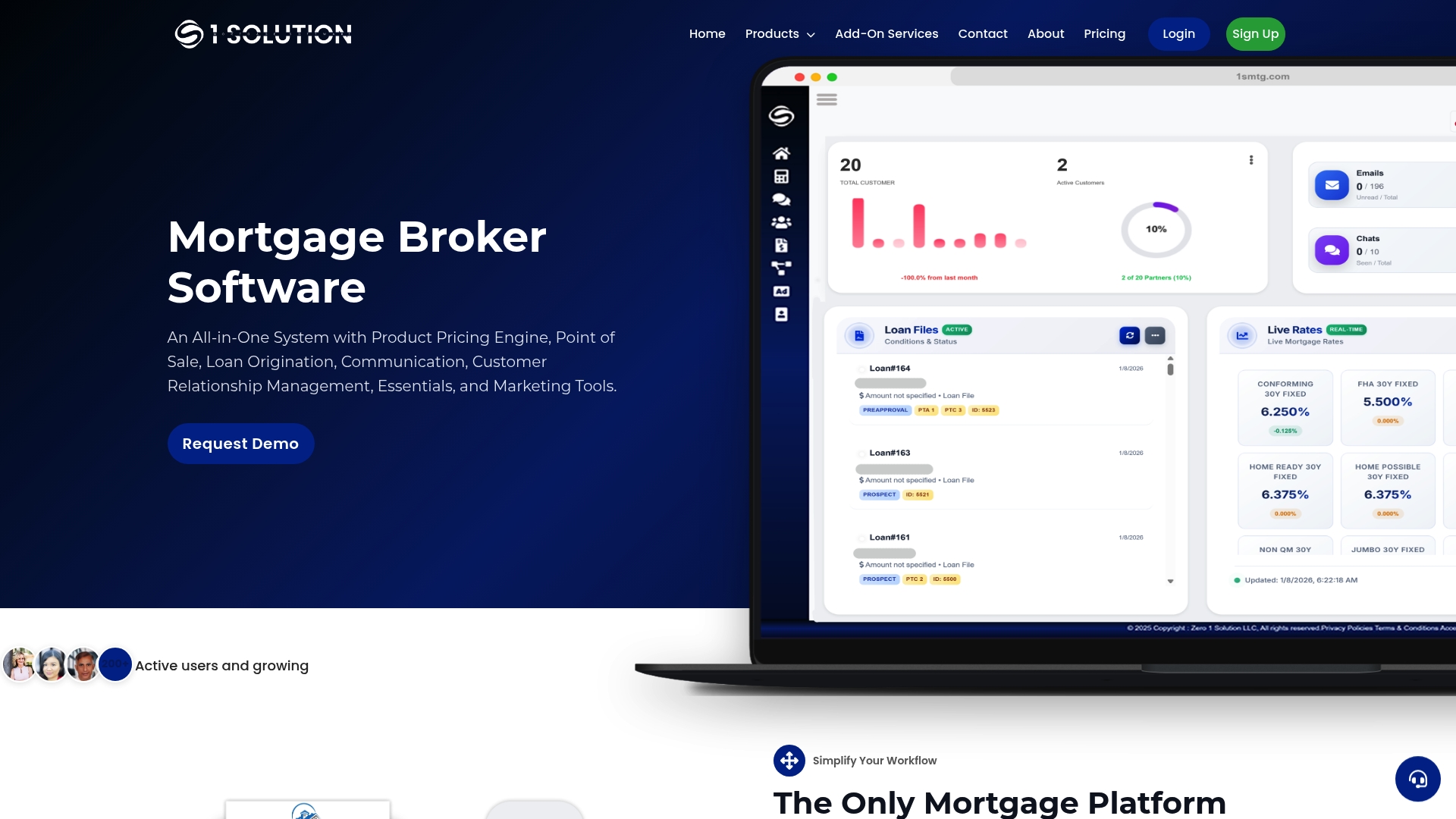
That matters because the checklist in this article, disclosure before recording, a queryable consent log, retention timers that match state and servicer requirements, only works if it runs the same way on every call, every agent, every state. A platform built specifically for mortgage operations means those settings live where your calls already happen instead of in a bolt-on tool that half your team forgets to open. If you're mapping your current call flow against what's outlined here and finding gaps, a demo of the platform is the fastest way to see how disclosure automation and audit-ready logging would actually fit your team's daily call volume.
Where to Verify These Rules Yourself
For the federal baseline, read 18 U.S.C. § 2511 directly and the FCC's consumer guide on call recording for the plain-language version. Justia's 50-state survey of recording laws is the fastest way to check any individual state, and the Texas State Law Library's audio recording guide shows what a solid state-specific resource looks like if you're building out a similar reference for other states. For mortgage-specific retention obligations, National Mortgage News' coverage of Minnesota's servicer law is worth bookmarking as more states consider similar rules. Our own mortgage compliance setup checklist and regulatory compliance overview round out the operational side once the legal picture is clear.
This article is general information, not a substitute for advice from a qualified lawyer. Consult a qualified legal professional about your own circumstances before acting on anything here.
Sources
- Omnibus Crime Control and Safe Streets Act / ECPA (federal statutes references)
- Recording Telephone Conversations — FCC consumer guide
- Recording Phone Calls and Conversations Under the Law: 50-State Survey — Justia
- Audio Recording - Texas State Law Library