
eConsent is the affirmative electronic consent required under the E-SIGN Act and UETA before a lender can present mortgage disclosures electronically or accept an e-signature. It must be captured before any electronic record is shown to the borrower, not after. Once valid consent is on file, the loan can move through eSigning and eClosing without reverting to paper.
TL;DR:
- Before showing disclosures, collect affirmative consent, explain withdrawal rights and required software, and verify that the borrower can open a sample record.
- If a borrower cannot access electronic records or declines consent, switch to paper immediately to protect TILA and RESPA timing requirements.
- Record each consent separately from signed documents, with the loan number, signer, timestamp, and device details; give each borrower an individual login.
- Freddie Mac requires seller and servicer approval for eNote delivery; lenders also need eVault custody and MERS eRegistry registration before sale.
- MISMO reports eNotes save roughly $200 to $300 per loan, but confirm investor acceptance and eVault compatibility before investing in full eNote capability.
Table of Contents
- What eConsent Means in a Mortgage Transaction
- Legal and GSE Requirements Behind eConsent and eMortgages
- How to Capture Valid eConsent and Sign Electronically
- Building an eConsent and eClosing Checklist for Your Shop
- Practitioner Notes on Making eConsent Audit-Ready
- Why eNotes Are Becoming the Secondary Market's Preference
- Where 1 Solution Fits in Your eConsent Workflow
- FAQ
- Sources
What eConsent Means in a Mortgage Transaction
eConsent is not the same thing as clicking to sign a document. It is the separate, earlier step where a borrower agrees to conduct the transaction electronically and confirms they can actually access records in that format. Under 15 U.S. Code § 7001, lenders must give consumers a clear notice of their right to withdraw consent, disclose any hardware or software needed to view the records, and confirm the consumer can access documents in the system used to present them. Only after that consent is captured can the lender lawfully move to e-signature.
Mixing up these two steps is one of the most common compliance gaps we see in broker shops moving to digital workflows.
- eConsent authorizes the use of electronic records and signatures for the transaction.
- E-signature is the act of executing a specific document once that authorization exists.
- Consent must happen before disclosures or an eNote are presented, never alongside or after.
Legal and GSE Requirements Behind eConsent and eMortgages
The federal baseline comes from E-SIGN, but originating and selling an eMortgage adds layers most teams underestimate. 15 U.S. Code § 7001 sets the floor: affirmative consent, a withdrawal notice, a hardware/software statement, and proof the consumer can access the electronic format. Getting this right protects the enforceability of every signature that follows.
Freddie Mac's eMortgage guidance goes further. Delivering an eNote requires specific seller/servicer approval and controls beyond what E-SIGN and UETA demand on their own, including eVault custody and registration steps before the note can be sold.
- E-SIGN sets the consumer-facing consent requirements for any electronic transaction.
- Freddie Mac requires additional seller/servicer approval before an eNote can be delivered.
- MISMO's framework focuses on interoperability between eVault and eRegistry systems so notes can move between custodians and investors cleanly.
MISMO's eClosing white paper reports that lenders adopting eNotes see roughly $200 to $300 in savings per loan, along with faster time to liquidity. That gap is almost entirely operational: fewer paper exceptions, fewer courier trips, fewer callbacks to fix a missed signature.
How to Capture Valid eConsent and Sign Electronically
A clean borrower flow protects the loan file and keeps the closing on schedule, making mortgage processes smoother for property buyers with expert advice on mortgages. The sequence matters as much as the content.
- Present the consent disclosure screen first, spelling out the right to withdraw, any hardware or software needed, and how to request paper copies.
- Require an affirmative action, such as a click-to-consent button paired with a typed name, rather than a passive scroll-through.
- Confirm the borrower can actually open and read a sample electronic document before granting full access to disclosures.
- Verify identity through your established process, and route to remote online notarization if the document and state allow it.
- Log the consent event with a timestamp, IP address, and device details tied to that specific borrower's account.
Pro Tip: If a borrower cannot demonstrate access to the electronic format, or declines consent, revert to paper disclosures immediately rather than troubleshooting mid-transaction; missing TILA-RESPA timing windows costs far more than a short delay.
For a deeper walkthrough of the specific checks examiners look for, our ESIGN and UETA compliance guide breaks down each disclosure element line by line.
Building an eConsent and eClosing Checklist for Your Shop
Getting one loan through an eClosing is easy. Building a repeatable process that survives an investor audit is the real work. A few pieces consistently separate shops that scale this smoothly from shops that stall out.
- Store consent records separately from the signed documents themselves, with timestamps and device metadata intact.
- Generate the eNote in SMART Doc format and deposit it in an eVault immediately after execution.
- Register the eNote on the MERS eRegistry and confirm the transfer chain is accurate before funding.
- Set up separate, authenticated logins for each co-borrower so consent and signature actions are individually traceable.
- Build identity-proofing and notarization steps, including remote online notarization where your state and investor allow it, directly into the closing workflow.
- Test the full handoff with your warehouse lender and investor before relying on it for live loans.
Our digital mortgage application overview maps how these pieces connect from application through funding.
| Checklist item | Why it matters |
|---|---|
| Separate consent record | Supports an auditable, defensible compliance trail |
| eVault deposit | Required for eNote custody and later transfer |
| MERS eRegistry registration | Confirms investor can take clean title to the note |
| Co-borrower separate logins | Isolates each signer's consent and signature record |
| Warehouse/investor test run | Confirms the note will actually be accepted at sale |
Pilot the full process with one title or settlement partner before rolling it out across every loan officer. That single pilot surfaces integration gaps that a spreadsheet checklist never catches.
Practitioner Notes on Making eConsent Audit-Ready
Years of watching brokers move from paper to digital closings taught us that the technical requirements are rarely the hard part. The hard part is making the consent trail easy to pull up when someone asks for it six months later.
- Configure your LOS or CRM to tag every consent event with the loan number, timestamp, and signer identity automatically, rather than relying on a PDF buried in the file.
- Give each co-borrower a separate login rather than a shared household account; a shared account makes it impossible to prove who actually consented.
- Keep a simple log of which investors accept which eNote formats, since requirements shift and a missed detail can delay a sale.
Pro Tip: Rather than building eVault and RON capability from scratch, partnering with a title or settlement provider offering a done-for-you eClose system gets you to production far faster than an internal build.
Our guide on configuring LOS/CRM systems for consent tracking walks through the specific fields worth logging.

Why eNotes Are Becoming the Secondary Market's Preference
Investors increasingly favor digital collateral over paper. Industry reporting from the Mortgage Bankers Association notes that purchasers see fewer post-purchase exceptions and faster settlement with eNotes than with hybrid paper files. The biggest blocker left is interoperability between eVault systems and tri-party agreements, so it's worth confirming investor acceptance before building out full eNote capability.
— Omar Khamisa
Where 1 Solution Fits in Your eConsent Workflow
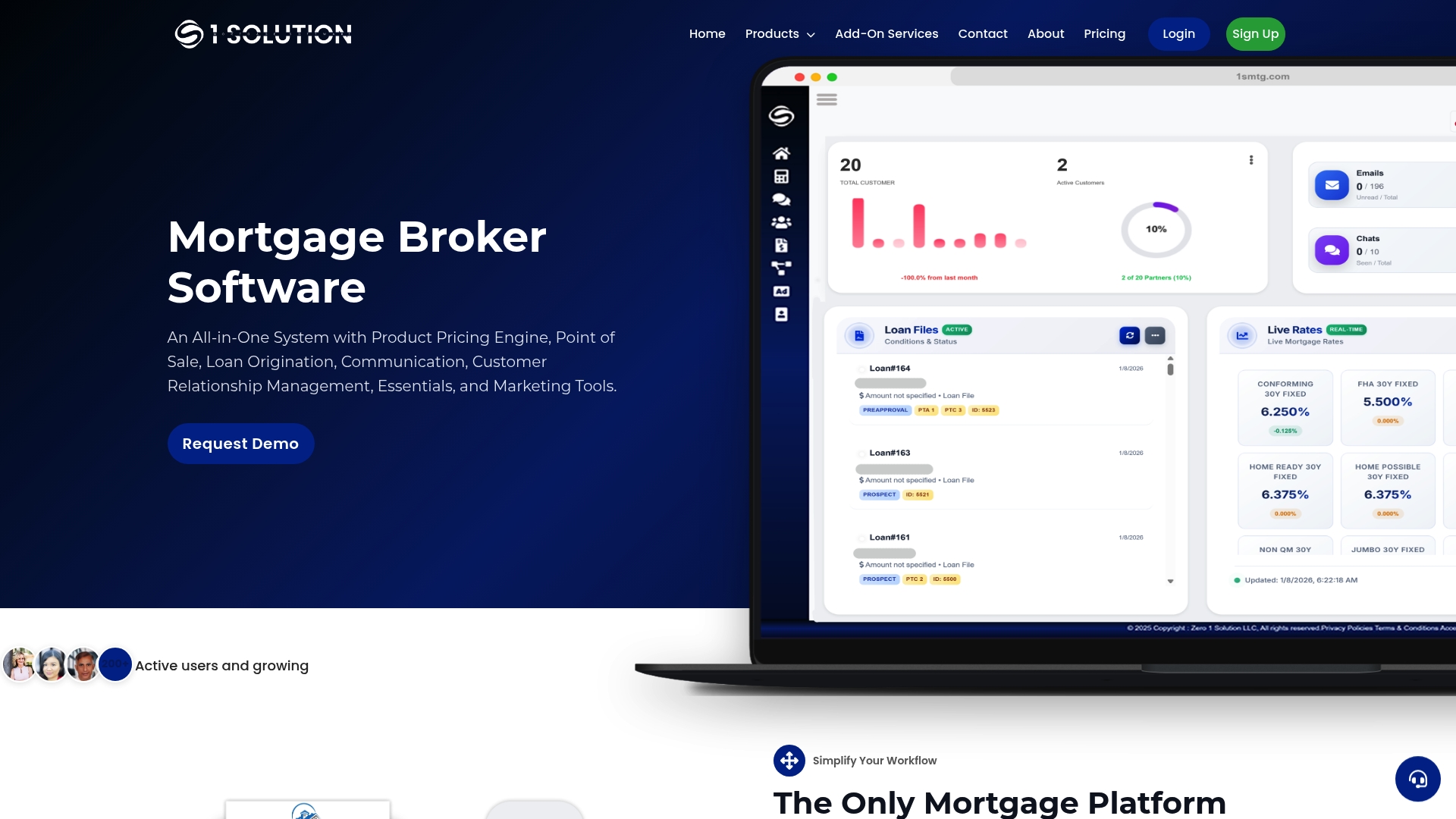
We built our platform around the reality that brokers need consent tracking and audit trails that hold up without hiring a compliance team to manage them. Inside our connected system, consent events, borrower portal activity, and e-signature steps all log against the same loan file, so pulling a complete record takes minutes instead of a search through three different vendors.
When you're evaluating any platform for this, ask a few direct questions:
- Does it log consent separately from the signature event, with timestamps and device data intact?
- Can your team access the full audit trail without opening a support ticket?
- Does it connect to your existing POS and LOS, or does it require rebuilding your intake process?
- What does onboarding and ongoing support actually look like once you're live?
Our Subscription Account brings pricing, CRM, POS, LOS, and compliance tracking into one place built specifically for independent brokers, not banks. If you want to see how consent tracking works inside a real file, reach out for a demo.
FAQ
What does VOE stand for in a mortgage?
VOE stands for Verification of Employment, a step lenders use to confirm a borrower's job and income before closing. It is separate from eConsent but often collected through the same digital borrower portal during underwriting.
Can a mortgage deed be signed electronically?
In most cases, yes, provided the lender has obtained valid eConsent under E-SIGN and the document meets state recording and notarization requirements. Some documents, particularly those requiring notarization, may still need remote online notarization or in-person signing depending on state rules and investor requirements.
What is a mortgage loan originator's fiduciary duty?
A loan originator's core duty is to act honestly and in the borrower's best interest when presenting loan options, disclosures, and terms. That duty extends to the eConsent process itself: the borrower must understand what they're agreeing to and retain the right to withdraw consent at any time.
What are 6 types of mortgages?
Common mortgage types include conventional, FHA, VA, USDA, jumbo, and adjustable-rate loans, each with different qualifying guidelines and investor requirements. The eConsent and eClosing process applies across all of these, though specific eNote acceptance can vary by investor.
Sources
- 15 U.S. Code § 7001 - General rule of validity | U.S. Code | LII / Legal Information Institute
- eMortgages - Freddie Mac Single-Family
- MISMO Publishes White Paper, Roadmap for Scaling Digital Mortgage Adoption Through eClosing | MBA
- MBA Newslink — Why loan purchasers are building their own case for eNotes