
A hybrid eClose mortgage splits the closing: you eSign most documents ahead of time, then sign the notarized ones in ink at a short in-person appointment. That means less time at the table and fewer last-minute surprises, while state and county notarization and recording rules may affect the process.
TL;DR:
- Capture electronic consent before sending disclosures, then verify every electronic signature is complete before scheduling the in person notary appointment.
- Ask whether the promissory note will be an eNote: Fannie Mae requires full electronic signing and MERS eRegistry registration for eMortgage delivery.
- Confirm state notarization rules and county recording acceptance for each loan; where electronic recording is unavailable, recordable documents need wet ink signatures.
- If the note remains on paper, its original must be shipped to the investor, often slowing delivery; an eNote can move electronically.
- Read and sign disclosures early, note questions for the loan team, bring photo ID, and confirm which documents still need ink signatures.
Table of Contents
- How does a hybrid eClose mortgage work from start to finish?
- Which documents get eSigned and which need wet signatures?
- What should you expect on closing day?
- What are the benefits and ROI of hybrid eClosings?
- What are the legal and compliance essentials for hybrid eClosings?
- What checklist keeps a hybrid eClosing on track?
- What should borrowers do before a hybrid closing?
- How does hybrid eClose change underwriting and loan processing?
- What security and privacy issues matter in a hybrid eClose?
- Why we think integrated tools make hybrid closings easier
- How our platform supports hybrid eClosings for brokers
- FAQ
- Sources
How does a hybrid eClose mortgage work from start to finish?
A hybrid eClose is a mortgage closing method where the borrower reviews and electronically signs the documents that do not need a notary before the appointment. The remaining notarized documents, such as the mortgage or security instrument, get signed in wet ink during a physical meeting with a notary, according to Proof's explainer. The result is far less paper at the table and a shorter appointment.
Here is the sequence most lenders and settlement teams follow:
- Package the loan documents. The lender or settlement team sorts the closing package into two groups: documents eligible for electronic signature and documents that must be signed in ink.
- Capture eConsent. The borrower agrees to receive and sign documents electronically before any disclosure goes out for signature.
- Send the eSign group. The borrower gets a secure link, completes an identity or authentication check, and signs the disclosures and acknowledgments on their own schedule.
- Verify completion. The settlement agent confirms every eSigned document is complete before anyone schedules or holds the in-person meeting.
- Hold the in-person appointment. The borrower signs the wet-ink documents in front of a notary and the settlement agent finalizes the package.
- Deliver and record. The lender delivers the loan to the investor and the recordable documents move to the county.
What the settlement agent does at the table is narrower than in a traditional closing. They check identification, witness and notarize the ink-signed documents, collect any funds, and confirm nothing was left unsigned in the eSign group. Most of the explaining has already happened, because the borrower has had the disclosures in hand for days.
Two variants matter for investor delivery:
- Hybrid with an eNote: The promissory note is signed electronically and registered on the MERS eRegistry. Because the note is electronic, the transaction qualifies as an eMortgage, per Fannie Mae's eClosing and eMortgage FAQs.
- Hybrid without an eNote: The note is signed in ink, the paper note has to be shipped to the investor, and the closing stays a hybrid even if almost everything else was eSigned.
Which variant you land in decides how quickly the loan can move to the secondary market, so the lender should settle it before the closing package is built.
Pro Tip: Ask your settlement agent to send a signed-versus-pending status report the day before the appointment, so any missing eSignature gets fixed before anyone drives to the table.
Which documents get eSigned and which need wet signatures?
The split follows one rule of thumb: if a document needs a notary or has to be recorded in the county land records, plan on ink unless the county and the lender are both set up for electronic notarization and eRecording. Everything else is a strong candidate for eSigning ahead of time.
Documents that are commonly eSigned before the appointment include:
- Loan disclosures and acknowledgments the borrower must receive and confirm
- Non-recordable lender forms and authorizations
- Borrower certifications that do not require notarization
- Initial and closing disclosure acknowledgments, depending on lender policy
Documents that are commonly signed in ink and notarized include:
- The mortgage or security instrument (deed of trust in some states)
- The promissory note, unless the lender uses an eNote
- Certain affidavits and state-specific forms that require a notary
The promissory note has a special status. It is the borrower's actual promise to repay, and Fannie Mae requires it to be either fully wet-signed or fully electronically signed as an eNote. An eNote also has to be registered on the MERS eRegistry. If the lender cannot support that, the note stays on paper and the closing remains a hybrid.
The security instrument is more flexible. Fannie Mae's guidance says lenders may mix wet and electronic signatures on the same security instrument, and a notarized instrument carrying both kinds of signatures will bear multiple notary stamps to validate each type.

Local rules can reshuffle all of this. DocMagic's overview of hybrid eClosings points out that hybrid practices are heavily shaped by county-level recording requirements. Where a county does not accept eRecording, recordable instruments must carry wet signatures no matter what the lender can do. State law on electronic notarization can push the split the same way. The takeaway: confirm the county and state rules for each loan, not once for your whole pipeline.
What should you expect on closing day?
Expect a shorter meeting with fewer surprises. Because the borrower already reviewed and signed the eSign group, the table time goes mostly to the notarized documents, identity verification and funds. Many practitioners describe appointments as short, though the exact length depends on the loan, the number of signers and how clean the package is.
Pre-signing helps beyond saving minutes:
- Fewer errors. Borrowers fill in electronic forms with required fields and prompts, so missing initials and blank signature lines are caught before the meeting.
- Fewer rushed questions. Disclosures reviewed days earlier lead to questions asked days earlier, when the loan team can still answer them calmly.
- Cleaner handoffs. The settlement agent starts the appointment with a mostly complete file instead of a stack to sort.
Funding implications depend on the note. With an eNote, delivery to the investor is electronic, which can shorten the path to the secondary market and to funding. With a paper note, the original has to be shipped, and that courier step is often the slowest part of the hybrid.
Settlement agents typically run a few last-mile checks before the borrower signs anything in ink:
- Every eSigned document shows as complete, as Proof notes when it describes how agents avoid last-minute delays
- Names, dates and loan figures match across the eSigned and paper sets
- The borrower's photo ID matches the name on the documents
- Any funds due at closing are in the expected form and amount
What are the benefits and ROI of hybrid eClosings?
Hybrid eClosings are widely adopted because they capture most of the digital payoff without waiting for every county and investor to be ready for a fully electronic closing.
According to Fannie Mae survey data cited by DocMagic, 76% of U.S. lenders offer some form of hybrid digital closing. That prevalence shows hybrid is the mainstream transition step, not an experiment.
The benefits break down by who is at the table:
- Lenders: Fewer documentation errors and faster turnaround, which is the ROI DocMagic's experts describe as immediate, even though investor and jurisdictional hurdles still limit fully electronic closings.
- Title and settlement agents: Less paper to print, assemble and reconcile, and a tighter appointment that leaves more room in the schedule.
- Borrowers: More time to read disclosures at home instead of at the table. Proof's experts note that reviewing and eSigning days ahead gives borrowers more time to understand complex loan documents than a traditional closing does.
Hybrid also works as a pragmatic bridge. Teams that learn eConsent capture, document sorting and eSign controls in a hybrid process are better prepared when an eNote and a fully electronic closing become possible for a given loan. You get the experience now, with the safety net of ink where the law or the county still asks for it.
We are not quoting a per-loan dollar figure here, because the sources we trust for this article do not state one. Measure your own savings in printing, courier and rework costs before and after you adopt the process.
What are the legal and compliance essentials for hybrid eClosings?
Hybrid eClosings sit on firm legal ground in the U.S., but the details live in investor rules, state law and county recording practice. Start with the investor's own guidance, since that sets what you can deliver.
Here is what Fannie Mae's guidance establishes:
The Promissory Note must be either fully wet-signed or fully electronically signed as an eNote, while a security instrument may mix wet and electronic signatures.
The same Fannie Mae FAQs add that an eNote has to be registered on the MERS eRegistry for eMortgage delivery, and that a notarized security instrument with both signature types carries multiple notary stamps. Without the eNote, the closing remains a hybrid even if most documents were eSigned.
Beyond the investor, check these items:
- County eRecording status. If the county cannot accept electronic recording, recordable instruments need wet signatures, as DocMagic's guidance on county-level requirements explains.
- State notarization rules. Whether electronic or remote online notarization is accepted, and under what conditions, varies by state. Our checklist on six checks that prevent remote online notarization failures covers what brokers should verify.
- ESIGN and UETA basics. Electronic signatures rest on federal and state law, and lenders must verify consent and record-retention steps. See our guidance on what lenders must verify under ESIGN and UETA and our explainer on the E-Sign Act and MERS.
- eConsent timing. Capture consent before disclosures go out for signature. We walk through that in our eConsent guide for brokers.
Practical compliance steps before you schedule a hybrid closing:
- Confirm the investor accepts the loan with the planned note type
- Confirm eNote eligibility and plan MERS eRegistry registration if an eNote is used
- Check the county's eRecording status and any wet-ink requirements
- If a remote online notary is used, flag it as the state and investor require
- Keep records showing when consent was captured and which documents were signed in which form
Whether a given arrangement is permitted in your state or county is a question for your compliance team or counsel. This article explains the common framework, not a ruling on any particular loan.
What checklist keeps a hybrid eClosing on track?
Most hybrid failures are coordination failures, so the fix is a repeatable sequence. Run these steps in order on every file:
- Check eligibility early. Confirm the loan qualifies for the planned process, the investor accepts it, and you know the county's eRecording status before the package is built.
- Capture eConsent first. No disclosure goes out for eSignature until consent is on record.
- Sort the package. Tag each document as eSign or wet-sign, and flag any that the state or county forces into ink.
- Lock the eSign set. Confirm every required electronic signature is complete before the in-person appointment is scheduled or held.
- Confirm the notary. Decide whether the notary is in person or remote, and verify the ID and authentication requirements for that route.
- Verify at the table. Match names, dates and loan figures across the electronic and paper sets before the borrower signs in ink.
- Post-close promptly. If an eNote was used, register it on the MERS eRegistry and deliver it to the investor or eVault, then confirm the recording steps for the notarized documents.
Proof's practitioners stress that hybrid closings cut paper but demand coordination, because agents must verify that all eSigned documents are finished before the meeting. A single missing eSignature found at the table can undo the time savings of the whole process.
Pro Tip: Build the sort step into your loan checklist as a required field, so no file reaches scheduling with documents still untagged.
What should borrowers do before a hybrid closing?
You can prevent most delays with a little preparation. Do the following:
- Complete eConsent and finish identity or authentication steps as soon as the link arrives
- Read and eSign the disclosures early, and write down questions while the loan team can still answer them
- Bring a valid government-issued photo ID to the in-person appointment
- Bring any original documents your lender or title company specifically requested
- Keep the loan team's direct phone number and email handy on closing day
Questions worth asking your lender or title company:
- Is my promissory note an eNote or a paper note?
- When will the loan fund after I sign?
- Which documents will I sign in ink, and which are already done?
- Who do I call if a document shows as incomplete?
Many borrowers are surprised that a hybrid closing still requires an in-person appointment. Fannie Mae's guidance notes that only an electronic promissory note makes a transaction an eMortgage, so ask early which type you have.
How does hybrid eClose change underwriting and loan processing?
Underwriting itself does not change. The credit, income and collateral decisions are made the same way, and the loan still has to clear conditions before closing documents are final. What shifts is the work around the decision: how conditions get cleared, how the package is built and how fast corrections move.
Processors feel the biggest change. Because disclosures are signed electronically, signature dates and consent records are captured automatically, which makes audit trails easier to assemble. A processor can see which borrower signed which document and when, instead of waiting for a courier or a scanned stack.
Closers and underwriters also benefit from earlier error detection. When a borrower eSigns days before the table, a wrong date or missing initial surfaces while there is still time to reissue the form. In a traditional closing, the same mistake appears with everyone in the room and the clock running.
The workflow does ask for discipline in a few places:
- Package sorting has to happen earlier, since the eSign set goes out before the appointment.
- Late changes to loan terms mean re-sending electronic documents and tracking superseded versions.
- Condition clearing should finish before closing documents are final, so the eSigned set matches the approved loan.
Teams that treat the eSign set as locked once it is out, and handle any change as a controlled reissue, tend to avoid the confusion that makes hybrid feel messy.
What security and privacy issues matter in a hybrid eClose?
A hybrid closing moves borrower identity data and financial records across more channels than a paper closing, so each handoff deserves a control. The electronic half carries the usual risks of online document delivery: phishing links, account takeover and unauthorized access to a signing session. The paper half carries its own: lost envelopes, misplaced originals and unsecured courier handoffs.
Controls worth putting in place:
- Authenticate signers before they open the eSign package, using the identity checks your platform and investor require.
- Use secure, expiring links and never send closing documents as plain email attachments.
- Restrict access so only people with a role in the file can view borrower financial data.
- Keep an audit trail of consent, signature events and document versions.
- Control the paper side by limiting who handles original ink documents and tracking them from signing to delivery.
- Train borrowers to confirm closing instructions by phone with a known number, since wire and closing-fund fraud often arrives by email.
Privacy duties follow the data wherever it goes. Lenders and settlement providers remain responsible for protecting nonpublic personal information under the laws that apply to them, so confirm that every vendor in the chain, from the eSign platform to the eVault, meets your security standards.
Why we think integrated tools make hybrid closings easier
In our experience building for brokers, hybrid closings rarely break on the law. They break between systems: one tool captures consent, another sends disclosures, a third tracks signatures, and a person reconciles it all by hand the night before closing. Every handoff is a place where a document goes missing or a consent record cannot be found. When the LOS, borrower portal, eSign and compliance tools share one file, the question "is the eSign set complete?" becomes a quick check instead of a phone chase. That single improvement, tighter document control and cleaner eConsent capture, is where we think brokers recover the most time.
— Omar Khamisa
How our platform supports hybrid eClosings for brokers
If you run a brokerage and want the hybrid workflow without stitching tools together, our platform brings loan origination, a borrower portal, eSignature, compliance tools and communication into one place. That brings loan origination, a borrower portal, eSignature, compliance tools and communication into one place for your team.
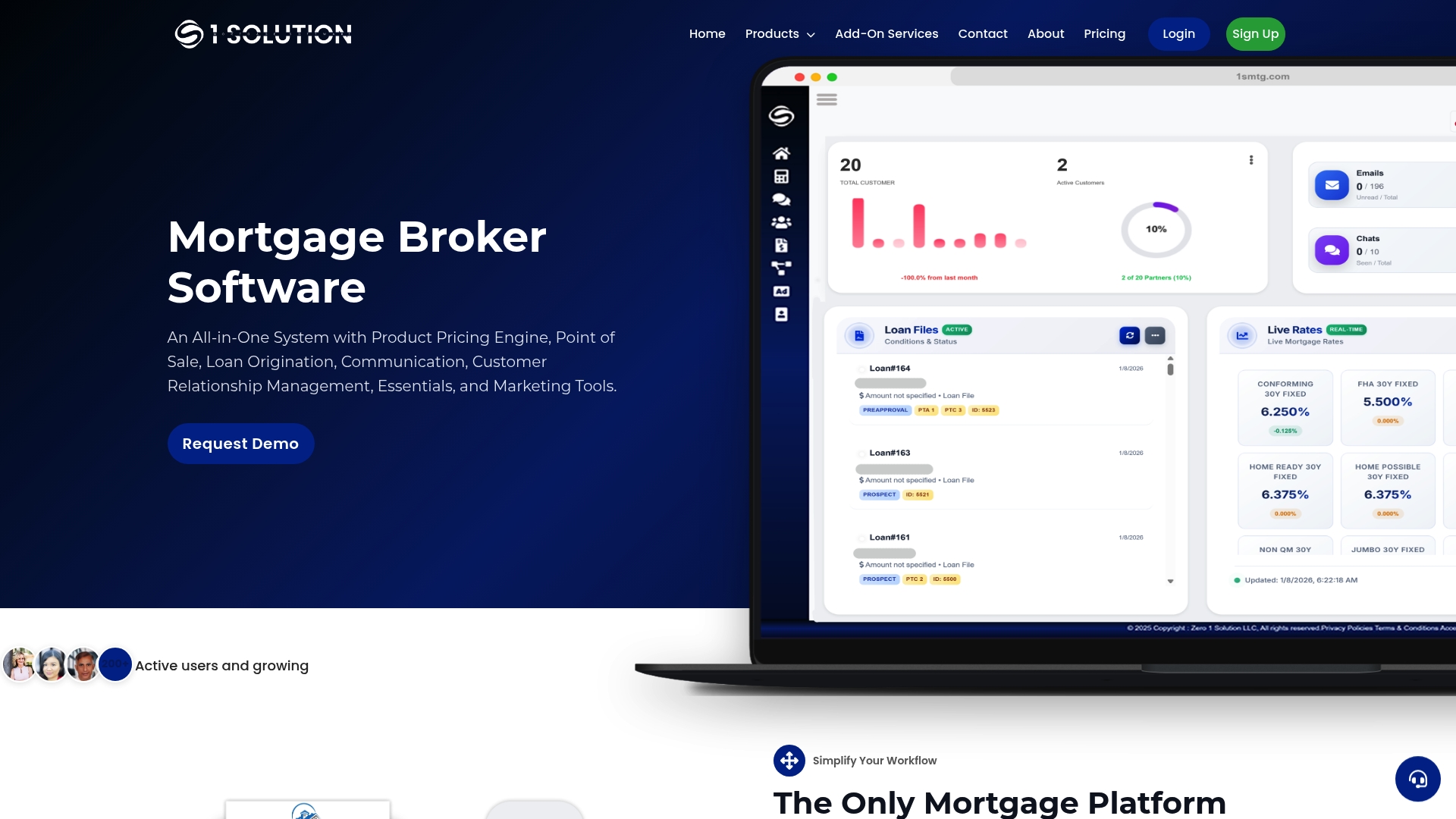
We built it with independent brokers in mind, without outside investors. See how it fits your closing process, request a demo, or look over the platform on our subscription page.
This article is general information, not a substitute for advice from a qualified financial advisor. Consult a qualified financial professional about your own circumstances before acting on anything here.
FAQ
Is a hybrid eClose the same as an eMortgage?
No. A hybrid eClose still uses a wet-ink promissory note, while an eMortgage requires an electronic note registered on the MERS eRegistry, according to Fannie Mae's eClosing guidance. Without the eNote, the closing remains a hybrid even if most documents were eSigned.
Can mortgage documents be signed with an electronic signature service?
Many can. Disclosures, acknowledgments and other non-notarized forms are commonly eSigned before closing, as Proof explains. Notarized documents like the security instrument are usually signed in ink unless the state, county and lender all support electronic notarization.
Do I still have to attend an in-person closing?
Usually yes. In a hybrid eClose, the notarized documents are signed in ink during a physical meeting with a notary. Your lender can tell you whether remote online notarization is available for your state and loan.
Who owns the home on the day of closing?
Ownership transfers when the deed is delivered and the closing is completed, which in practice follows signing, funding and recording steps that vary by state. Ask your title company exactly when title passes in your county.
Why does county recording matter for a hybrid eClose?
Counties set their own rules for accepting electronic recording. DocMagic notes that where eRecording is unavailable, recordable instruments need wet signatures regardless of what the lender can support.
Sources
- Hybrid eClosings: Choosing the Right Mix of Digital and Wet Signatures
- What Is a Hybrid Closing?
- FAQs: eClosings & eMortgages | Fannie Mae