

Scaling a mortgage broker business is defined as the process of growing loan volume and revenue without proportionally increasing costs, staff, or founder workload. Most brokers hit a ceiling not because they lack leads, but because their operations cannot handle more volume without breaking down. The mortgage broker business scaling tips that actually work share one common thread: fix your systems before you chase more business. This guide covers the operational, hiring, technology, and marketing moves that produce sustainable growth, drawing on real examples from brokers writing $100M or more annually.
What operational systems must you scale first?
Scaling mortgage business operations starts with fixing what is already broken inside your pipeline. Most firms break in the middle of the funnel, not at the top. Document collection is slow, follow-up is inconsistent, and compliance checkpoints are manual. Pouring more leads into a broken process does not produce more closings. It produces more chaos.
The first move is to document every step of your loan submission and follow-up workflow. Write it down, assign ownership, and make it repeatable. A process that lives in your head cannot be delegated or audited. Standardized workflows also make compliance reviews faster and reduce the risk of errors that trigger regulatory problems.

Compliance automation deserves its own attention. Manual compliance tracking is the single biggest drag on broker capacity at scale. Automated reminders, digital checklists, and audit trails replace the mental overhead of tracking deadlines across dozens of files simultaneously.
Here is a direct comparison of manual versus automated operations at scale:
| Area | Manual approach | Automated approach |
|---|---|---|
| Document collection | Email back-and-forth, delays | Digital portal, client self-upload |
| Compliance tracking | Spreadsheet or memory | Automated checkpoints and alerts |
| Pipeline reporting | Weekly manual updates | Real-time CRM dashboard |
| Follow-up cadence | Ad hoc, inconsistent | Scheduled, triggered sequences |
| Loan status updates | Phone calls, reactive | Automated client notifications |
Offshore back-office support is one of the most underused tools in mortgage business expansion. Offshore support reduces operational costs by 40–60% for low-judgment tasks like data entry, file prep, and status updates. That cost reduction frees up local payroll budget for the roles that actually require licensed judgment.
- Standardize loan submission checklists before hiring processors
- Automate client follow-up sequences inside your CRM
- Use digital document portals to cut collection time
- Assign offshore staff to repetitive, rule-based tasks
- Build compliance checkpoints into your workflow software
Pro Tip: Stage your operational build-out before you run any new lead generation campaigns. Every dollar spent on leads before your pipeline is clean is a dollar spent accelerating burnout.
How does specialized hiring accelerate growth?
Specialized hiring is the fastest way to increase throughput without burning out your existing team. Specialization in loan types and team roles increases throughput because specialists handle familiar scenarios faster than generalists. A processor who only works purchase files closes them faster than one who rotates between refinances, HELOCs, and commercial deals.
The transition from a founder-dependent model to a scalable team structure is the hardest shift most brokers face. When you are the bottleneck for every decision, adding volume only adds pressure. The goal is to install infrastructure that runs without your constant input.
Hire based on pipeline forecasts, not on current pain. Most brokers hire reactively, when they are already overwhelmed. By then, onboarding a new hire adds friction at the worst possible moment. Hire one pipeline stage ahead of where you are.
A functional team structure for a broker writing $50M or more annually typically looks like this:
- Lead loan officer handles client relationships and complex file decisions
- Loan processor manages document collection, file prep, and lender submission
- Loan officer assistant or coordinator handles scheduling, status updates, and client communication
- Compliance reviewer audits files before submission to catch errors early
- Marketing or operations coordinator manages referral partner outreach and CRM data
Pro Tip: Avoid hiring a second loan officer before your processing capacity can support the additional volume. Adding origination without processing support creates a backlog that damages client experience and referral rates.
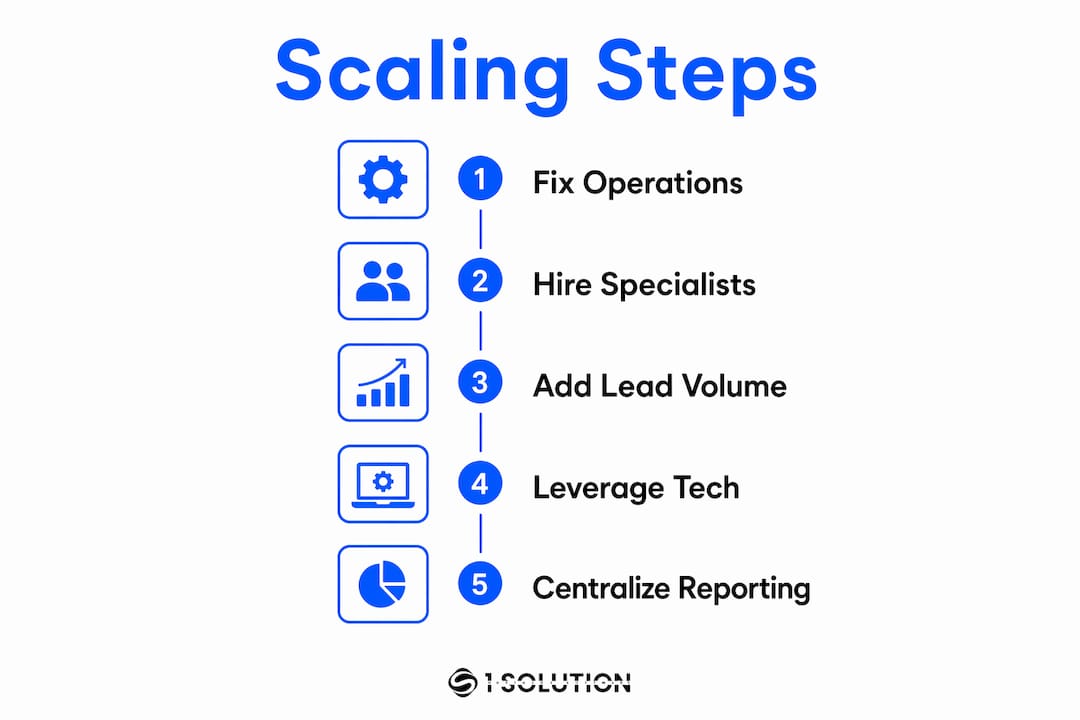
Scaling from early-stage growth to a fully installed infrastructure requires centralized reporting, automated compliance workflows, and hires aligned with predicted demand. That alignment is what separates brokers who scale cleanly from those who grow into disorganization.
Which technology tools improve mortgage broker scalability?
AI-driven automation substitutes for additional staff in the early phases of scaling. Tasks like automated document tracking, invoice processing, and compliance reminders no longer require a dedicated loan officer assistant. That shift changes the economics of growth significantly.
CRM software is the operational backbone of any broker scaling past 20 active files. A well-configured CRM handles lead scoring, pipeline stage tracking, automated follow-up sequences, and referral source attribution. Without it, you are managing relationships from memory and spreadsheets, which fails at volume.
Here is what technology should cover at each stage of your operation:
- Document collection: Digital client portals reduce back-and-forth by giving borrowers a single place to upload and track their documents
- Pipeline visibility: Real-time dashboards show every file's status, next action, and days in stage without manual updates
- Compliance tracking: Automated checkpoints flag missing documents or expired disclosures before they become problems
- Client communication: Triggered email and SMS sequences keep borrowers informed without consuming loan officer time
- Referral tracking: CRM attribution shows which partners send the most closeable leads, so you know where to invest relationship time
Mortgage automation tools vary widely in how well they integrate with each other. Fragmented systems create manual handoffs between tools, which defeats the purpose of automation. Choose software built on a connected platform rather than assembling a stack of single-purpose apps.
Pro Tip: Before committing to any software, map your current workflow and identify the three steps that consume the most time. Choose tools that directly address those three steps. Everything else is a distraction.
Loan officer efficiency software specifically targets the administrative tasks that consume originator time. When loan officers spend less time on status calls and document chasing, they close more files with the same hours.
What are the best mortgage broker growth strategies for lead volume?
High-producing brokers track input metrics like proposal volume and referral engagement rather than output metrics like monthly closings. Output metrics tell you what already happened. Input metrics tell you what is coming. That distinction changes how you manage your pipeline week to week.
Referral networks built around realtors, accountants, and buyer's agents outperform paid lead generation for most independent brokers. Structured referral networks outperform random lead generation because they produce predictable volume from partners who already trust you. The key is tracking which partners send closeable leads and doubling down on those relationships.
Content marketing and SEO generate inbound leads, but they require patience. Inbound demand requires around a 6-month lead time for content to mature and rank. Brokers who abandon content after two months never see the return. Commit to one or two channels for at least six months before evaluating results.
The most effective mortgage broker growth strategies follow a disciplined sequence:
- Build your referral base first. Identify five to ten active referral partners and schedule monthly touchpoints with each one.
- Track input metrics weekly. Count proposals sent, referral conversations had, and applications started, not just closings.
- Choose one content channel. Write a weekly market update email or publish two blog posts per month. Do not split effort across five platforms.
- Nurture past clients systematically. A CRM-driven annual check-in sequence generates repeat business and referrals from people who already trust you.
- Audit your lead conversion process quarterly. Identify where leads drop out and fix that stage before adding more volume at the top.
Avoiding "shiny object syndrome" is one of the most underrated mortgage business expansion moves. Brokers who chase every new marketing channel never build depth in any of them. Consistency in a single channel compounds over time. Inconsistency in five channels produces noise.
Key Takeaways
Scaling a mortgage broker business requires fixing operational systems first, then hiring specialists, then adding lead volume in that exact order.
| Point | Details |
|---|---|
| Fix operations before leads | Broken pipelines accelerate burnout when you add more volume at the top. |
| Specialize your hires | Specialists close familiar loan types faster than generalists at every volume level. |
| Automate compliance and follow-up | CRM automation and digital portals protect broker selling time from admin tasks. |
| Track input metrics, not just closings | Proposal volume and referral engagement predict pipeline health weeks in advance. |
| Commit to one lead channel | Six months of consistent effort in one channel outperforms scattered activity across many. |
What scaling actually taught me about control
Brokers ask me all the time what the single biggest mistake is when scaling. My answer surprises them: it is trying to maintain full control while growing.
Scaling requires accepting reduced control as new systems mature. That is not a warning. It is a design requirement. When you build a system that runs without you, it will feel unstable at first. Files will be handled differently than you would handle them. Clients will get updates from a coordinator instead of from you directly. That discomfort is the cost of growth.
The brokers I have seen fail at scaling are not the ones who lacked leads or talent. They are the ones who could not let go of execution long enough for their systems to take hold. They pulled every decision back to themselves, which made the system dependent on them again.
Focus on system design, not on working harder. A broker writing $200M does not work twice as hard as one writing $100M. They have built infrastructure that multiplies their effort. That infrastructure starts with documented processes, not with a bigger team or a bigger marketing budget.
The mindset shift is this: your job is to build the machine, not to be the machine.
— Omar Khamisa
How 1 Solution Mortgage Software supports your growth
Scaling a mortgage broker business without the right technology means rebuilding your systems every time you add volume. 1 Solution Mortgage Software was built by mortgage professionals who have processed, underwritten, and originated loans, so the platform addresses the exact friction points that slow brokers down at scale.
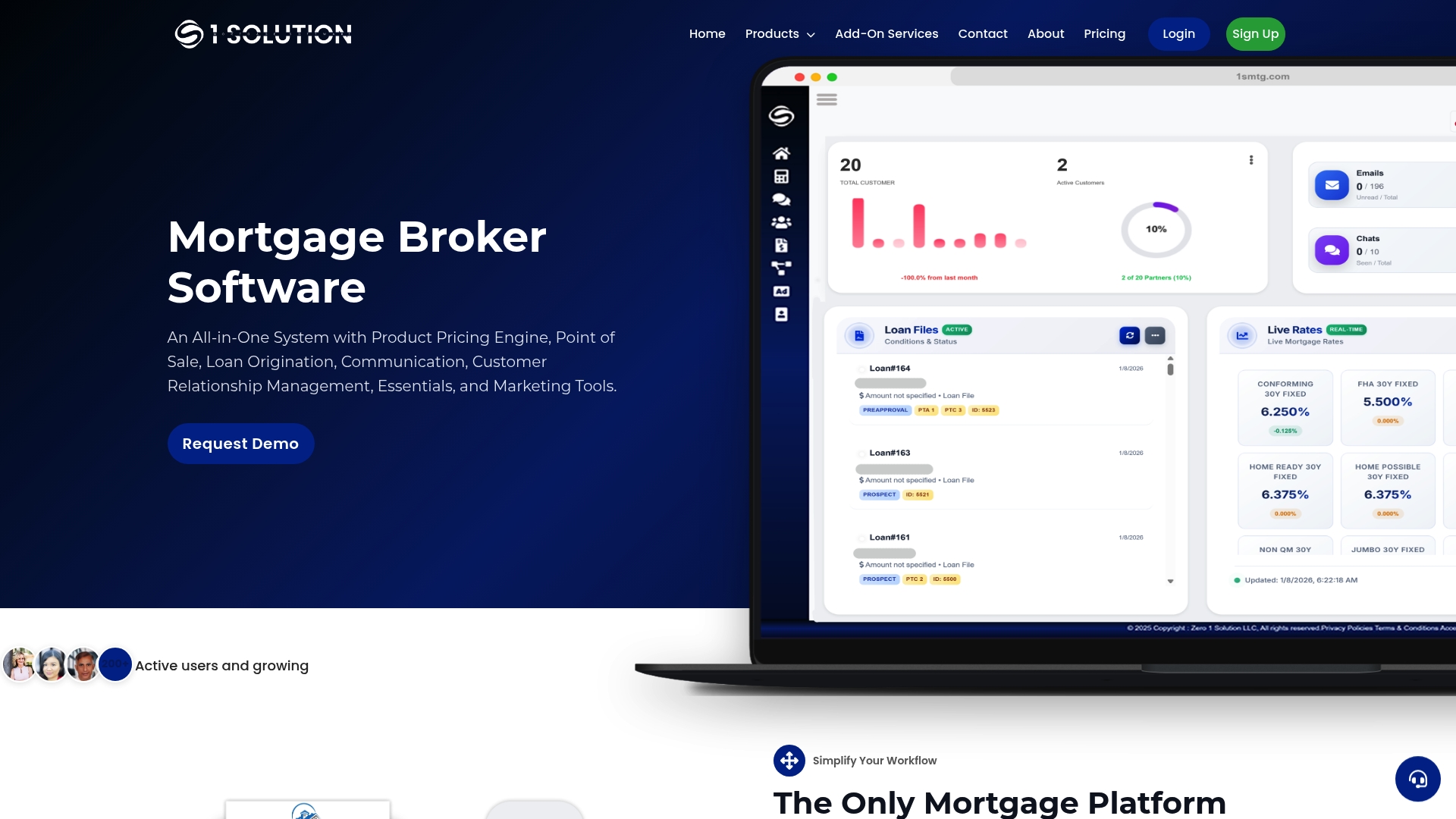
The platform connects CRM automation, compliance tracking, digital document portals, and pipeline reporting in one place. That means fewer manual handoffs, fewer missed deadlines, and more time for loan officers to originate. If you are ready to build the infrastructure that supports real growth, explore 1 Solution Mortgage Software and see how it fits your operation.
FAQ
What should mortgage brokers fix before scaling?
Fix document collection, follow-up consistency, and compliance tracking before adding lead volume. Most scaling failures start with a broken middle funnel, not a lack of leads.
How many referral partners does a broker need to scale?
Five to ten active referral partners with structured monthly touchpoints is enough to generate predictable volume. Quality and consistency matter more than the total number of partners.
Can AI replace a loan officer assistant when scaling?
AI-driven automation handles document tracking, status updates, and compliance reminders without additional staff. This substitution works well in early scaling phases before volume justifies a full-time hire.
How long does it take for content marketing to generate mortgage leads?
Inbound content typically requires around six months to mature and produce consistent lead flow. Brokers who commit to one channel for that full period see compounding returns that paid leads cannot match.
What metrics should mortgage brokers track to manage growth?
Track input metrics like proposals sent, referral conversations, and applications started each week. These leading indicators predict pipeline health weeks before closing numbers reflect any change.