

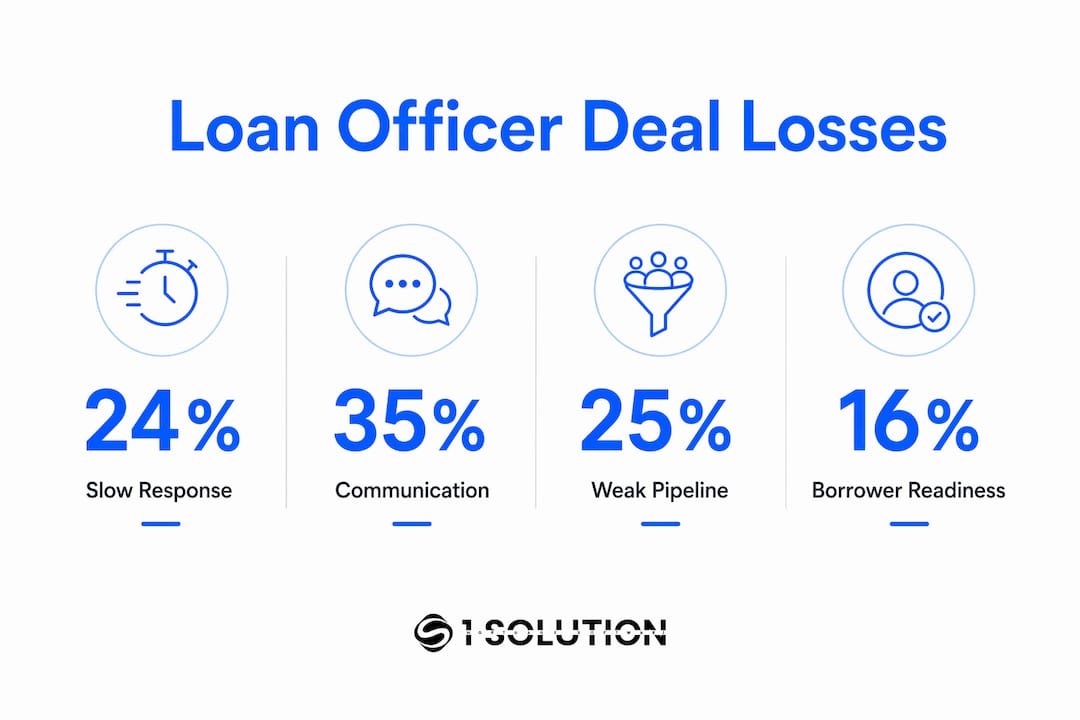
Loan officers lose deals primarily because of three breakdowns: slow response times, poor communication during critical moments, and weak pipeline systems. These are not random failures. They are predictable patterns that repeat across the industry. Between 60% and 80% of new loan officers fail in their first year, and the root cause is almost always structural, not personal. Understanding why loan officers lose deals is the first step toward fixing the systems that let those deals slip away.
Why loan officers lose deals: the core breakdown
The industry term for this pattern is "deal fallout," and it describes any loan that enters the pipeline but never closes. Deal fallout happens at every stage, from first inquiry to post-application silence. The causes are rarely a single mistake. They stack: a slow reply here, a vague update there, no follow-up system anywhere.
77% of consumers trust AI as much as human experts. That means borrowers are cross-checking your rate quotes, your advice, and your timelines against AI tools before they ever sign anything. The loan officer who builds trust faster than an algorithm wins the deal. The one who waits for the borrower to call back does not.
The factors affecting loan deal success come down to speed, clarity, and structure. Loan officers who lose consistently are usually missing at least two of those three. The good news is that all three are fixable with the right systems and habits.
How does slow response time cause loan officers to lose clients?
Borrowers who wait more than 24 hours for a response have typically already contacted three or more other lenders. That single data point reframes the entire conversation about responsiveness. Speed is not a courtesy. It is a competitive requirement.

The critical window for an initial inquiry response is under one hour. After that window closes, borrower attention fragments. They open tabs, fill out other forms, and start comparing. By the time you call back at the end of the day, you are already third or fourth in line.
Loan officers can close this gap with a few concrete changes:
- Set up automated text or email acknowledgment within five minutes of any new inquiry
- Use a CRM with lead routing so no inquiry sits unassigned
- Schedule two dedicated call blocks daily (morning and early afternoon) for same-day follow-up
- Use voicemail drop tools for after-hours inquiries so borrowers hear from you before they wake up
- Assign a backup contact for days when you are in closings or training
Pro Tip: Set up an AI-powered callback or automated SMS sequence that fires the moment a new lead submits a form. The message should confirm receipt, set a specific callback time, and include your direct number. Borrowers who get that message within five minutes convert at a significantly higher rate than those who wait.
The pre-decision buyer journey has shifted heavily toward digital and AI platforms. Loan officers who engage borrowers before they start comparing are the ones who control the conversation. Waiting for the borrower to reach out a second time is a strategy that does not work.
Does poor communication during deal challenges cost you future business?
Borrowers judge loan officers more on behavior and communication when deals fail than on the deal outcome itself. That finding changes how you should think about every difficult conversation. A lost deal is not the end of the relationship. How you handle it determines whether you ever get a second chance.
Most deal fallout happens after application when communication slows, expectations drift, and borrower confidence drops. The silence that follows a difficult underwriting condition is often more damaging than the condition itself. Borrowers fill that silence with anxiety, and anxiety drives them to look elsewhere.
Clear communication during deal challenges follows a specific sequence:
- Name the problem directly. Do not soften it to the point of confusion.
- Explain what caused it in plain language the borrower can repeat to a spouse or family member.
- Give a realistic timeline for resolution or a clear next step.
- Follow up before the borrower has to ask for an update.
- If the deal cannot close, say so clearly and offer a path forward, whether that is a credit improvement plan or a referral.
"A borrower who loses a deal but feels respected and informed will refer you to three people. A borrower who loses a deal and feels ignored will tell ten people to avoid you. The outcome of the deal matters less than the quality of your conduct during it."
Setting realistic expectations from the first conversation prevents most of this. Loan officers who over-promise on timelines or rates create a trust deficit they cannot recover from. Consistent execution and clear communication under pressure are the defining skills for loan originators in 2026.
Why does weak pipeline development lead to deal losses?
The most common reason loan officers fail is not bad advice or poor product knowledge. It is running out of people to call. Loan officers lacking structured lead generation beyond their personal networks exhaust their warm contacts within 12 to 18 months and have no backup system to replace them.
Mortgage sales cycles are longer than most other financial products. A borrower who is not ready today may close 18 months from now. That means your pipeline needs to hold leads at multiple stages simultaneously, not just active applicants. Loan officers who treat their pipeline as a list of current deals are always one slow month away from a revenue crisis.
The mortgage broker lead conversion process requires consistent prospecting across multiple channels. Effective pipeline strategies include:
- Realtor partnership programs with structured referral agreements
- Monthly email campaigns to past clients and prospects
- Credit monitoring alerts that trigger outreach when a prospect's score improves
- Social media content targeting first-time buyers in specific zip codes
- Community events and homebuyer education workshops
| Pipeline strategy | Best use case | Time to first lead |
|---|---|---|
| Realtor referral program | Established loan officers with local relationships | 2–4 weeks |
| Credit monitoring alerts | Borrowers not yet ready to apply | 3–12 months |
| Email nurture campaigns | Past clients and warm prospects | 30–90 days |
| Social media content | Brand building and first-time buyer outreach | 60–180 days |
| Homebuyer workshops | Community trust building and pre-qualified leads | 4–8 weeks |
Loan officers lacking mentorship also struggle to handle complex borrower scenarios, which accelerates deal losses in the early years. A structured onboarding program that includes pipeline-building training cuts that learning curve significantly.
How does borrower readiness affect whether deals close?
Borrower readiness is the single most underestimated factor in deal fallout. A borrower who applies before they are financially prepared creates a deal that is almost certain to fail. The loan officer who catches that early and guides the borrower through a readiness plan builds a relationship that closes 12 months later.
Borrower readiness tools and early engagement during the "am I ready?" phase increase loan officer influence and deal probability. This is the phase where most loan officers are absent. They wait for the borrower to decide they are ready, then compete with every other lender for the application. The loan officer who engages during the readiness phase has no competition.
Practical ways to engage borrowers before they are ready to apply:
- Offer a free credit review with a written action plan
- Set up automated credit monitoring and alert the borrower when their score crosses a target threshold
- Send monthly market updates that keep your name in front of prospects without asking for anything
- Use a digital point-of-sale tool that lets borrowers track their own readiness metrics
Pro Tip: When a borrower says "I'm not ready yet," treat that as the start of the relationship, not a dead end. Schedule a 90-day check-in on the spot and add them to a credit monitoring program. Loan officers who engage borrowers early in the readiness phase close a disproportionate share of deals when those borrowers finally apply.
Deal-breaking issues often stem from inefficient handling of emotional and psychological borrower needs during stressful, non-standard loan scenarios. The mortgage process is one of the most stressful financial events in a person's life. Loan officers who acknowledge that stress and communicate through it retain borrowers that others lose.
Key Takeaways
Loan officers lose deals most often because of slow responses, communication gaps, thin pipelines, and failure to engage borrowers before they are ready to apply.
| Point | Details |
|---|---|
| Speed wins the first contact | Respond to new inquiries within one hour or borrowers will contact multiple competitors. |
| Communication quality outlasts deal outcomes | Borrowers who feel respected during a failed deal refer future clients and return themselves. |
| Pipeline depth prevents revenue gaps | Structured prospecting across multiple channels replaces warm contacts before they run out. |
| Engage borrowers in the readiness phase | Loan officers who enter the conversation early face no competition when the borrower applies. |
| Second-chance pipelines generate long-term revenue | Tracking why deals die and setting follow-up triggers converts future closings from lost leads. |
Lost deals are auditions, not endings
I have spent over 20 years in mortgage operations, working as a processor, underwriter, loan originator, and systems consultant. The pattern I see most often is not what you would expect. The loan officers who struggle most are not the ones who lose deals. They are the ones who lose deals and then disappear.
A lost deal is an audition. The borrower is watching how you handle adversity. Do you call them back with a clear explanation, or do you go quiet? Do you offer a path forward, or do you move on to the next lead? Many loan officers view lost deals as sunk costs rather than relationship opportunities. That is the most expensive mistake in this business.
Building a second-chance pipeline by tracking why deals die and setting trigger reminders produces more long-term revenue than focusing only on live deals. I have seen loan officers generate significant business from borrowers they could not close two years earlier, simply because they stayed in contact and reached out when rates dropped or the borrower's situation changed.
The mindset shift is simple but not easy. Stop measuring success only by closed loans. Start measuring it by the quality of every relationship you build, including the ones that do not close today. Consistent execution, clear communication, and a structured follow-up system are what separate loan officers who build careers from those who burn through their network and quit.
How 1 Solution Mortgage Software helps you close more deals
Losing deals to slow response times and fragmented systems is a structural problem. It requires a structural fix.
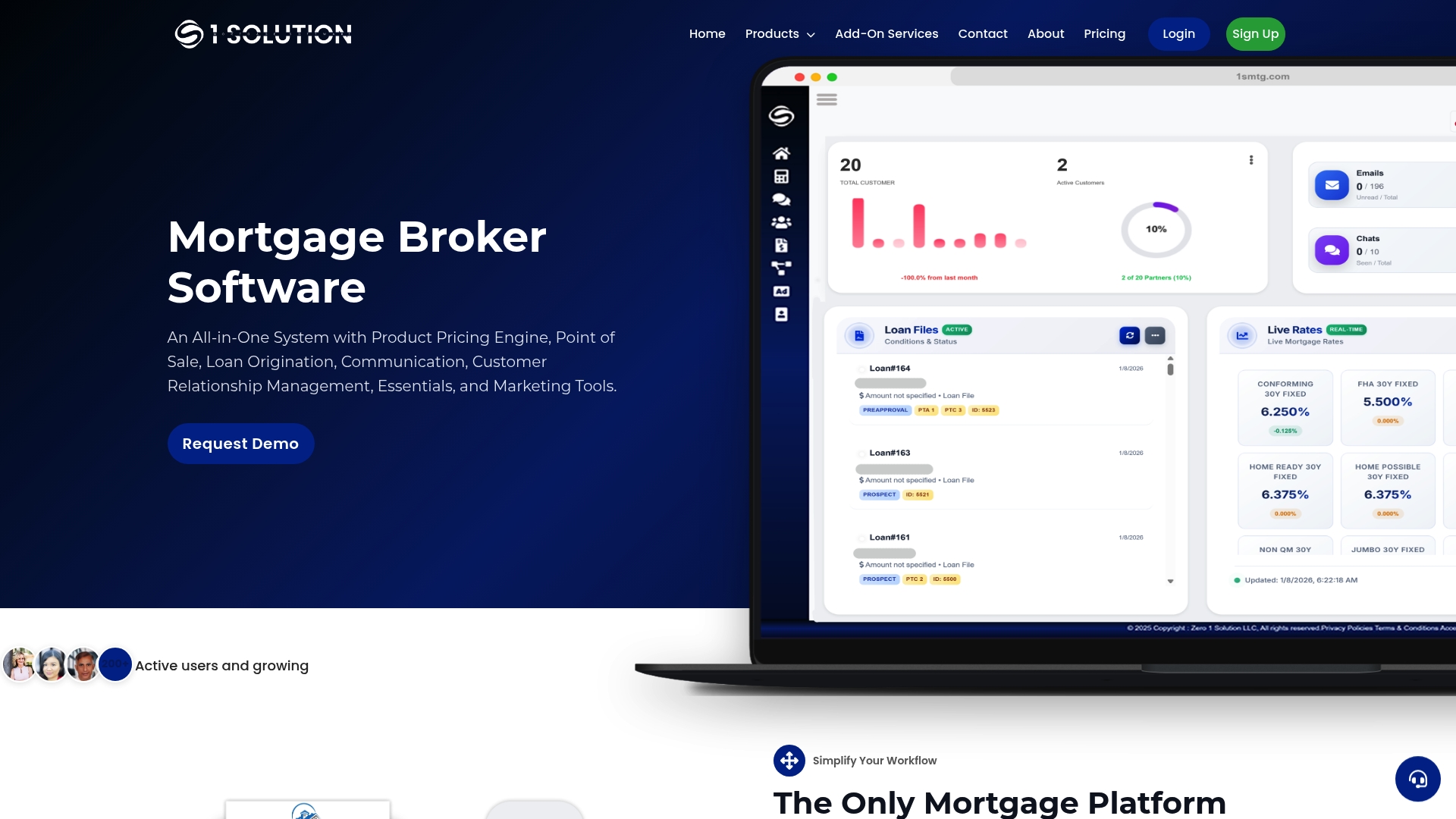
1 Solution Mortgage Software was built by mortgage professionals who have worked every role in this industry. The platform brings CRM, pipeline tracking, borrower communication, POS, LOS, compliance, and marketing tools into one connected system. You can see every lead, every deal stage, and every follow-up trigger from a single dashboard. When a borrower goes quiet, the system tells you. When a deal falls out, you know exactly why.
For loan officers who want to close more deals without adding overhead or juggling disconnected tools, 1 Solution Mortgage Software gives you the control and visibility that independent brokers deserve. Built from real industry experience, not a boardroom.
FAQ
Why do most new loan officers fail in their first year?
Between 60% and 80% of new loan officers fail in their first year due to lack of structured lead generation beyond personal networks. Once warm contacts are exhausted, loan officers without a prospecting system have no pipeline to fall back on.
How quickly should a loan officer respond to a new inquiry?
The target response window is under one hour. Borrowers who wait more than 24 hours typically contact three or more other lenders before hearing back from you.
Can a lost deal still produce future business?
A well-handled lost deal frequently produces referrals and repeat business. Borrowers evaluate loan officers on behavior during deal failures, and those who communicate clearly and follow up consistently earn long-term loyalty.
What is a second-chance pipeline?
A second-chance pipeline is a structured system for tracking deals that did not close, logging the reason for fallout, and setting automated follow-up triggers for future outreach. It converts leads that most loan officers abandon into future closings.
How does borrower readiness affect deal closure rates?
Borrowers who apply before they are financially ready create deals that are likely to fail at underwriting. Loan officers who engage borrowers early in the readiness phase build stronger relationships and face less competition when those borrowers are finally ready to apply.