
Mentorship is defined as the structured transfer of judgment, habits, and real-world skills from an experienced producer to a developing loan officer. The role of mentorship in loan officer development goes far beyond orientation checklists or product training. It builds the confidence, deal judgment, and referral habits that separate average producers from top performers. With nearly half of financial advisors planning to retire by 2035, the mortgage industry faces a serious succession gap. Structured mentorship is the most direct answer to that gap.
What is the role of mentorship in loan officer development?
Mentorship is not the same as recruiting or onboarding. Recruiting fills a seat. Onboarding covers compliance basics and system logins. Mentorship builds the judgment a loan officer needs to close files under pressure, manage difficult borrowers, and generate referrals consistently.
The core difference is timing. Mentorship delivers real-time learning during actual loan transactions, not in a classroom or webinar. When a file hits a snag at underwriting, a mentor walks the loan officer through the decision in the moment. That experience sticks in a way that no training module replicates.

Loan officer training programs, including the 20-hour NMLS pre-license course required before licensure, establish regulatory knowledge. They do not teach a new originator how to read a borrower's hesitation, restructure a deal to save a closing, or build a referral pipeline from scratch. Mentorship fills that gap directly.
Mentorship also builds soft skills that formal training ignores. Mentors model great client service, showing mentees how to communicate clearly under stress, set realistic expectations, and earn repeat business. These behaviors drive long-term production far more than product knowledge alone.
- Recruiting fills headcount. Mentorship builds producers.
- Onboarding covers rules. Mentorship teaches judgment.
- Training programs teach compliance. Mentorship teaches execution.
- Formal courses build knowledge. Mentorship builds habits.
Pro Tip: When evaluating a mentorship arrangement, ask one question: "Will I be involved in live deals?" If the answer is no, it is coaching in name only.
What does effective mentorship for loan officers look like?
Effective mentorship follows a structure. Without clear expectations and regular touchpoints, even the best mentor-mentee pairing drifts into casual conversation. Formal mentorship programs require benchmarks and scheduled reviews to produce measurable growth.
The most productive mentorship activities for loan officers include:
- Deal structure reviews. Walk through every active file together. Identify risk early and discuss how to adjust the structure before it becomes a problem at underwriting.
- Pipeline reviews. Meet weekly to assess which files will close, which need attention, and which are at risk. This builds the deal judgment that separates top producers from average ones.
- Communication coaching. Role-play borrower conversations, realtor calls, and difficult objections. Repetition under low-stakes conditions prepares loan officers for high-stakes moments.
- Referral habit building. Mentors show mentees exactly how they ask for referrals, follow up with past clients, and maintain realtor relationships. Watching the behavior in practice is more effective than any script.
- Post-close debriefs. Review every closed loan for what worked and what did not. This creates a feedback loop that compounds over time.
Mentorship also requires selectivity. Selective mentorship focused on coachable individuals drives a better return on development resources. Not every new hire is ready to absorb mentorship. The best mentors identify loan officers who show a growth mindset and invest their time there.
Pro Tip: Before committing to a mentorship relationship, give the mentee a small assignment. How they handle it tells you everything about their coachability.
What are the measurable benefits of mentorship for loan officers?
Mentorship produces outcomes that show up in production numbers, not just confidence surveys. The three core areas where mentorship delivers measurable improvement are confidence, deal judgment, and referral generation.
Mentorship accelerates deal judgment, enabling loan officers to predict which files will close and adjust early. That skill directly improves pull-through rates. A loan officer who can identify a problem file in week two of processing saves the team time, preserves the borrower relationship, and protects the firm's reputation.
"Financial mentorship acts like compound interest. The benefits accumulate over time, leading to more predictable, stable business outcomes. A loan officer with two years of mentored experience often outperforms a self-taught originator with five years in the seat."
Referral habits are another area where mentorship pays off. Borrowers refer based on trust and execution. Mentors teach loan officers how to earn that trust through consistent communication and follow-through, not through marketing tactics. The result is a referral pipeline that grows without paid advertising.
| Benefit area | What mentorship produces |
|---|---|
| Confidence | Faster decision-making under pressure during live transactions |
| Deal judgment | Earlier identification of file risk and proactive restructuring |
| Referral habits | Consistent, trust-based referral generation from past clients |
| Soft skills | Stronger borrower communication and realtor relationship management |
| Business continuity | Prepared next-generation producers ready to absorb senior volume |
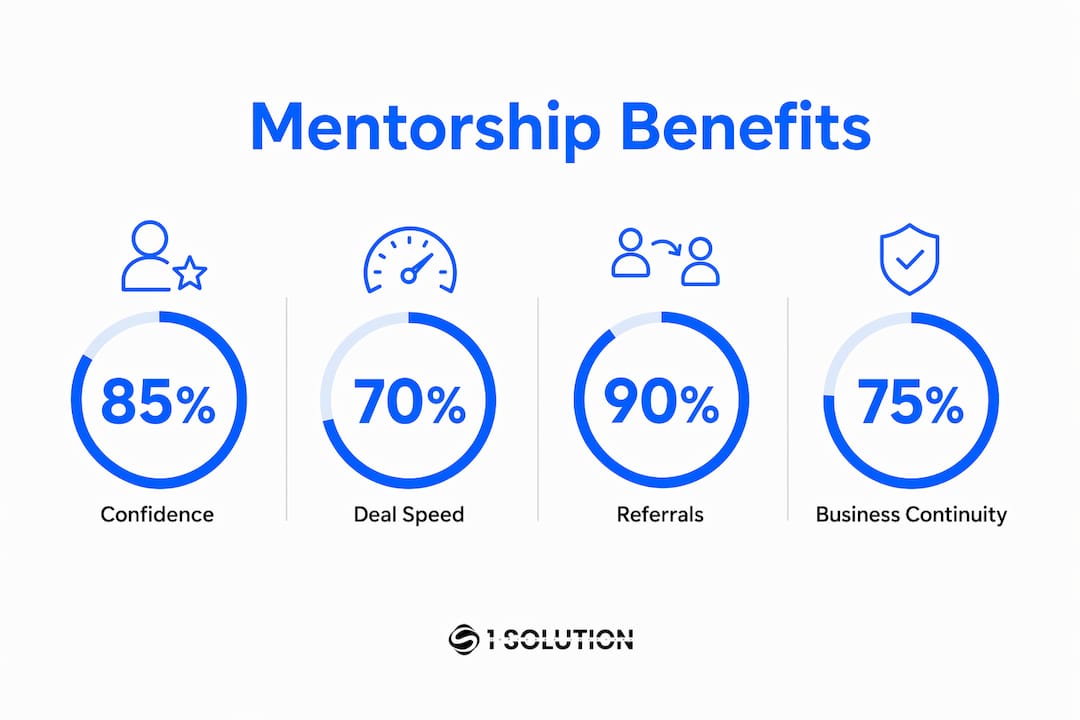
The business continuity benefit deserves attention. With a significant portion of senior originators approaching retirement, firms that invest in staff training and mentorship now will have a pipeline of capable producers when those veterans step back. Firms that rely on recruiting alone will face a production gap they cannot fill quickly.
What are the most common mentorship pitfalls to avoid?
Mentorship fails most often not because of bad intentions but because of structural mistakes. Recognizing these pitfalls before they take hold saves time and protects both the mentor and the mentee.
- Confusing mentorship with recruiting. Bringing on a new loan officer and calling it mentorship is a common mistake. Mentorship transforms raw talent into high performers through ongoing support. Recruiting is the first step, not the whole program.
- Creating dependency instead of independence. The goal of mentorship is to teach judgment frameworks, not to give answers. A mentor who solves every problem for the mentee produces a loan officer who cannot function without supervision. Effective mentorship teaches decision-making frameworks so the mentee can reason through new situations independently.
- Mentoring everyone equally. Time is finite. Spreading mentorship across every new hire dilutes its impact. Focus on loan officers who demonstrate coachability and a genuine commitment to growth.
- Stopping after onboarding. The first 90 days matter, but mentorship that ends at onboarding leaves loan officers without support during their first difficult market cycle. Ongoing mentorship through the first full year produces far better outcomes.
- Ignoring the technology layer. Mentors who guide loan officers through software training for loan officers alongside deal coaching accelerate productivity faster than those who treat systems and skills as separate tracks.
How do you build a mentorship program for loan officers?
A mentorship program works best when it is treated as an operating system, not a one-time initiative. The structure below applies whether you are a branch manager building a team program or a senior loan officer mentoring one person.
- Design a 90-day playbook. Define what the mentee should know, do, and produce by the end of each 30-day block. Week one covers systems and compliance. Week four covers live deal reviews. Week twelve covers independent pipeline management.
- Match mentors and mentees by style and goals. A high-volume purchase-focused originator should not mentor someone targeting refinance or niche products. Alignment on market focus and communication style accelerates the relationship.
- Set measurable goals. Define success in concrete terms: number of files reviewed together, referral conversations practiced, pull-through rate targets. Vague goals produce vague results.
- Build in accountability for the mentor. Mentors need feedback too. A quarterly review of the mentee's progress holds both parties accountable and keeps the program from going stale.
- Pair mentorship with the right tools. A well-structured loan officer onboarding program that integrates mentorship with technology training produces loan officers who are both skilled and efficient from day one.
Mentors guide simplification and help loan officers concentrate on productive efforts rather than constantly switching strategies. That focus is one of the most underrated benefits of a structured program.
Key Takeaways
Mentorship is the single most effective tool for building loan officers who produce consistently, manage deals independently, and generate referrals without relying on advertising.
| Point | Details |
|---|---|
| Mentorship vs. training | Pre-license courses build compliance knowledge; mentorship builds judgment and execution habits. |
| Real-time learning | Mentorship during live transactions produces faster skill development than any classroom format. |
| Selectivity matters | Focusing mentorship on coachable loan officers delivers a better return on development time. |
| Succession planning | With major retirement trends ahead, mentorship is the primary tool for business continuity. |
| Avoid dependency | Teach judgment frameworks, not answers, so mentees can operate independently under pressure. |
What I've learned from 20 years of watching mentorship work and fail
Most firms treat mentorship as a nice-to-have. They hire a strong loan officer, sit them next to a veteran for a few weeks, and call it done. That is not mentorship. That is proximity. Real mentorship requires intention, structure, and a mentor who is willing to invest time in someone else's growth without expecting immediate production in return.
The loan officers I have seen develop fastest share one trait: they were involved in live deals from week two or three, not week twelve. Watching a file move through processing, underwriting, and closing in real time teaches more than any playbook. The stakes are real. The decisions matter. That pressure accelerates learning in a way that nothing else does.
The hardest part of mentorship is resisting the urge to give answers. When a mentee asks how to handle a difficult underwriter condition, the instinct is to just tell them. The better move is to ask them what they think first. That one habit, repeated consistently, builds the independent judgment that separates a producer who needs hand-holding from one who can run their own pipeline.
Mentorship also has a compounding effect that most people underestimate. A loan officer who receives strong mentorship in year one will mentor someone else in year five. That knowledge transfer multiplies across the organization. Firms that build mentorship into their mortgage team structure create a culture of development that outlasts any individual producer. That is the real return on investment.
— Omar Khamisa
How 1 Solution Mortgage Software supports loan officer growth
Building a mentorship program requires more than good intentions. Loan officers need tools that match the way they learn and work, especially in the early stages of their careers.
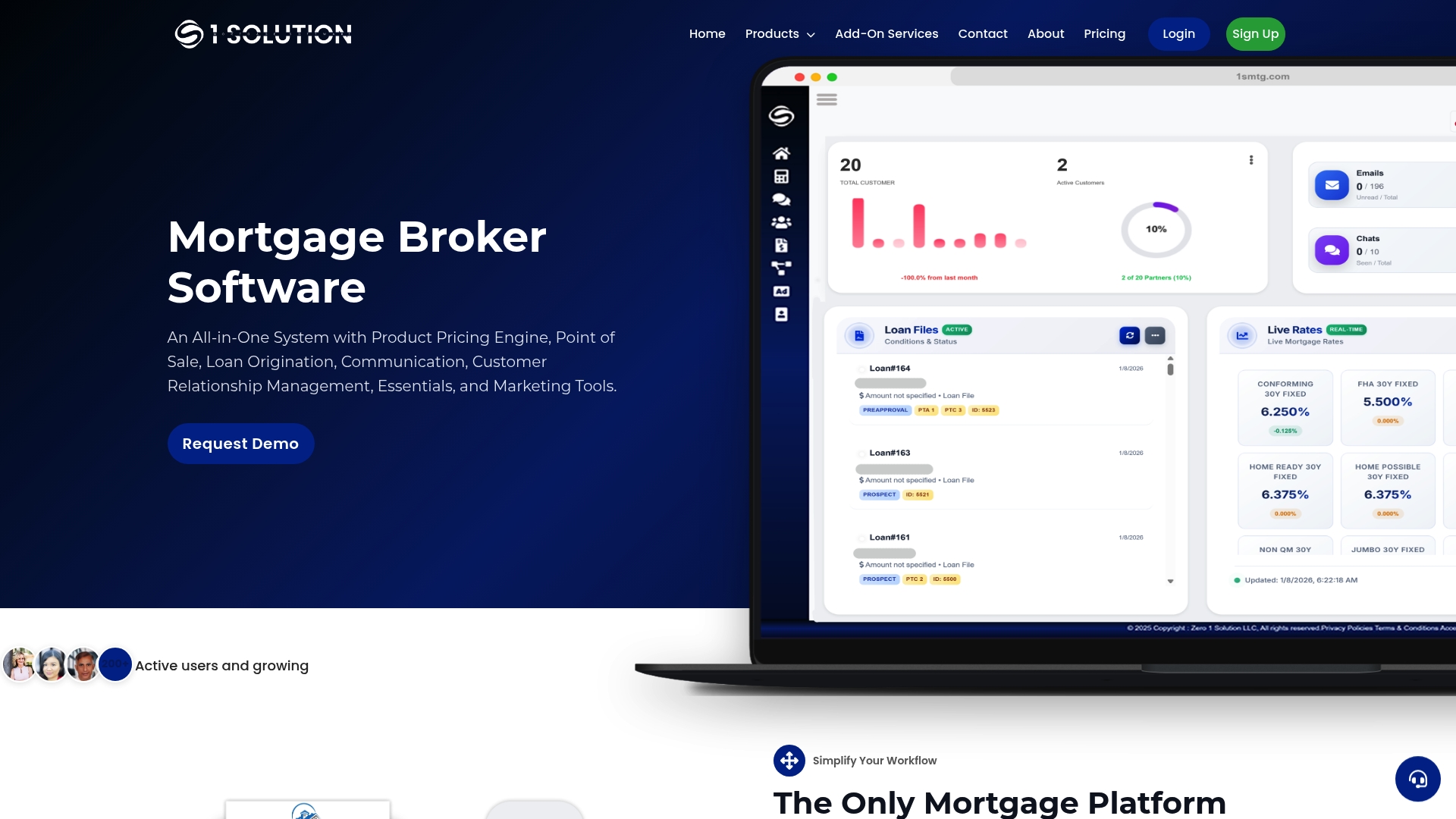
1 Solution Mortgage Software was built by mortgage professionals who have sat in the loan officer seat, processed files, and managed pipelines under real pressure. The platform brings together CRM, LOS, POS, compliance, and communication tools in one connected system, so mentors and mentees work from the same data without switching between fragmented platforms. When a mentor reviews a mentee's pipeline, both see the same file status, conditions, and borrower communications in real time. That shared visibility makes deal coaching faster and more specific. Explore 1 Solution Mortgage Software and see how the right technology foundation supports every stage of loan officer development.
FAQ
What is the role of mentorship in loan officer development?
Mentorship builds the judgment, confidence, and referral habits that formal training programs do not cover. It delivers real-time guidance during live transactions, which accelerates skill development faster than any classroom format.
How does mentorship differ from loan officer training programs?
Training programs like the 20-hour NMLS pre-license course establish regulatory knowledge. Mentorship teaches execution, deal judgment, and client relationship skills through direct involvement in active files.
What are the biggest mentorship pitfalls for loan officers?
The most common pitfalls are creating dependency instead of independence, mentoring everyone equally regardless of coachability, and stopping support after the initial onboarding phase ends.
How long should a loan officer mentorship program last?
A structured 90-day playbook covers the foundation, but effective mentorship continues through the first full year to support loan officers during their first difficult market conditions.
Why is mentorship critical for mortgage industry succession?
With a large share of senior originators approaching retirement, firms that build mentorship programs now will have trained producers ready to absorb volume when veterans step back, rather than facing a production gap they cannot fill through recruiting alone.