
A mortgage feedback loop is a continuous, data-driven cycle that feeds loan performance insights back into underwriting policies, pricing decisions, and operational workflows to improve approval quality over time. The industry standard term for this concept is "closed-loop learning," and it sits at the core of modern lending governance frameworks, including the Federal Reserve's SR 11-7 model risk management guidance. When brokers and lenders build this cycle correctly, it reduces repurchase risk, tightens underwriting accuracy, and directly improves the borrower experience. Understanding how the mortgage feedback loop works is no longer optional for professionals who want to stay competitive and compliant.
How does the mortgage feedback loop work in underwriting?
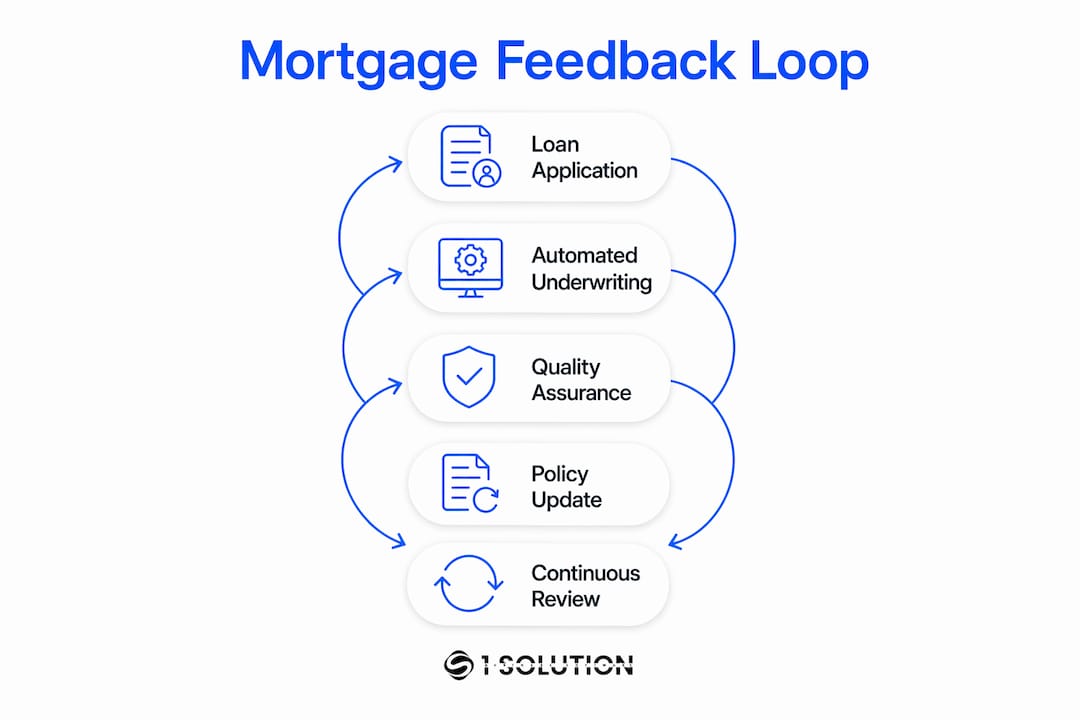
The mortgage feedback loop operates across four distinct data flows: loan application inputs, Automated Underwriting System (AUS) outputs, human underwriter overrides, and post-closing performance data. Each stage generates signals that, when captured and routed correctly, inform the next round of policy decisions. Without that routing, the signals disappear and errors repeat.
The AUS output is the first checkpoint. When a system like Fannie Mae's Desktop Underwriter returns a finding, the underwriter's response, whether they approve, suspend, or override, becomes a data point. Tracking those overrides over time reveals where automated logic diverges from real-world risk. That gap is where feedback loops earn their value.

Post-closing performance data closes the circuit. Repurchase demands, early payment defaults, and investor findings all trace back to specific underwriting decisions. Mapping those outcomes to the original loan file, the underwriter, and the active policy version at the time of decision creates a traceable audit trail. Monitoring conditional-to-clear conversion time and rescind frequency directly links underwriting performance to financial risk and investor confidence.
Key operational metrics that feed this cycle include:
- Conditional approval conversion rate: The percentage of conditional approvals that clear without additional conditions. Structured feedback programs have moved this metric from 61.9% to 78.5% in documented cases.
- Rescind rate: The frequency at which approved loans are pulled back before closing, signaling upstream underwriting errors.
- Exception aging: How long a file sits in a suspended or conditional state before resolution, revealing bottlenecks in triage workflows.
- Override frequency by underwriter: Patterns that identify training gaps or policy ambiguities.
Pro Tip: Build a policy versioning registry that timestamps every guideline change. Every loan decision should reference the exact policy version active at the time of approval. This "Git-like" immutable record is your first line of defense in a repurchase audit.
What are the key components of a strong mortgage feedback system?
Closed-loop feedback structures require four structural pillars to function. Miss one and the loop breaks.
-
Integrated data infrastructure. Loan origination, underwriting, servicing, and QA data must live in a connected system. A Bank Director 2025 survey found 56% of financial institutions keep siloed data, and only 18% measure ROI on technology investments. Siloed data means feedback never reaches the people who can act on it.
-
Stage-level metrics. Each phase of the mortgage process needs its own performance indicators. Aggregate metrics hide the source of problems. A rising rescind rate means nothing without knowing whether it originates in processing, underwriting, or closing.
-
Formal review cadences. Weekly human adjudication panels, monthly policy review meetings, and quarterly governance audits create the rhythm that keeps feedback loops active. Without scheduled reviews, data accumulates but decisions never change.
-
Feedback mechanisms tied to policy and pricing. Insights must connect directly to policy revisions and product adjustments. A finding that sits in a report but never updates a guideline is not a feedback loop. It is a filing cabinet.
Quality assurance sampling anchors the governance layer. A 3.1% monthly random QA sampling rate tied to active policy revisions maintains audit trails and reduces repurchase risk by enabling root-cause tagging on every defect found. That sampling rate is not arbitrary. It reflects the minimum threshold needed to detect systemic errors before they reach investors.
Human-machine collaboration defines the execution layer. Automated systems flag anomalies. Human reviewers interpret context, apply judgment, and document rationale. The combination produces decisions that are both fast and defensible. Neither element works well without the other.
Pro Tip: Tag every QA finding to a specific policy section and underwriter. Over 90 days, patterns emerge that point directly to training needs or policy gaps. That specificity turns QA from a compliance checkbox into a genuine improvement tool.
For brokers building this governance structure from scratch, a mortgage compliance management guide covers the foundational setup steps in detail.
How is AI changing the mortgage feedback loop?
AI-driven adaptive underwriting models recalibrate continuously based on new loan performance data. Traditional models update quarterly or annually. AI models update in near real time, which means policy adjustments happen faster and with greater precision.
The most significant technological shift is the emergence of digital twins in mortgage risk management. AI-driven mortgage risk models using digital twins simulate economic changes instantly on portfolios, enabling proactive borrower interventions before defaults occur. A digital twin of a loan portfolio can model the impact of a 50-basis-point rate increase on delinquency rates across specific borrower segments within minutes. That capability moves risk management from reactive to predictive.
The benefits of AI-enhanced feedback loops include:
- Real-time risk score recalibration based on macroeconomic signals
- Automated detection of rate dispersion and pricing exceptions across loan officers
- Continuous fraud model refinement using claim and repurchase outcomes
- Portfolio stress testing without waiting for actual defaults to materialize
Continuous learning feedback from claim and repurchase data reduces false positives in fraud detection by approximately 9.3% after six months when combined with weekly human adjudication panels. That reduction matters because false positives slow pipelines and frustrate borrowers who are legitimate applicants.
The caution is equally important:
Automation applied without structured feedback loops and clean audit trails amplifies existing underwriting errors rather than correcting them. A disorganized process scaled by automation becomes a disorganized process running faster. The technology is only as reliable as the inputs and governance structure behind it.
Brokers evaluating mortgage automation tools should audit their current process documentation before deploying any AI-driven system. Clean inputs produce reliable outputs. Chaotic inputs produce faster chaos.
How can mortgage professionals implement feedback loops today?
Practical implementation starts with mapping, not technology. Before deploying any system, brokers and lenders need a clear picture of where exceptions originate, how long they age, and what decisions resolve them.
Step 1: Map exception types and root causes. Categorize every conditional approval by the type of condition: income documentation, asset verification, title, appraisal, or compliance. Each category points to a different root cause and a different training or policy response.
Step 2: Build dashboards tracking time-in-condition and exception aging. Implementing structured feedback loops that map exception types to training dashboards has improved triage performance metrics from 61.9% to 78.5% in documented cases. That improvement came directly from visibility, not from adding headcount.
Step 3: Create conditional triage teams with defined escalation thresholds. Not every exception needs a senior underwriter. Tiered triage routes simple conditions to processors and complex ones to underwriters, reducing cycle time and preserving senior capacity for high-risk decisions.
Step 4: Monitor pricing leakage through rate dispersion analysis. Lenders must move from post-mortem feedback to proactive pricing guardrails that analyze rate dispersion, discounting patterns, and exception volumes to reduce margin leakage. Pricing exceptions that go untracked become permanent discounts that erode profitability over time.
Step 5: Maintain audit-ready documentation at every stage. Every decision, override, and policy reference should be logged with a timestamp and a rationale. This is not just compliance hygiene. It is the raw material that makes future feedback loops possible.
Pro Tip: Run a 90-day exception audit before implementing any new feedback system. Categorize every exception from the prior quarter by type, originator, and resolution time. That baseline tells you exactly where to focus first.
For a structured view of how these operational steps connect to broader mortgage broker operations, the framework translates directly to daily workflow decisions.
You can also explore a broader mortgage glossary to clarify terminology used across feedback loop documentation and compliance reporting.
| Metric | What it measures | Target benchmark |
|---|---|---|
| Conditional conversion rate | Percentage of conditionals cleared without new conditions | Above 75% |
| Rescind rate | Approved loans pulled before closing | Below 2% |
| Exception aging | Average days a file sits in conditional status | Under 5 business days |
| QA defect rate | Percentage of sampled files with policy violations | Below 3% |
Key Takeaways
A mortgage feedback loop only delivers lasting improvement when integrated data, stage-level metrics, formal review cadences, and policy-linked escalation mechanisms all function together as one connected system.
| Point | Details |
|---|---|
| Feedback loops require four pillars | Integrated data, stage metrics, review cadences, and policy-linked escalation must all be present. |
| Metrics drive the loop | Tracking conditional conversion rates and rescind frequency connects underwriting decisions to financial outcomes. |
| QA sampling anchors compliance | A 3.1% monthly random QA sampling rate tied to policy revisions reduces repurchase risk and supports audit defense. |
| AI enhances but does not replace governance | Digital twins and adaptive models improve speed and precision, but only when built on clean processes and human oversight. |
| Map before you automate | Categorizing exception types and root causes before deploying technology prevents amplifying existing errors at scale. |
Why feedback loops are about policy governance, not just surveys
Most brokers I talk to think of feedback as customer satisfaction scores or post-close surveys. That framing is too narrow, and it costs them. The real feedback loop in mortgage lending is a policy governance mechanism. It is the system that tells you whether your underwriting guidelines are producing the outcomes you intended, and whether your team is applying them consistently.
I have spent over 20 years working across mortgage operations, from processing to underwriting to systems consulting. The single most common failure I see is not bad technology or bad people. It is the absence of a closed circuit between what a decision produces and what the policy says it should produce. Lenders scale their operations and assume the process scales with them. It does not. Without a deliberate feedback structure, scale just means more loans with the same unresolved errors.
The second failure is treating automation as a fix for process problems. I have watched lenders deploy sophisticated systems on top of disorganized workflows and wonder why results did not improve. Automation amplifies what already exists. If your process is clean and your logic is documented, automation accelerates improvement. If neither is true, automation accelerates the problems.
The brokers and lenders who build durable operations are the ones who treat every repurchase demand, every investor finding, and every exception as a data point to route back into their policy. They do not treat those events as isolated incidents. They treat them as signals. That mindset is the foundation of a real feedback loop, and it is what separates operations that improve over time from ones that stay stuck.
— Omar Khamisa
How 1 Solution Mortgage Software supports your feedback loop
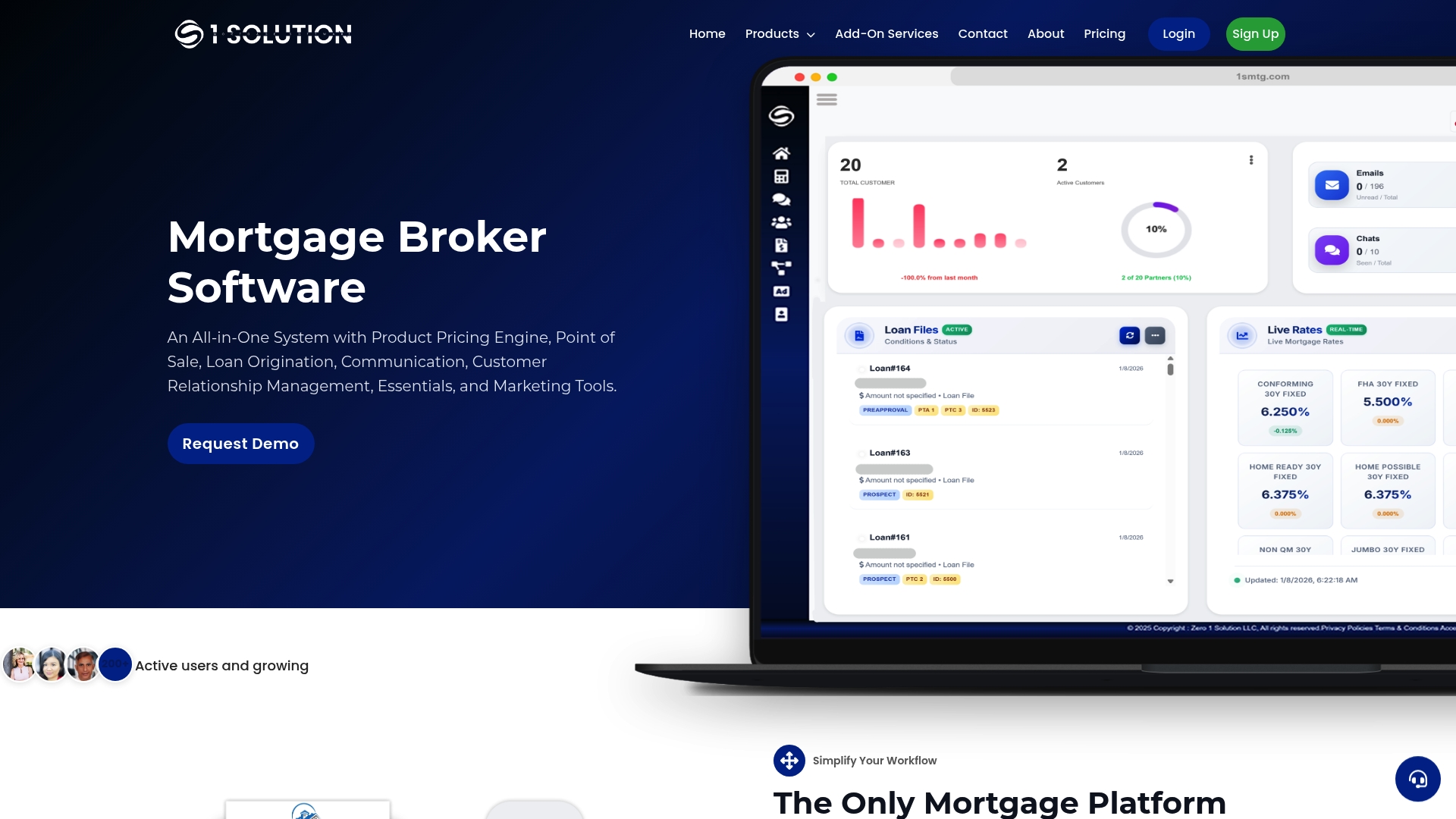
1 Solution Mortgage Software was built by mortgage professionals who understand that feedback loops only work when your data, compliance tools, and operational workflows live in one connected system. The platform brings together LOS, CRM, compliance tracking, and reporting in a single environment designed specifically for independent brokers and lenders.
Compliance features include audit-ready documentation, policy version tracking, and QA sampling support that align directly with the governance practices covered in this article. Operational dashboards give you visibility into exception aging, pipeline performance, and pricing patterns without requiring a separate analytics tool.
If you are ready to build a feedback loop that actually connects your underwriting decisions to your outcomes, explore 1 Solution Mortgage Software and see how the platform supports every stage of the process.
FAQ
What is a mortgage feedback loop?
A mortgage feedback loop is a structured cycle that routes loan performance data, including repurchase outcomes, exception rates, and underwriting decisions, back into policy and process adjustments to improve future results.
Why do mortgage feedback loops fail?
Feedback loops fail most often because of siloed data, absent review cadences, or findings that never connect to policy changes. A Bank Director 2025 survey found 56% of financial institutions keep siloed data, which breaks the circuit before it can close.
How does AI improve the mortgage feedback loop?
AI-driven models recalibrate underwriting risk scores in near real time using new performance data. Digital twins extend this by simulating macroeconomic shocks on portfolios, enabling proactive intervention before defaults occur.
What QA sampling rate supports a strong feedback loop?
A 3.1% monthly random QA sampling rate tied to active policy revisions is the recommended threshold for maintaining audit trails and reducing repurchase risk through root-cause tagging.
Is mortgage feedback beneficial for independent brokers?
Yes. Independent brokers benefit directly from feedback loops because tighter exception management, faster conditional conversion, and audit-ready documentation reduce repurchase exposure and build investor confidence without requiring enterprise-scale resources.