
A wholesale channel manager is the role or software system that centralizes a broker's lender relationships, pricing and product distribution, loan submissions, and clear-to-close workflow into one operational hub instead of a dozen scattered logins. It runs on data standards like MISMO 3.4 (the Mortgage Industry Standards Maintenance Organization's file format), it touches the secondary market handoff every wholesale loan eventually makes, and platforms like 1 Solution (1smtg) build it directly into their pricing and origination stack.
For a broker juggling relationships with dozens of wholesale lenders, that centralization pays off in three concrete ways:
- Faster turn times because loan data moves once, not five times across five systems.
- A consolidated view of pricing and products so you're not tab-hopping between lender portals to shop a scenario.
- Cleaner lender collaboration, since account executives can see exactly where a file stands instead of waiting on a status email.
Brokers who run 50+ wholesale lenders in their network depend on structured pricing engines to return real-time quotes across that entire roster. Without a channel manager tying the pieces together, that scale becomes a liability instead of an advantage.
Key Takeaways
A wholesale channel manager centralizes lender relationships, pricing, submissions, and clear-to-close tracking, and its value comes from removing rekeying at every handoff between broker and lender.
| Point | Details |
|---|---|
| Core definition | It centralizes lender pricing, submissions, and clear-to-close workflows into one system. |
| MISMO fidelity matters most | Test a vendor's MISMO 3.4 export against a real lender file before committing. |
| AE collaboration drives speed | Giving lenders visibility into pending conditions shortens turn times noticeably. |
| Pilot before full rollout | Run one lender and product type for four to six weeks and measure exceptions. |
| 1 Solution's approach | Built by a former processor and underwriter, it combines LOS, POS, and PPE tools with audit trail logging in one platform. |
Table of Contents
- What Is a Wholesale Channel Manager's Role in the Submission Workflow?
- What Features Should a Wholesale Channel Manager Include?
- What Are the Business Benefits of a Wholesale Channel Manager?
- How Do You Evaluate a Wholesale Channel Manager?
- What Does Integration and Implementation Actually Require?
- What Best Practices Keep a Wholesale Channel Running Smoothly?
- How Does 1 Solution Approach Wholesale Channel Management?
- Why a Broker-First Channel Manager Actually Matters
- See What a Wholesale Channel Manager Looks Like in Practice
- Frequently Asked Questions About Wholesale Channel Managers
- Sources
What Is a Wholesale Channel Manager's Role in the Submission Workflow?
The workflow starts the moment a borrower's application is ready to leave your point-of-sale system, and it doesn't end until the lender issues a clear-to-close and sells the loan into the secondary market.
Here's the sequence a broker actually lives through: intake and data capture, MISMO 3.4 export, rate and product shopping across your lender panel, registering the loan in the winning lender's portal, submitting the file with disclosures attached, uploading conditions as underwriting requests them, working through stips with the underwriter, and finally reaching clear-to-close. The broker sits at the center of every one of these steps, acting as the borrower's primary contact while coordinating with the lender's operations team behind the scenes.
Lenders own underwriting decisions and funding. Brokers own everything that touches the borrower and the file's movement between systems. A channel manager's job is to shrink the gap between those two roles so rekeying data three times doesn't become the norm.
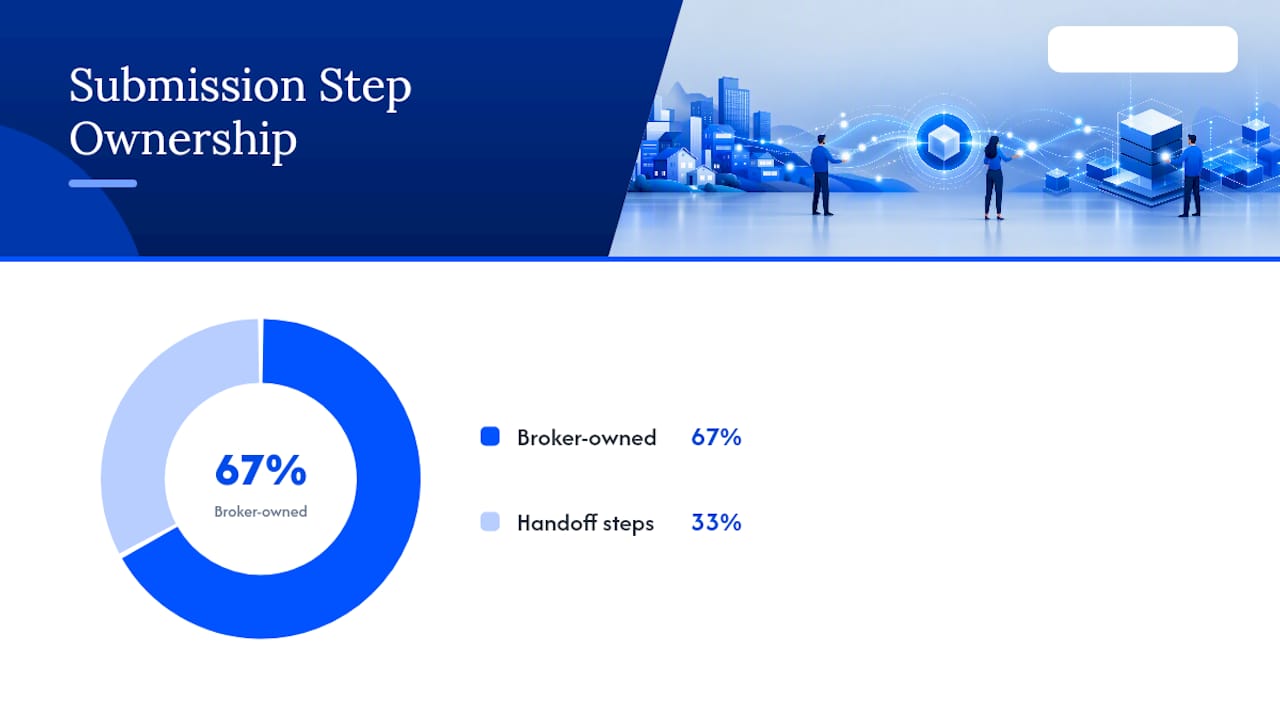
| Workflow step | Who owns it | Typical handoff friction |
|---|---|---|
| Application intake | Broker / POS | Manual re-entry into lender portal |
| MISMO export | Broker / LOS | File format mismatches between systems |
| Rate and product shopping | Broker / PPE | Comparing pricing across disconnected tabs |
| Loan registration | Broker → Lender portal | Duplicate data entry at registration |
| Condition uploads | Broker | Missing documents flagged late in underwriting |
| Clear-to-close | Lender → Broker | Status visibility lag |
For a deeper look at where these handoffs typically break down inside a brokerage, our guide on mortgage broker operations walks through the internal process in more detail, and our piece on closing coordination systems covers the final stretch to clear-to-close.
Pro Tip: Give your lender's account executive standing visibility into your pending files. Scotsman Guide's reporting on broker-lender handoffs found that platform transparency shifts the relationship from "waiting for a decision" to "collaborating on a solution" — and that shift alone often shaves days off a stuck file.
What Features Should a Wholesale Channel Manager Include?
A real channel manager isn't a glorified spreadsheet with lender logins bookmarked. It needs to actually support the standards and connections wholesale lending runs on.
- MISMO import/export, ideally supporting MISMO 3.4, so loan data moves between your LOS and a lender's system without manual translation.
- LOS/POS integration that eliminates duplicate data entry between your origination system and your point-of-sale front end.
- Lender portal orchestration that lets you register, submit, and track a file without logging into ten separate lender sites.
- A pricing engine (PPE) capable of rate-shopping across your lender panel in real time.
- Condition and submission tracking with a clear audit trail of what's outstanding and who's waiting on what.
- Role-based access and encryption that keeps sensitive borrower data compartmentalized and secure.
Each of these maps to a specific pain point in the workflow above. A pricing engine, for instance, is what makes it possible to shop dozens of lenders at once instead of manually pulling rate sheets, and that scenario submission process is exactly how large wholesale broker networks operate today.
| Feature | Workflow benefit | Standard or integration |
|---|---|---|
| MISMO import/export | Eliminates manual data re-entry | MISMO 3.4 |
| LOS/POS integration | Removes duplicate borrower data entry | API connections |
| Pricing engine (PPE) | Enables real-time rate-shopping | Lender rate feeds |
| Condition tracking | Reduces missed stips and delays | Audit trail logs |
| Document transport | Secures disclosure and condition delivery | SFTP / encrypted APIs |
When you're vetting a vendor, ask specifically how they handle each of these standards, not just whether they "support wholesale lending" in general terms. Vague answers on MISMO fidelity or API documentation are the first sign a platform was built for retail, then retrofitted.
What Are the Business Benefits of a Wholesale Channel Manager?
The operational upside is straightforward: fewer manual re-entries, shorter turn times, and a clearer escalation path when a file stalls in underwriting. But the business case runs deeper than convenience.
Brokers who can shop pricing efficiently across a wide lender panel routinely secure better terms for borrowers than a single retail relationship allows, and wholesale's structural pricing and flexibility advantages are a big reason the channel has been capturing a growing share of originations. That's not an accident of market timing. It's a direct result of brokers having access to specialized lender partners and the digital tools to actually use that access.
- Better rate access because you're comparing real, structured quotes instead of static rate sheets.
- Fewer lost deals since condition tracking catches stips before they become closing-day surprises.
- Scalable capacity for growing teams, since one system handles submission volume instead of one loan officer's memory.
A channel manager isn't the only lever here. Centralizing borrower communication, as covered in our client correspondence guide, compounds the same efficiency gains on the front end of the pipeline.
How Do You Evaluate a Wholesale Channel Manager?
Run a real evaluation before you sign anything, not a feature checklist skim during a fifteen-minute demo.
- Confirm MISMO 3.4 fidelity. Ask for a sample export and check it against a lender's actual import spec.
- Test LOS/POS integration depth. A vendor that says "we integrate with your LOS" should show you the field mapping, not just claim it works.
- Verify pricing engine accuracy. Run a live scenario against three lenders and compare the output to their actual rate sheets.
- Check portal orchestration. Can you register and submit without leaving the platform, or does it just launch external tabs?
- Review security controls and audit logs. Ask who can access what, and how changes to a file are tracked over time.
- Understand the pricing model. Subscription flat fee, per-seat cost, or transaction-based pricing all change your math at scale.
Red flags worth walking away from: vague MISMO claims, no lender onboarding support, pricing that's only revealed after a sales call, and API documentation that doesn't exist in writing.
| Evaluation dimension | What good looks like | What to ask the vendor |
|---|---|---|
| Integration ease | Documented API and MISMO support | "Show me a live field mapping." |
| Operational fit | Matches your existing submission volume | "How many concurrent files has this handled?" |
| Cost model | Transparent, predictable pricing | "Is this subscription or transaction-based?" |
| Support model | Named onboarding contact | "Who do we call during a lender integration issue?" |
For help narrowing which lenders belong on your panel in the first place, our lender comparison guide breaks down how to build that menu before you even start evaluating software.
What Does Integration and Implementation Actually Require?
Rolling out a channel manager is a technical project and a change-management project at the same time, and treating it as only the former is how pilots stall.
On the technical side, you need MISMO 3.4 import/export configured, LOS and POS connectors tested, API keys issued, and secure document transport (SFTP or encrypted API) set up for disclosures and conditions. Field mapping between your systems and each lender's portal needs verification before you submit a single live file.
For the rollout itself, pick one representative lender and product type, run a four to six week pilot, and measure turn-times and exception rates against your baseline. Gather feedback directly from the lender's account executive during that window, since they'll spot friction you won't see from your side of the file.
| Integration task | Owner | Expected timeline |
|---|---|---|
| MISMO 3.4 configuration | Vendor | 1 to 2 weeks |
| LOS/POS connector setup | Vendor + brokerage IT | 2 to 3 weeks |
| Lender portal credentials | Brokerage + lender | 1 week |
| Pilot loan submission | Brokerage | 4 to 6 weeks |
| AE feedback review | Brokerage + lender | Ongoing |
- Sandbox-test before touching a live borrower file.
- Onboard lenders in phases, not all at once.
- Keep a rollback plan in case a connector fails mid-pilot.
- Train loan officers and operations staff before go-live, not after.
Collecting each lender's own onboarding documentation matters here too. Wholesale lending guides vary meaningfully from one lender to the next, and skipping that review is how phased rollouts turn into fire drills. Our workflow design guide covers how to structure this change internally before you flip the switch.
What Best Practices Keep a Wholesale Channel Running Smoothly?
Treat your lender AEs as partners working toward the same outcome, not gatekeepers standing between you and a closing. The strongest wholesale relationships share one objective: figuring out how to responsibly make a loan work, not finding reasons to decline it.
- Standardize your submission packages so every file looks the same to every lender.
- Maintain a one-page requirement sheet per lender, since conditions and documentation expectations vary widely.
- Monitor exceptions weekly instead of discovering a pattern of stalled files a month later.
- Give AEs visibility into pending conditions rather than making them ask for status updates.
The most common pitfalls are self-inflicted: inconsistent file formats across lenders, sloppy condition-tracking discipline, ignoring AE feedback on recurring issues, and pricing surprises that surface late and damage borrower trust.
Pro Tip: Build communication templates for common condition types before you need them. When underwriting asks for the same document type across three different lenders, you shouldn't be drafting a borrower request email from scratch each time.
If you're restructuring who owns which task internally, our team structure guide and file submission guide both cover how to assign ownership so nothing falls through during handoffs.
How Does 1 Solution Approach Wholesale Channel Management?
1 Solution was built by Omar Khamisa, who spent over 20 years working across mortgage operations as a processor, underwriter, loan originator, and systems consultant before founding the platform. That background shapes how the channel management features actually work, because they were built to solve problems Omar lived through, not problems a product team guessed at.
- LOS and POS integration removes the duplicate data entry that eats hours out of every submission.
- A built-in pricing engine lets you shop your lender panel without switching tabs.
- Document orchestration handles condition uploads and disclosures inside one system.
- Audit trail logging keeps a clear compliance record of every file touchpoint, which matters when regulators or investors come asking. Our compliance guide covers what that recordkeeping needs to look like in practice.
Wholesale lenders now match retail lenders on digital tools. Success depends on orchestration and removing rekeying, not on adding more disconnected point tools to an already fragmented stack.
That's the operational bet 1 Solution makes: fewer systems, better connected, run by someone who's actually processed the files.
Why a Broker-First Channel Manager Actually Matters
Most mortgage technology gets built by people who've never had to chase a missing condition at 6 p.m. on a Friday. I've spent decades on the operations side of this business, as a processor, an underwriter, a loan originator, watching brokerages lose deals not because the rate wasn't competitive, but because the file got stuck in a system that didn't talk to the lender's portal.

That friction isn't a minor inconvenience. It's the difference between a broker who can scale to handle real volume and one who's capped by how many browser tabs they can keep open. I've watched loan officers manually retype the same borrower data into four different systems for a single file, and every one of those re-entries is a place where an error, a delay, or a lost deal can happen.
The conventional wisdom says brokers just need "more integrations." That's not quite right. What brokers need is fewer systems that actually talk to each other, built by people who understand that a condition upload at 4:55 p.m. shouldn't require three logins to complete.
See What a Wholesale Channel Manager Looks Like in Practice
You've read how the workflow, the features, and the evaluation checklist all fit together. The fastest way to know if a platform actually delivers on that is to run it against a real pilot lender and measure the turn-time difference yourself.
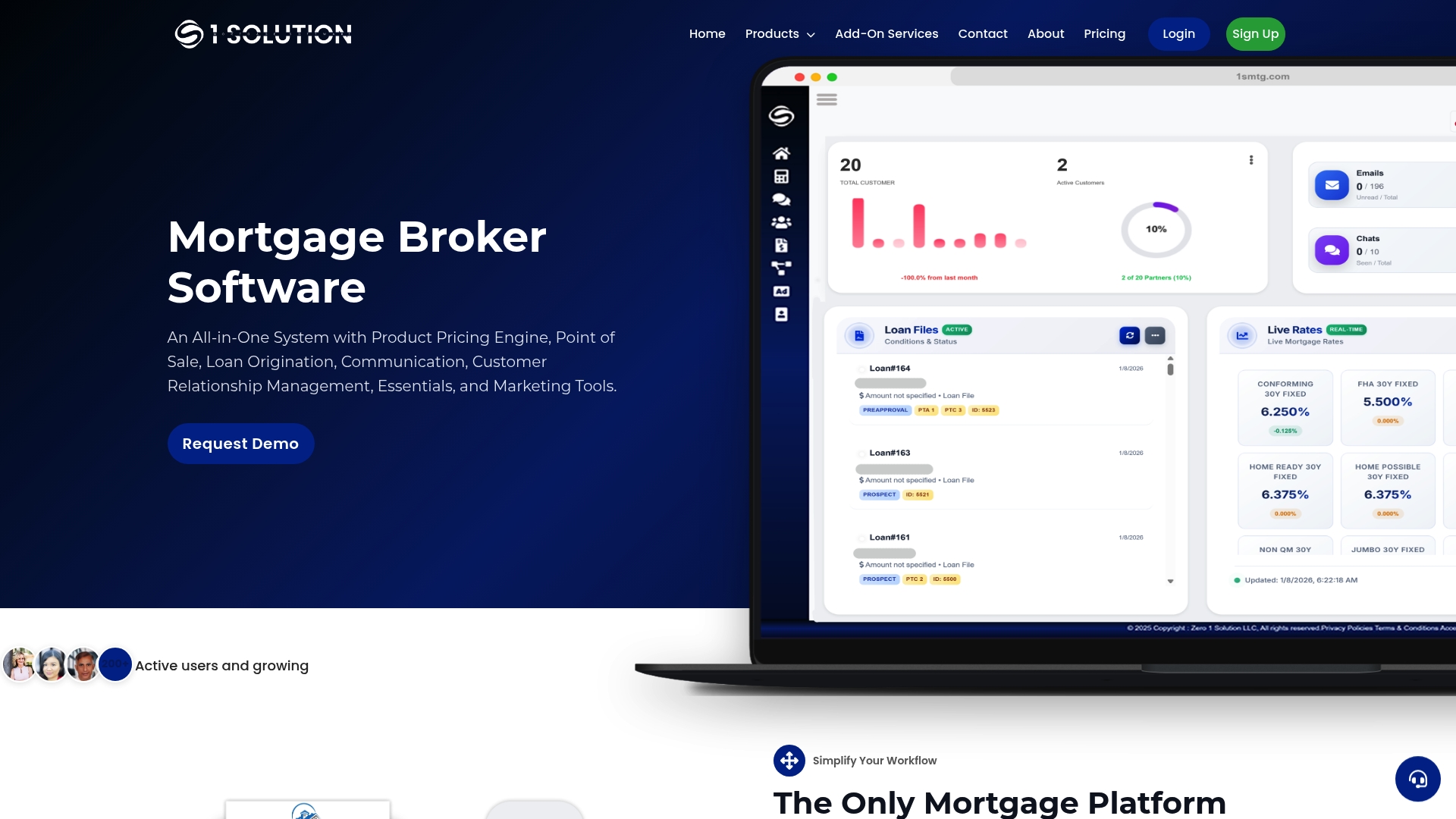
1 Solution Mortgage Software is built for brokers running exactly the workflow described above, not retrofitted from a bank's retail platform. A short trial lets you validate three things directly: whether MISMO import actually works against your lender's file format, whether submission orchestration cuts your rekeying time, and whether condition tracking gives you the transparency your AE relationships need. Schedule a demo of 1 Solution and bring a real file from your pilot lender. You'll know within one pilot cycle whether the platform earns a permanent spot in your stack.
Frequently Asked Questions About Wholesale Channel Managers
What is a wholesale channel manager in mortgage lending?
It's the system or role that centralizes a broker's wholesale lender relationships, product and pricing distribution, loan submissions, and clear-to-close tracking into one coordinated workflow.
Is a wholesale channel manager a person or software?
It can be either. Some brokerages assign a person to own lender relationships and submission tracking, while others rely on software platforms that automate the same functions through MISMO integration and pricing engines.
Why does MISMO 3.4 matter for wholesale channel management?
MISMO 3.4 is the data standard that lets loan files move between a broker's LOS and a lender's system without manual re-entry, which directly affects turn times and error rates.
How does a wholesale channel manager improve broker-lender collaboration?
It gives lender account executives visibility into pending conditions and file status, which shifts the relationship toward proactive problem-solving instead of one-sided status requests.
What should brokers ask vendors during evaluation?
Ask for a live MISMO export sample, documented API specs, real pricing engine output against known rate sheets, and a clear breakdown of the pricing model before signing anything.
This article is general information, not a substitute for advice from a qualified financial advisor. Consult a qualified financial professional about your own circumstances before acting on anything here.
Sources
- Why wholesale lending needs smoother broker–lender handoffs | Scotsman Guide
- Wholesale mortgage lenders: How they work | Bankrate
- Why Wholesale Mortgages Win in Today’s Market | Mortgage Professional
- 50+ Wholesale Lenders: How Wholesale Mortgage Broker Networks Work 2026 | Mo Abdel
Lender-specific onboarding requirements still vary widely, so pair these sources with the individual onboarding documentation each wholesale lender provides before you finalize a pilot.